

Wholesale Transmission Line Tower Solutions for Reliable Power Grid Infrastructure
2026-06-21
In an era where uninterrupted power is non-negotiable, the reliability of our grid infrastructure often comes down to one unsung hero: the transmission line tower. These towering structures do more than hold cables aloft—they form the literal backbone of energy delivery, braving extreme weather and ever-increasing loads. Yet, sourcing towers that balance rugged durability with cost-efficiency at scale remains a challenge. That’s where Anbang steps in, offering wholesale transmission line tower solutions that combine industrial-grade engineering with competitive pricing, empowering a smarter, more resilient grid.
Engineered for Extreme Conditions: Beyond Standard Transmission Towers
When the terrain turns brutal and weather patterns defy predictability, standard transmission towers simply won’t suffice. Our engineering philosophy centers on designing structures that thrive where others fail—from frozen tundras with unstable permafrost to arid deserts swept by sandstorms, and from deep mountain passes plagued by rime ice to coastal regions hammered by salt spray. We analyze site specific stresses beyond generic load tables, integrating dynamic 3D wind mapping, soil structure interaction studies, and decades of climate anomaly data into every blueprint. The result is a tower that overcomes not just routine loads, but the endless assault of the extreme.
The secret lies in a blend of unconventional materials and adaptive design details that you won’t find in off-the-shelf catalogs. We employ high-performance, low-alloy steels tested to perform well below -50°C without brittle fracture, and we apply multi-layer protective coatings that self-seal microscopic fissures before corrosion can spread. Geometry is anything but standard: tapered cross-arms reduce galloping in ice-laden winds, isolated footings ride out permafrost’s active-layer shifts, and lattice patterns are tuned to disrupt harmonic vibration from high-wind events. Instead of overengineering mass, we focus on strategic reinforcement, putting strength precisely where failures traditionally originate.
Every tower that leaves our yards is a direct answer to a question the environment has been asking for years: can you stay standing through the worst I can throw? In the field, these lines remain energized when ordinary structures crumple—something our clients in northern Canada, Mongolia’s steppes, and the Atacama Desert have witnessed firsthand. It’s not about adding safety margins on paper; it’s about dissecting how nature attacks, then building a formidable defense into the steel itself. That’s what we mean by engineered for extremes—exceeding the limits that standard designs never dared to approach.
Modular Designs That Simplify Complex Grid Expansions
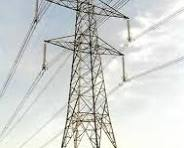
Scaling electrical infrastructure often brings a tangle of custom engineering, long lead times, and site-specific surprises. Modular design steps in by pre-configuring standard factory-built sections—think of them as building blocks that combine power conversion, protection, and control in a single enclosure. These sections are tested before they leave the factory, slashing the commissioning phase and allowing utilities to roll out upgrades in phases that match actual load growth rather than betting on distant future demands.
The real simplicity unfolds during installation. Instead of piecing together dozens of components outdoors, crews plug in pre-wired modules that can be stacked or arrayed to reach the required capacity. This approach sidesteps the usual headaches of trenching, cabling, and weather delays, turning a multi-month construction project into a matter of weeks. As needs shift, modules can be added or reconfigured without tearing out existing equipment—a flexibility that traditional brick-and-mortar substations rarely offer.
Beyond convenience, modularity builds in resilience. Fault isolation happens within a single module, leaving the rest of the array online. And because the design relies on proven, repeatable units, spare parts and technical expertise are far more portable across sites. In an era where grid planners face everything from renewables integration to wildfire hardening, this kind of graceful expandability is less a luxury and more a practical necessity.
Galvanized Steel Mastery: Corrosion Resistance for Decades
The secret behind galvanized steel's enduring protection lies in its metallurgical bond—a fusion of zinc and iron that forms an impermeable shield. Unlike superficial coatings, this intermetallic layer becomes an integral part of the steel, sacrificing itself slowly over time while leaving the underlying metal virtually untouched. It’s a quiet, self-healing partnership where the zinc corrodes preferentially, a phenomenon that’s particularly effective at exposed edges and scratches, ensuring no weak point goes unguarded.
Decades of real-world performance have proven that galvanized steel doesn’t just resist rust—it outpaces expectations in the harshest environments. From coastal salt spray to industrial fallout, the zinc patina evolves into a stable, tenacious barrier that stifles corrosive attacks before they can gain a foothold. This isn’t a passive defense; it’s an active, adaptive response that adjusts to environmental aggressors, meaning the structure you install today will still be standing strong when others have long been replaced.
What truly sets this material apart is the way it combines toughness with a kind of silent reliability. There’s no constant repainting, no invasive inspections, just a steady, predictable decay of the zinc layer that can be calculated down to the micron per year. Engineers and architects lean on this certainty, knowing that once it’s in place, the steel beneath will stay sound for a generation or more—a testament to a technology that’s been quietly perfected over a century.
Custom Lattice and Tubular Structures for Unconventional Terrain
Designing for remote, rugged landscapes demands more than just durable materials—it requires a structural language that moves with the ground, absorbs shock, and distributes load across irregular surfaces. Custom lattice frameworks, optimized through parametric modeling, adapt to variable slope angles and soil instability, while tubular cross-sections provide torsional rigidity without excess weight. Together, they form load paths that flex rather than fight against thermal expansion, ground shifts, and wind-induced vibration, offering resilience where traditional rigid foundations would crack.
A key advantage lies in the marriage of topology optimization and on-site assembly. Nodes are often 3D-printed or cast with integrated joints, enabling rapid field welding while maintaining exact geometric fit. The tubular members can be filled with locally sourced ballast—gravel, sand, or even water—to lower the center of gravity and enhance damping during seismic events. In steep terrain, lattice towers with variable-density infill patterns minimize material usage while preserving strength, creating structures that appear to grow organically from the landscape.
Beyond pure engineering, these systems enable an architecture that reveals its own logic. The repetitive geometry of lattice nodes creates a rhythm against untamed surroundings, while the tubular profiles catch light and shadow in ways solid masses cannot. In off-world simulations and extreme alpine test sites, such structures have demonstrated the ability to self-center after lateral impact, a behavior critical for anything deployed on shifting permafrost or asteroid regolith. The result is not just a build, but a continuously negotiated equilibrium between form, force, and unpredictable ground.
From Urban Hubs to Remote Outposts: Versatile Deployment Models
Deploying infrastructure in bustling city centers often means cramming hardware into tight spaces, dealing with noise restrictions, and contending with sky-high real estate costs. Compact, energy-efficient units that can be tucked away in basements or on rooftops become the norm. In these environments, seamless integration with existing building systems and minimal visual impact aren’t just nice-to-haves—they’re prerequisites for even getting a permit.
Shift the focus to a remote research station in the tundra or a mining camp hours from the nearest paved road, and the priorities flip entirely. Here, raw resilience takes center stage. Hardware must survive temperature swings from -40°C to blistering heat, shrug off dust or salt spray, and run reliably when the nearest technician is a helicopter ride away. Redundant power inputs, passive cooling, and designs that can be serviced while wearing thick gloves suddenly become the most critical features.
Between these extremes lies a spectrum where thoughtful modularity pays off. A single core setup can be adapted with different enclosures, cooling methods, or mounting options to fit a roadside cabinet as comfortably as an office floor. By keeping the fundamental computing or networking engine consistent while letting the packaging and supporting infrastructure adapt, teams avoid reinventing the wheel for each site—but still end up with a solution that feels purpose-built, no matter how peculiar the location.
Cost-Efficient Supply Chains Without Compromising Structural Integrity
Achieving a lean supply chain without cutting corners on structural reliability is a puzzle many industries face. It starts with careful material selection—choosing alternatives that meet rigorous standards but come at a lower price point, often by leveraging localized suppliers to trim transport costs. Then, streamlining logistics processes cuts waste and lead times, but only when paired with stringent quality checks. This dual focus ensures that every dollar saved doesn’t eat away at the integrity of the final product.
Design innovation plays a hidden role here. By using advanced modeling to minimize material usage while upholding safety factors, companies can reduce raw material demands and associated supply chain pressures. The key is maintaining a feedback loop between procurement and engineering; when both teams align on specifications and tolerances, the result is a supply chain that’s not just cheaper, but smarter—delivering resilient structures without the hidden cost of future failures.
FAQ
Options include lattice steel towers, tubular poles, and guyed structures, each suited for different voltage levels and terrain conditions. We can also adapt existing designs to meet unique load or height requirements.
By using high-strength galvanized steel and precision engineering, these towers maintain structural integrity under extreme weather, reducing failure risks. Corrosion protection and robust construction extend service life, directly supporting uninterrupted power flow.
Yes, custom engineering is a core part of our wholesale service. From foundation loads to conductor configuration, we work from your technical requirements to produce towers that fit perfectly into your network.
Every production batch undergoes material testing, weld inspections, and full-scale load tests. Our factories follow ISO 9001 standards, with third-party verification available to confirm compliance before shipment.
Lead times vary with order complexity and quantity, but standard designs often ship within 8–12 weeks. Custom projects may take longer, and we provide clear schedules after design approval.
Absolutely. Our towers are built for diverse climates—from coastal salt spray to high-wind zones and earthquake-prone areas. Coatings and steel grades are selected based on the site’s exposure class.
We coordinate pre-shipment packaging suited for containerized or break-bulk transport, and can arrange sequencing to match your construction timeline. Documentation for customs clearance is included as standard.
Conclusion
Delivering wholesale transmission line tower solutions means more than just supplying steel structures—it requires a deep understanding of the diverse and unforgiving environments where power grids must hold firm. Our towers are engineered to perform under the most extreme conditions, from hurricane-force winds to subzero ice loads, exceeding the capabilities of standard designs. By leveraging advanced galvanizing processes, we achieve a level of corrosion protection that extends service life by decades, even in coastal or industrial zones. Where terrain defies convention—steep mountains, dense forests, or marshy lowlands—custom lattice and tubular configurations adapt seamlessly, ensuring every anchor bolt finds solid ground without the need for excessive civil works.
Modularity drives our approach to grid expansion, allowing projects to scale quickly while controlling on-site complexity. Pre-engineered components bolt together with precision, speeding erection and reducing labor costs. This flexibility proves invaluable whether deploying towers near sensitive urban corridors or in remote, off-grid regions where logistics are punishing. Our supply chain strategy ensures structural integrity never becomes a bargaining chip; we maintain rigorous quality checks from raw material sourcing to final assembly, delivering competitively priced solutions that utilities can depend on. From suburban substations to the outposts of renewable energy, these transmission towers form the backbone of a stable, resilient grid—ready for whatever the future demands.
Contact Us
Contact Person: antor khan
Email: [email protected]
Tel/WhatsApp: 8613863903569
Website: https://www.qdabtower.com/