
Vertical Lift Rack Zinc Plating Equipment Company: A Practical Guide to Making the Right Choice
2026-08-27
Vertical lift rack zinc plating equipment is the backbone of many high-volume finishing lines, yet choosing the right supplier often comes down to guesswork. You need a system that balances throughput, footprint, and long-term reliability—not just a shiny brochure. In this practical guide, we'll walk through the key factors that separate a smart investment from a costly mistake. Along the way, you'll see why Junda has become a trusted name for operators who demand more than standard off-the-shelf solutions.
What Your Existing Line Reveals About Your Next Zinc Plating Rack
Your current rack isn’t just a fixture; it’s a record of every compromise you’ve made between current density, part density, and maintenance downtime. If you map the burn marks, thin spots, and rack marks on a few production runs, you’ll see exactly which contact points are overworked and where solution flow is stalling. That pattern is the clearest signal you’ll get for redesigning the next rack’s spine and tip geometry.
Look at how often your operators strip and re-coat the rack versus how often they replace contact tips. A rack that demands frequent stripping usually points to excessive exposed metal outside the contact zone, while rapid tip wear indicates current crowding. Both problems can be designed out by adjusting the plastisol coverage and redistributing the contact load. The scrap rate from parts that touch the rack body or each other during plating is another direct read on whether you need more space or a different work-holding approach.
Finally, check the variance in plating thickness across a single rack and between racks run on the same line. If thickness shifts with rack position, your bus bar connections or rack frame resistance are talking to you. Use that data to specify a heavier copper spine, shorter current path, or auxiliary anodes on the next rack. You’ll end up with a design that fixes what your line is already telling you, instead of guessing at a catalog solution.
The True Cost of Cutting Corners on Vertical Lift Systems
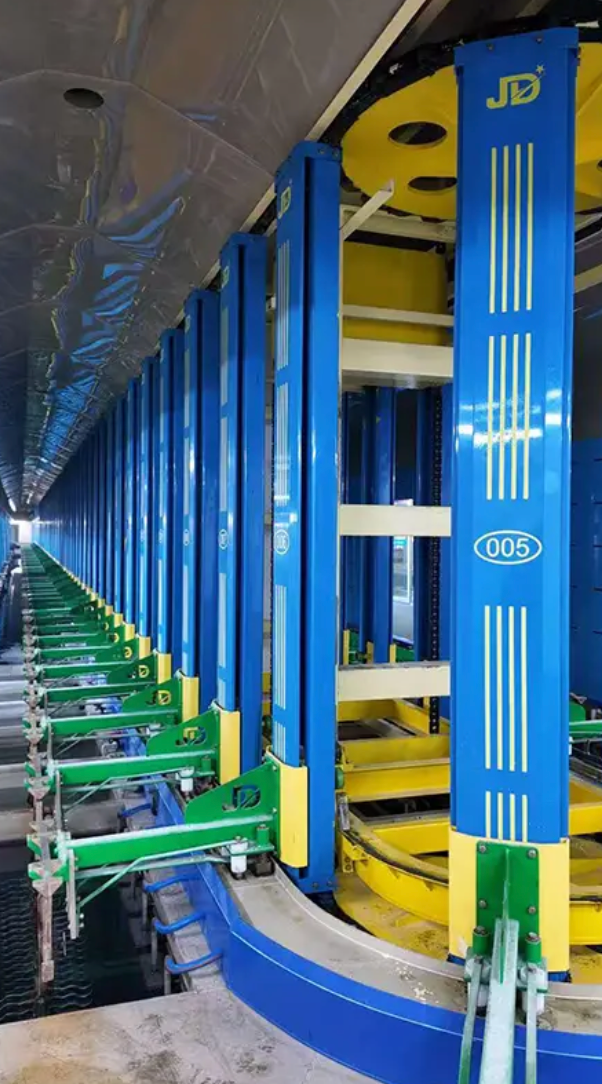
When budgets tighten, vertical lift systems often become a tempting target for value engineering. A lower bid looks attractive on the spreadsheet, but the real price shows up in a few months of continuous operation. Components chosen for purchase cost instead of duty cycle begin to wear unevenly, sensors drift out of calibration, and the first emergency callback usually costs more than the initial savings. What seemed like a smart trim becomes a recurring operational headache.
The hidden damage shows up in lost tenant patience and strained maintenance schedules. Every unplanned shutdown in a busy residential or commercial building cascades into missed deliveries, stalled moves, and angry phone calls. Facility staff get pulled away from preventive work to chase intermittent faults, while waiting for specialized parts with long lead times forces the building to run on reduced service. These disruptions never appear on the purchase order, but they pile up in overtime hours, temporary solutions, and eroded confidence from occupants.
Then there’s the liability that no one budgets for. Using non-certified controllers, skipping redundant brake tests, or pushing equipment beyond its rated cycles quietly transfers risk to the owner. A single code violation or passenger injury can trigger legal claims, higher insurance premiums, and a mandatory modernization that costs several times more than doing it properly from the start. The real price of cutting corners isn’t the cheaper part—it’s the loss of safety margin, legal exposure, and the trust that takes years to rebuild.
Reading Vendor Spec Sheets Like an Engineer, Not a Buyer
Most people flip straight to the headline numbers on the first page and stop there. An engineer starts at the back, in the fine print of test conditions and footnotes, because that's where the 25°C ambient temperature assumption, the 1% duty cycle, and the 'typical' values that only hold for five minutes are hiding. You learn to distrust any spec that doesn't explicitly state how it was measured, under what load, and for how long before collapse.
The second habit is treating every maximum rating as a cliff edge rather than an operating point. A buyer sees '100V maximum input' and assumes it'll run fine at 99V all day. An engineer reads the derating curve, checks the thermal resistance from junction to case, and realises that at 85°C ambient with poor airflow, the safe ceiling is closer to 70V. You look for the graph that plots failure rate against stress, not the bullet point that says 'robust design'.
Finally, you cross-check the spec sheet against reality instead of trusting the logo at the top. Pull three different vendor datasheets for the same generic part and compare the missing graphs — one will omit output impedance over frequency, another won't show transient response, the third will hide the dropout voltage at cold temperature. That absence tells you more about where the component struggles than any marketing paragraph. Reading like an engineer means treating the spec sheet as a list of questions, not a certificate of performance.
Tank Dimensions and Rack Design: A Match Most Companies Miss
Tank drawings often list a nominal diameter and height, but the values that matter for rack clearance are the as-built dimensions—including weld caps, nozzle projections, insulation cladding, and even the slight ovality that comes from field erection. Rack designers who pull data straight from a datasheet end up with beams that sit too close to the tank shell or platforms that collide with a manway cover at full swing. The mismatch rarely shows up in 3D models because both sides work from the same generic file. It appears on site when a pipe spool won’t fit behind a stiffener ring or a walkway needs to be cut and re-drilled.
A better approach treats tank and rack as one physical system rather than separate packages. Before finalizing rack elevations, compare the tank’s as-built survey, insulation type, and nozzle orientation against the rack’s beam depth and column placement. Leave enough clearance for lifting lugs, level instruments, and future nozzle additions. Even two inches of overlooked thickness on a fireproofed support can force a entire platform redesign. Companies that close this gap early usually avoid the expensive field modifications and schedule slips that the rest of the industry accepts as normal.
Maintenance Habits That Keep Zinc Plating Lines Running Smoothly
A lot of downtime on zinc lines traces back to loose electrical connections, not failed rectifiers. Get in the habit of checking bus bar joints, anode saddles, and cable lugs during the morning walkthrough. A quick infrared thermometer pass across the rectifier cabinet and tank-side contacts will usually flag a hot spot long before it shuts the line down.
Bath chemistry shifts faster than most people expect, especially when production loads fluctuate. Run a simple titration for zinc metal and caustic at least once a shift, and pull a Hull cell panel weekly to watch for brightener or carrier breakdown. If the bath turns cloudy or the foam pattern changes, don't wait for the lab report—cut back on drag-in, skim the surface, and check the filter bags for channeling.
Mechanical upkeep matters just as much as chemistry. Worn rack hooks, frayed barrel danglers, and corroded anode baskets create resistance that leads to uneven plate thickness. Clean contacts with a wire brush, replace cracked insulators, and keep the tank rim free of built-up salts so drips don't creep back into the bath. Ten minutes of that each day beats an unplanned line stop.
Custom Engineering Without the Endless Back-and-Forth
Most custom engineering projects get stuck in a loop of vague requirements, delayed clarifications, and misaligned expectations. We cut through that by starting with a focused discovery session that captures not just the technical specs, but the real-world constraints and edge cases you face. Instead of weeks of email chains, you get a single, detailed proposal that reads like a working blueprint — clear enough to build from, flexible enough to adapt as your project evolves.
Our process replaces guesswork with structured communication. Every design decision is logged, every assumption is flagged, and every milestone has a concrete deliverable attached. You won't find generic status updates or surprise scope changes here. When something needs your input, you get a specific question with the context needed to answer in minutes, not days. That's how we keep the engineering momentum going without the friction of constant back-and-forth.
The result feels less like outsourcing and more like having an embedded team that already understands your product. We've refined this approach across dozens of build-to-spec projects, and it shows in the details: fewer revision rounds, faster handoffs, and documentation that actually helps your team maintain the solution later. You get custom engineering that fits your timeline and your tech stack — without the translation loss that usually comes with it.
FAQ
Start with their track record in plating shops similar to yours. Ask for references where the equipment handles the same part geometry and production volume, then visit if possible. Check whether they design and build the hoist, tanks, rectifiers, and controls in-house or just assemble components from others. The supplier should be able to explain how their vertical lift motion reduces drips, prevents cross-contamination, and keeps rack contacts clean. Look for clear documentation on load ratings, lift speed, and duty cycle instead of glossy marketing claims.
It is the heart of the system. A poorly designed hoist causes uneven immersion and withdrawal, which leads to thickness variation, burning on high-current-density areas, or bare patches in recesses. The lift should accelerate and decelerate smoothly, hold the rack steady without swinging, and allow fine speed adjustments for different part profiles. Pay attention to the guide rails, cable or chain redundancy, and limit switches. If the hoist drifts or jerks, your plating distribution will never be consistent no matter how good the chemistry is.
The tank linings, racks, and structural supports see constant exposure to acidic or alkaline solutions, fumes, and occasional splashes. Polypropylene and PVC are common for tanks, but welded polypropylene tanks with proper reinforcement outlast thin thermoformed liners. Racks should use copper cored with a thick PVC or plastisol coating, and the contact tips need regular stripping. Structural steel near the line needs a robust epoxy coating or stainless steel in critical load-bearing areas. Cheaping out on materials only moves the cost into downtime and rework later.
They often focus on the purchase price and ignore the cost of lost production from slow lift cycles or frequent breakdowns. Another mistake is buying a standard line without checking the maximum rack depth, part clearance, or anode placement for their actual parts. Some buyers underestimate ventilation and exhaust needs because zinc plating creates mist and hydrogen. Others skip asking about spare parts availability and lead times for hoist motors or rectifier boards. The biggest one is not involving the plating operators early in the layout review, so the line ends up awkward to load and maintain.
Ask them to break down the cycle into individual steps: load, transfer, immersion, plating time, withdrawal, drip time, rinse, and unload. Compare their plating time against Faraday's law calculations for your required thickness and current density. If the quoted cycle time assumes maximum current density but your parts have recessed areas that burn at high current, the number will be too optimistic. Request a video of a similar line running actual parts, or have them run a sample rack through a pilot line. Realistic cycle times include buffer for rack stripping and anode maintenance.
That depends on your part mix and future plans. Standardized systems cost less upfront, have proven designs, and spare parts are easier to source. They work well for job shops plating a wide range of small to medium parts. Custom engineering makes sense when you have unusually large parts, tight dimensional tolerances, high production volumes, or specific automation needs. The middle ground is a modular system that starts standard but allows adding stations, adjusting tank lengths, or upgrading controls later. Avoid customizing basic components just for the sake of it because it complicates maintenance.
Schedule weekly checks of hoist cables, chain tension, limit switches, and guide rollers. Keep a log of any unusual vibration or drift so you catch bearing wear before it damages the rack or tanks. Clean the bus bars and rack contacts regularly because zinc buildup increases resistance and heat. Inspect tank linings for cracks and leaks, especially around welds and fittings. Calibrate the rectifier and check anode baskets monthly. Train operators to report small issues instead of pushing through a shift with a faulty hoist, because a minor adjustment ignored today becomes a major repair next month.
The rectifier controls current density, which directly determines plating thickness distribution and appearance. For vertical lift systems, you want a rectifier with low ripple, especially if you run bright zinc or zinc-nickel alloys. High ripple causes rough deposits and poor covering power in low-current-density areas. Match the rectifier's voltage and amperage to your tank size, anode area, and maximum rack surface area. Look for units with remote control, ramp-up capability, and overload protection. A rectifier that is too small will force longer plating times, while one that is too large can burn parts if not properly controlled.
Conclusion
Before you sign off on a new vertical lift rack system, spend a week watching your existing line. Note where racks sag, where contacts arc, where operators struggle to load or unload. Those observations tell you more about your next purchase than any glossy brochure. When a vendor hands you a spec sheet, ignore the marketing bullet points and look for the numbers an engineer would check: rated load per flight bar, current density at full immersion, material thickness at stress points, and the exact alloy used for the copper bus. If those figures are missing or vague, walk away. Then measure your tanks—not just length and width, but freeboard height, anode-to-cathode spacing, and the true working depth under normal solution levels. A rack that doesn't leave at least six inches of clearance on all sides will scrape, arc, and wear out years early. Most companies fix this after the fact with costly tank modifications, which is avoidable if you design the rack around the tank, not the other way around.
Cutting corners on a vertical lift system usually means a lower upfront price and a much higher total cost. Thin steel frames bend under repeated lifting; undersized copper bus overheats and plates unevenly; cheap insulation cracks and creates stray current paths. All of that shows up as rework, rejected parts, and unplanned downtime. Instead, build maintenance into the daily routine: check lift guides for wear, clean contact surfaces weekly, and replace bushings before they develop play. A system that runs smoothly is one where operators can spot problems early. On the custom engineering side, you don't need endless back-and-forth if you come prepared with real data—your part weights, racks per hour, chemical bath specifics, and space constraints. A competent vendor will turn that into a workable design in one or two iterations. The right choice isn't about buying the most expensive rack; it's about matching the mechanical reality of your line with a supplier who asks the right questions before quoting a price.
Contact Us
Contact Person: hayyr
Email: [email protected]
Tel/WhatsApp: 8613082110525
Website: https://www.jundaelectroplating.com