

Top Rapid Prototyping Service Supplier for Fast and Reliable Prototyping
2026-11-16
Speed matters, but a prototype that arrives on time and falls short on quality is worse than no prototype at all. That’s the harsh reality many product teams face—until they discover ProtoMat. As a top rapid prototyping service supplier, ProtoMat has built a reputation for combining lightning-fast lead times with the kind of precision and durability you’d expect from a much larger operation. Here’s what makes them the go-to choice when your next breakthrough can’t wait.
Speed That Survives Tolerance Checks
Tolerance checks usually make people reach for the feed override. Slow everything down, take the measurement, nudge the offsets, then ramp back up. That rhythm wastes hours and kills throughput. The whole point here is to keep moving. The machine holds its accuracy at full cutting speed, so the inspection step becomes a formality rather than a forced pause.
That kind of speed isn't about raw horsepower. It comes from keeping thermal drift small, using rigid ways, and letting the controller anticipate direction changes instead of reacting late. When those things work together, there's no need to back off just to stay inside the tolerance band. The result is a setup that doesn't punish you for running it the way it was meant to run.
On a busy shift, that changes how people work. They load a part, hit cycle start, and trust the numbers that come back from the CMM. No more coasting through inspection and gunning it between checks. The pace stays consistent, and the scrap bin stays empty.
Your CAD File, Turned Solid Overnight
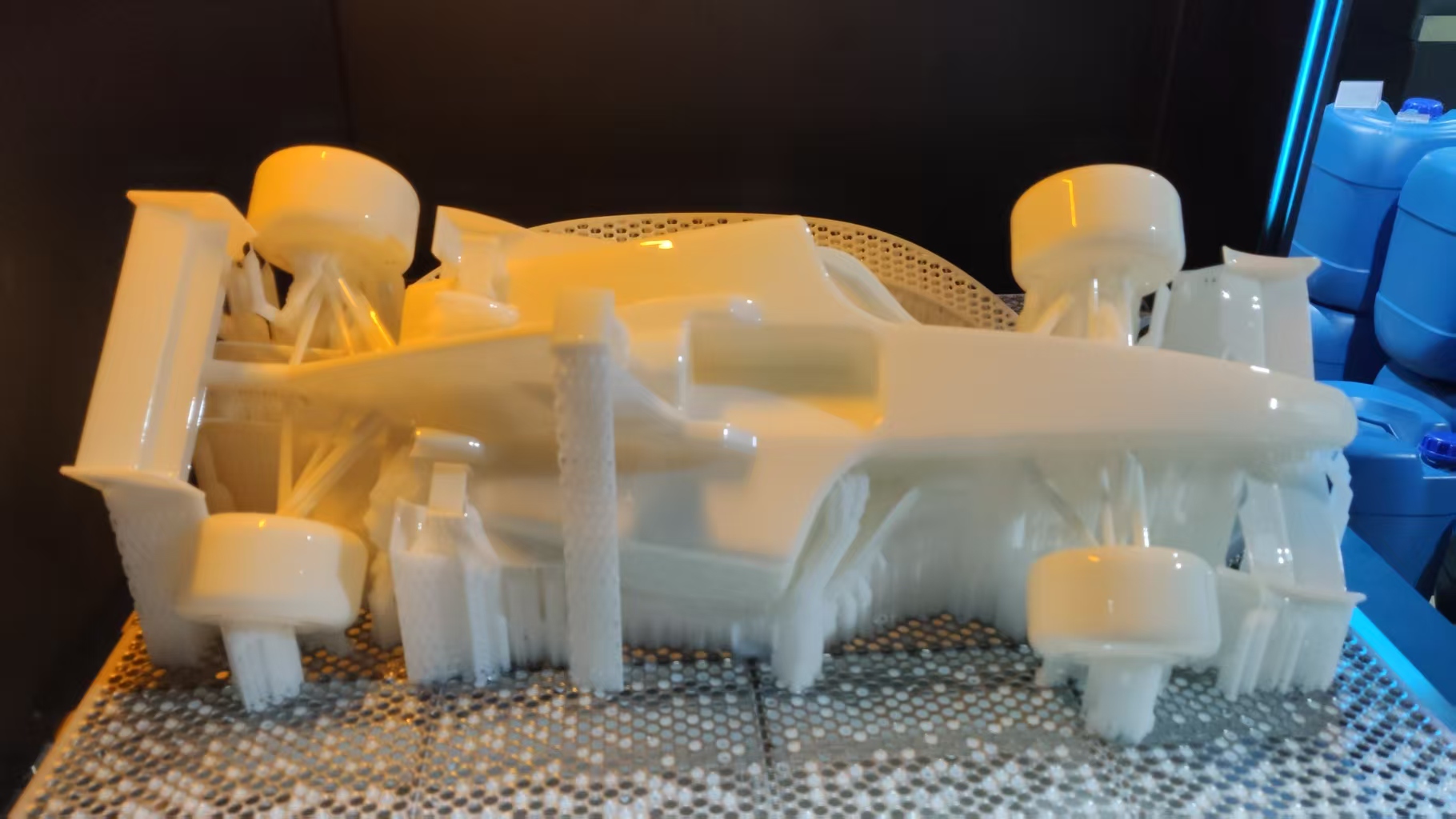
Upload your CAD file before you leave for the day, and by the time you're back at your desk, we've turned it into a physical part you can hold, test, and show off. No waiting weeks for prototypes — just a clean, accurate build that matches your design intent.
Whether it's a complex housing with internal channels or a simple bracket, our overnight turnaround doesn't cut corners. We print with industrial-grade materials, and every part goes through a quick dimensional check so what you see in the model is exactly what shows up in your hand.
From urgent client presentations to last-minute fit tests, this is the fastest way to move from screen to solid. Drop in your file tonight, and tomorrow you're iterating on the real thing instead of staring at a render.
Real Materials, Not Just Pretty Renderings
When a product page shows a soft leather texture or a brushed metal surface, it's easy to assume the real object will feel the same. But many brands rely on glossy 3D renders that look sharp on screen yet fall flat in your hands. Real materials carry weight, temperature, and tiny inconsistencies that no digital mockup can fully capture. That's why we photograph actual samples under natural and studio lighting, preserving the grain of wood, the weave of fabric, and the cool edge of machined aluminum as they truly are.
You won't find exaggerated reflections or over-saturated colors here. Instead, we focus on details that matter when you live with a product: how the leather creases near a stitch, the way matte glass resists fingerprints, or the subtle patina that develops on raw brass over time. These aren't accidental imperfections—they're proof of honest craftsmanship. By showing close-ups taken from real prototypes, we let the material speak without digital retouching that hides its nature.
This approach feels different because it respects your need to judge quality before buying. A render can make cheap plastic look like ceramic, but a well-lit photograph of the actual surface leaves no room for guesswork. We believe the best way to describe a material is to show it as it behaves under daily use, from morning light across a desk to the scratch test of keys in a pocket. That's the difference between a pretty picture and a promise you can trust.
Short-Run Production Without Six-Week Tooling Waits
Waiting six weeks for hardened tooling kills momentum. Short-run production works differently: aluminum or soft molds can be machined in days, not months, and still deliver hundreds to thousands of dimensionally stable parts. This approach removes the traditional gate between a frozen design and physical samples, letting engineering teams test fit, function, and even early market response without committing to high-volume steel tooling.
The real advantage shows up in parallel workflows. While a design is still being refined, low-volume runs can start on CNC machines or 3D printers, then shift to bridge tooling as the geometry settles. Because each step uses just-in-time tooling rather than long-lead hard tools, the total timeline compresses from sixteen weeks to under three. You pay a slightly higher per-part cost, but you gain weeks of iteration speed and avoid the sunk cost of a mold that may need changes after first articles.
Prototypes That Handle Real Stress, Not Just Showroom Glances
Look past the polished surfaces and you'll find prototypes built for the kind of abuse that never makes it into a brochure. We're talking about repeated slams, awkward drops on concrete, and the slow creep of fatigue that only shows up after thousands of cycles. These aren't display pieces—they're test mules wearing the scars of real-world validation.
Every hinge, latch, and load-bearing joint gets pushed until it complains. Then we push a little more. The goal isn't to see if it works once while a designer holds their breath; it's to know the mechanism still feels right after a year of daily use, a few accidental impacts, and the occasional bout of user frustration. That's the difference between a pretty mockup and a prototype you can trust.
We've had prototypes survive being run over by an office chair, dropped down a flight of stairs, and left in a hot car for a week—on purpose. If a design survives that kind of treatment and still opens, closes, or connects like it should, then it's earned the right to move forward. Showroom glances don't reveal flaws. Stress does.
One Supplier for Iterations, Finishes, and Last-Minute Tweaks
When a design shifts mid-project, waiting on three separate vendors can stall momentum. Working with one supplier that handles iterations, finishes, and last-minute tweaks keeps everything under a single roof. The team already knows your tolerances, material quirks, and past decisions, so small changes don't trigger a new round of onboarding.
That continuity shows up most clearly in surface finishes and fit adjustments. Instead of sending parts out for polishing or coating after each revision, the same crew adjusts the process on the fly. A satin texture, a tighter radius, a swapped fastener — these refinements are treated as part of the workflow rather than emergencies.
This setup also absorbs the inevitable late-stage surprises. When a prototype needs a quick chamfer or a batch arrives with a slight warp, one call resolves it without handoffs to unfamiliar shops. The result is fewer delays, cleaner communication, and a product that actually matches the final intent.
FAQ
For simple designs, we often ship within 24 to 48 hours using in-house SLA and SLS machines. More complex parts with multiple components might take three to five business days, but we always confirm the exact timeline after reviewing your files.
We cover the main ones: SLA for high-detail resin parts, SLS for durable nylon, FDM for cost-effective thermoplastics, and CNC machining for metal prototypes. If you're unsure which fits, our engineers will recommend the best option based on your part's function and tolerance needs.
Every part goes through a dimensional check against your CAD file before shipping. We also run surface finish and material density tests on request. For functional prototypes, we can provide material certifications or test reports so you know exactly what you're getting.
Yes. Plastics are done through SLA, SLS, and FDM, while metals are typically machined from aluminum, stainless steel, or brass. We also offer vacuum casting for short-run silicone molds if you need a few dozen parts in a production-like material.
Just send us the updated file, and we'll fast-track the revision. Most minor changes can be re-printed or re-machined within the same lead time as the original, and we won't charge a new setup fee if the change is small.
We stand behind our work with a free re-make if a part arrives with a defect that's our fault. We also have a no-questions-asked refund policy if the prototype doesn't match your approved drawing, though that's rare because of our pre-production checks.
We're not the cheapest, but our pricing is transparent and includes the engineering review, material, and shipping. You won't see hidden charges for file fixes or standard finishing. For repeat orders, we offer volume discounts that can cut costs by up to 20%.
Conclusion
When timelines collapse and tolerance checks still matter, a rapid prototyping partner that pairs speed with dimensional discipline becomes the difference between a missed window and a working part. This supplier turns your CAD file into a solid, testable component overnight—not a glossy visualization, but a physical piece machined or printed from the same engineering-grade materials you'll eventually use in production. Those prototypes are expected to survive more than a showroom glance: they get bolted into assemblies, loaded with real stress, and pushed until something speaks. That's where material honesty and process control separate serious providers from the rest.
The same service extends into short-run production, so there's no six-week wait for tooling or a separate vendor handoff when you need a few hundred units. Because iterations, surface finishes, and last-minute tweaks all live under one roof, feedback loops stay tight and miscommunication doesn't eat your schedule. You're not juggling three shops and a rendering studio—you're sending updates to a single team that already knows your part's history. Fast turns are empty promises without repeatability, so this supplier builds every quote and every revision around the idea that reliable means more than just on time; it means the part fits, functions, and holds tolerance when it arrives.
Contact Us
Contact Person: Joe
Email: [email protected]
Tel/WhatsApp: +8613799507208
Website: https://www.3dprotomat.com/