

Top Garage Gym Machines for a Complete Home Workout
2026-11-17
A garage gym only works if every piece pulls its weight. The trouble is, most home setups grow by accident—one machine for legs, another for cable work, and nothing that ties a full session together. This list is different. It covers the top garage gym machines that actually build a complete home workout, from strength to conditioning, without wasting floor space. Along the way, you’ll see how Yingruis equipment fits into that smarter setup.
Half Racks That Leave Room for the Car
Most garages turn into a game of inches once a car is parked inside, and the floor is usually the first casualty. Half racks solve that by claiming the unused stretch of wall above the hood instead of stealing space from the vehicle. Bins for seasonal gear, tools, and camping boxes sit overhead while the car still slides in with the mirrors cleared and the doors able to open.
The real advantage shows up in daily use. Because these racks stop short of the ground, you can still walk around the front of the car, pop the trunk, or open a passenger door without stepping over a shelf foot. They also keep bulky items off the concrete, away from tire grime and the dampness that collects near the garage floor.
Installation works best when you aim for a height that clears the tallest vehicle you park, plus a few extra inches for roof boxes or a lifted suspension. Heavy-duty brackets and solid wall anchors matter more than the shelf material itself, since the load hangs above something you would rather not dent.
Adjustable Dumbbells Without the Rack Sprawl
Adjustable dumbbells used to mean a separate rack taking up permanent floor space. The newer designs eliminate that problem entirely, combining a compact cradle with the adjustment mechanism itself. You get the weight range you need without the sprawl, and the whole setup tucks against a wall or slides under a bed when not in use.
Because the stand is minimal, the visual weight of your training area drops quickly. Instead of bulky steel shelves, these systems keep the plates nested inside the base, so the footprint stays about the size of a single shoe box. That makes them practical for apartments, garages, or any corner where space is already tight.
What really stands out is how little friction the compact layout adds to your routine. The dumbbells sit ready to grab, the dial or slide mechanism clicks through weights in seconds, and there is no second piece of hardware to move or clean around. The rack sprawl disappears, but the smooth transitions between sets remain.
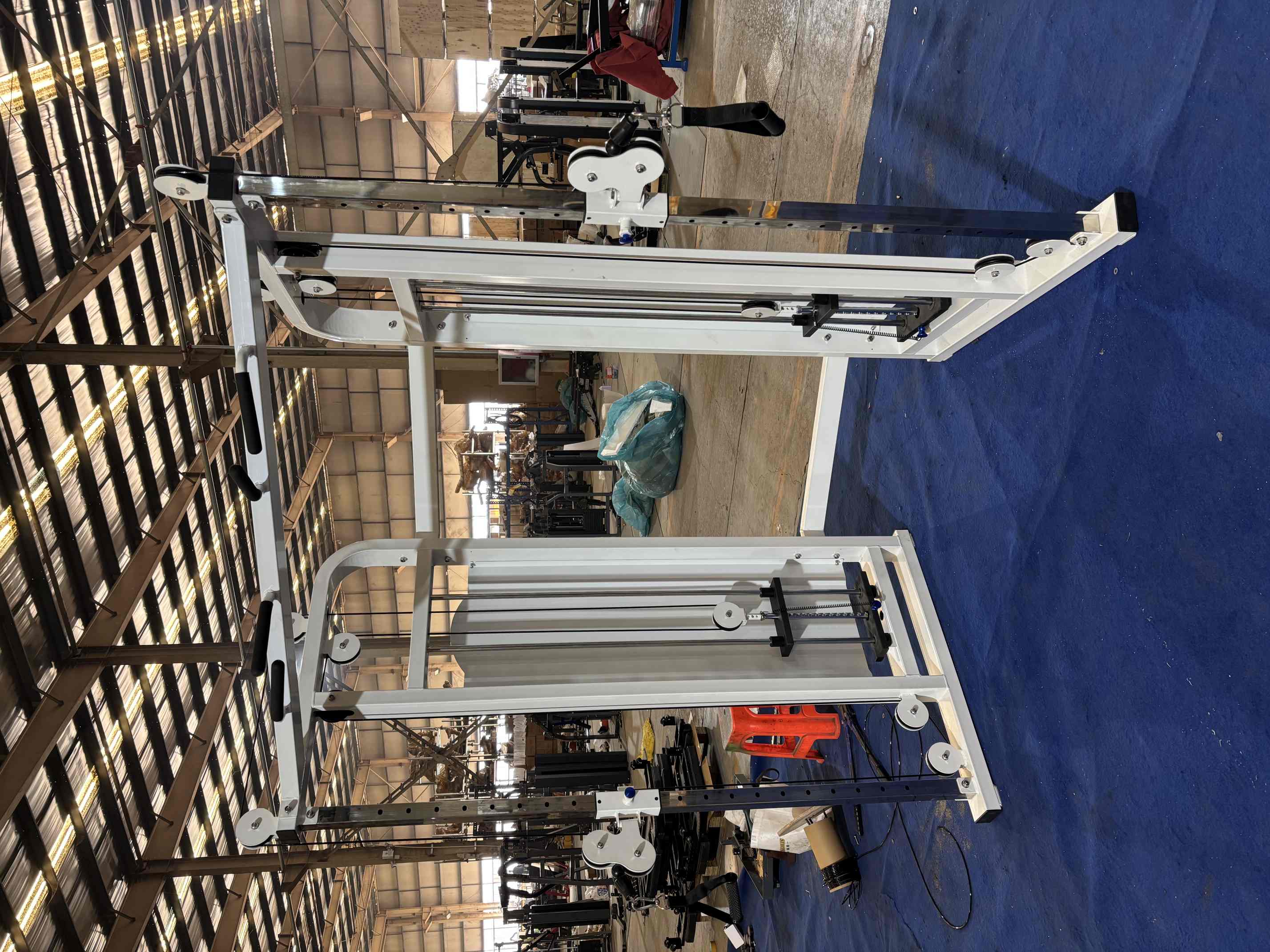
Cable Towers That Fill What Free Weights Miss
Free weights demand a lot of coordination and balance, but they also let momentum take over when fatigue sets in. A cable tower keeps the load on the muscle through the entire range of motion, so there is no easy half rep near lockout. You can feel the difference most in moves like flyes, lateral raises, and triceps pushdowns, where dumbbells often lose tension at the top or bottom.
The adjustable pulley positions also open up angles that fixed benches and barbells do not naturally offer. Instead of being locked into pressing straight up or rowing from a bent-over stance, you can set the handle low, mid, or high and shift your body until the resistance lines up with how your joints actually move. That flexibility is useful for working around cranky shoulders or elbows without turning every session into a rehab routine.
Another quiet advantage is that cable stacks let you change loads quickly and train closer to failure alone. Dropping a heavy dumbbell after a final rep is not always an option, but releasing a cable handle back to the stack is far more controlled. This makes cable towers a practical bridge between raw strength work and the higher-rep isolation that builds size without beating up your joints.
Benches Stable Enough for Heavy Presses
Heavy presses punish weak benches in ways that a static load rating never reveals. The frame has to absorb sudden point loads, vibration, and the occasional off-center part without twisting. Look for fully welded steel frames with diagonal bracing rather than bolted sheet-metal legs. A wide stance and a thick top plate do more for real-world stability than a high claimed capacity on a spec sheet.
The connection between the legs and the top is where most failures start. On a bench meant for a heavy press, those joints should be gusseted or welded along full seams, not just tacked at the corners. Adjustable leveling feet with a large contact patch help settle the bench on uneven floors, so the press does not rock forward mid-stroke. If there is any flex under load, even a few millimeters, it will show up as misalignment in the finished piece.
Mass also plays a role that is easy to underestimate. A heavier bench with thick-walled legs and a solid top will naturally dampen vibration and resist walking across the floor during repetitive work. If you can, bolt the bench to the floor or add a lower shelf loaded with tooling, because that extra weight low in the frame keeps the whole setup calmer when the press is working hard.
Cardio Machines That Fold or Roll Away
Space is often the biggest obstacle between you and a consistent workout routine, especially if you live in an apartment or share a small home gym. That's where cardio machines that fold or roll away earn their keep. Instead of dedicating a permanent corner to a bulky treadmill or elliptical, you can pull one out for a session, then tuck it against a wall or into a closet when you're done. The best designs use folding decks, compact footprints, and transport wheels that actually work on carpet, not just showroom flooring.
What separates a genuinely convenient option from a gimmick is how smoothly the storage process feels. A good folding treadmill, for example, should let you lift the running deck with one hand and have a hydraulic assist that prevents it from slamming down when you release it. Rolling models rely on front-mounted wheels that let you tip the machine like a hand truck, but you'll want to check the weight before assuming it's easy to move solo. Some under-desk walking pads are light enough to slide under a sofa, while heavier full-size machines may need a dedicated spot even when folded.
Portability never has to mean sacrificing intensity. Look for models that keep a stable base during sprints or incline work, with a folding mechanism that locks firmly in place when open. A few well-known examples include folding upright bikes with a slim profile and compact rowers that roll into a corner. Just remember that the machine still needs clearance around it while in use, so measure both your workout area and your planned storage nook before you buy.
Barbells and Plates Worth the Floor Space They Use
Most home gyms fail not from a lack of equipment, but from gear that quietly turns into clutter. A barbell and a stack of plates earn their place only when they pull double duty across strength cycles, not just on leg day. Look for bars with a moderate knurl depth that feels secure without shredding your hands, and plates with slim profiles that let you load heavier without needing a forklift to move them. If you can't deadlift, press, and front squat with the same setup, it's probably taking up more room than it gives back.
Rubber-coated or urethane plates are worth the extra upfront cost if you train in a shared space, since they protect both the floor and your hearing. But don't fall for the myth that you need a full Olympic set from day one. A solid 20kg bar, four 20kg plates, a pair of 10s and 5s, and two change plates will cover more programming than most people realize. The real test is whether you reach for them when the workout gets hard, not whether they match a color scheme.
What separates a permanent fixture from a regret purchase is how often it gets chalked up. Bars with quality bushings or bearings spin smoothly enough for cleans, while a basic bushing bar is fine for slower lifts but feels dead overhead. Plates with grips molded into the edges make loading and unloading safer, especially when you're tired. If the geometry and surface texture feel right to your hands, you'll find reasons to lift. If not, that corner of the room becomes a very expensive coat rack.
FAQ
A power rack with a pull-up bar usually becomes more valuable than any single-purpose machine. Add a bench that adjusts from flat to incline, a barbell, and a set of rubber plates, and you can train squats, presses, rows, hinges, and loaded carries without constantly rearranging the space.
It can cover a lot of movement patterns, especially if the unit has adjustable pulleys and enough room to step back. That said, heavy lower-body work like squats and deadlifts is harder to replicate with cables alone, so most people still end up wanting some kind of rack and free-weight option nearby.
Adjustable dumbbells paired with a compact bench and a short barbell often work better in limited floor space than a dedicated leg press. You can load goblet squats, lunges, Romanian deadlifts, and step-ups without needing a long runway, and everything can be stored against a wall when the session is over.
It depends on what kind of conditioning you actually stick with. A rower or an air bike takes up less room than a treadmill and doubles as a solid warm-up tool. If strength is the main goal, those two tend to be more practical than large machines that sit unused most of the week.
Look for racks with shorter uprights or ones that can be bolted to concrete, and check the highest point of any pressing movement before buying. Wall-mounted plate storage, fold-back racks, and low-profile benches help keep the center of the floor open for lifting without making the space feel cramped.
Thick rubber mats, a good overhead light, a mirror for checking depth and bar path, and a large fan usually matter more than people expect. Wall hooks for bands and belts, plus a small shelf for chalk and clips, keep the floor clear and make the space feel less like a storage closet.
For most people, dependable free weights and a solid rack hold up better than cheap multi-gyms that wobble under load. A used barbell and quality plates will stay useful for years, while a bargain machine with plastic parts often limits progression and gets harder to sell later.
Conclusion
A garage gym only works if every square foot earns its keep, and that starts with choosing a half rack instead of a full cage when the car still needs to fit. The best half racks give you solid safeties and pull-up options without turning the whole space into a steel maze. Pair one with a bench that doesn’t wobble under heavy presses, and you’ve got a setup that handles squats, bench work, and overhead pressing without constant rearranging. For barbells and plates, the trick is being honest about what you’ll actually load: a solid power bar and a few pairs of bumper plates will cover more ground than a cluttered weight tree full of sizes you rarely touch.
Where free weights leave gaps, a compact cable tower earns its footprint quickly. It gives you rows, flyes, triceps pushdowns, and rotational work that barbells simply can’t replicate, and many units now tuck into a corner without demanding a dedicated room. Adjustable dumbbells solve the rack sprawl problem by replacing a dozen fixed pairs with one dial-and-go set, so you can move from drop sets to heavy rows without tripping over rubber. When cardio needs to live in the same space, skip the bulky treadmill and look for a folding model or a rower that rolls upright against the wall. None of this means sacrificing training quality; it just means the garage stays usable for parking, storage, and hard workouts all at once.
Contact Us
Contact Person: Owen Wu
Email: [email protected]
Tel/WhatsApp: 86-15376736259
Website: https://www.yingruisfit.com/