

Top FWA Solutions: Unlocking Next-Gen Wireless Connectivity for Businesses and Homes
2026-05-15
The demand for seamless, high-speed wireless connectivity is reshaping how businesses operate and families connect. Fixed Wireless Access (FWA) has stepped into the spotlight, promising fiber-like performance without the hassle of cables. But with so many solutions flooding the market, which ones truly deliver next-gen experiences? Discover the top contenders driving this revolution—and learn how IPLOOK is engineering breakthroughs that stand out from the crowd.
Why Fixed Wireless Access Is Redefining Business Connectivity
Gone are the days when robust business internet meant waiting months for fiber trenching or settling for sluggish DSL. Fixed Wireless Access (FWA) cuts through that by beaming high-speed signals from nearby towers straight to a compact receiver on your building. The real shift is in speed to service—a site can go live in days, not quarters. For warehouses tucked in industrial parks or pop-up retail spaces where wired options are limited, FWA turns a connectivity dead zone into a fully operational hub without a single backhoe in sight.
Beyond fast turns, FWA introduces a new kind of network elasticity. Bandwidth can flex with demand, so a seasonal spike in traffic or a sudden pivot to hybrid work doesn’t choke the connection. It’s not just about raw throughput either; modern FWA platforms, especially those riding on 5G infrastructure, deliver the low latency that real-time collaboration and cloud applications demand. Companies are mixing FWA into SD-WAN fabrics, using it as a primary or failover link that rivals wired reliability while side-stepping single-provider lock-in.
The cost dynamics flip traditional thinking on its head. Instead of sinking capital into construction and leased lines, businesses pay a predictable subscription built on a wireless edge. Savings on installation alone free up budget for other digital initiatives, and the service-level agreements now common for FWA plans give IT teams confidence it’s not merely consumer-grade connectivity. For growing firms, that means a branch office in a new market can stand up with enterprise-grade connectivity overnight—and reallocate resources just as fast when needs change.
Home Internet Without the Cables: The FWA Advantage
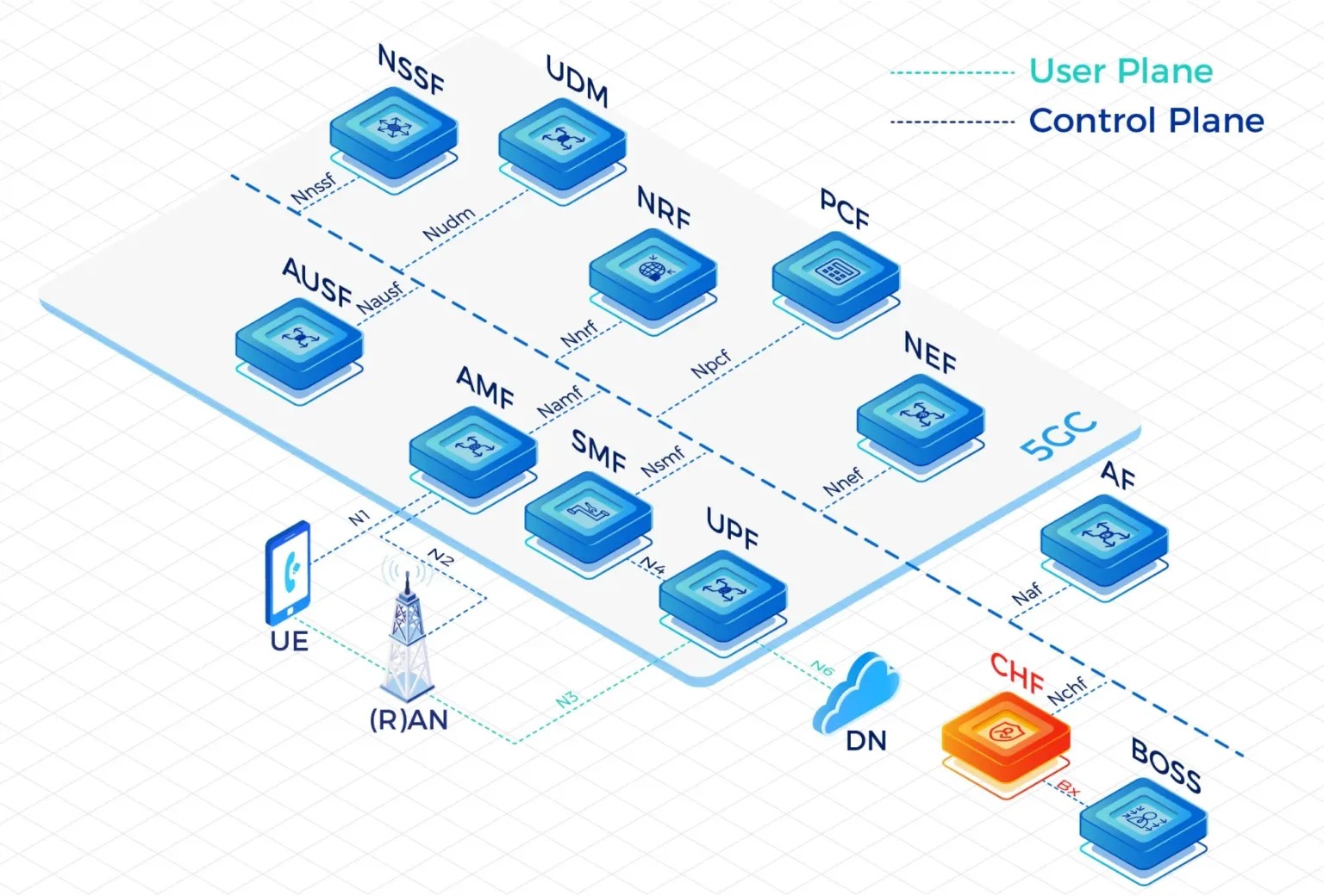
Forget about waiting weeks for a technician to dig up your yard. Fixed wireless access (FWA) delivers broadband straight to your home using radio signals from a nearby tower, so setup is often as simple as plugging in a receiver. It’s a game-changer for anyone tired of navigating cable monopolies or living where fiber hasn’t reached.
The real perk? You’re not sharing a congested line with your entire neighborhood. While cable bandwidth gets divided among households, FWA connections can be more consistent because the signal is beamed directly to you. That means smoother streaming, clearer video calls, and less lag when you’re gaming late at night.
It also opens up possibilities that traditional providers can’t match—like quickly scaling capacity in underserved areas or offering flexible plans without multi-year contracts. With 5G backing the latest FWA setups, speeds are rivaling wired options, making it a quiet revolution for home internet that doesn’t depend on a physical last mile.
Breaking Down the Tech: How Next-Gen FWA Handles High Demand
Next-generation Fixed Wireless Access takes a fundamentally different approach to managing network congestion. Instead of relying solely on traditional spectrum allocation, it employs dynamic beamforming that directs concentrated signals precisely where they're needed. This means that during peak hours, the system can instantly shift resources to overloaded sectors, maintaining stable connections without the usual slowdowns. The technology essentially creates multiple virtual lanes within the same frequency band, allowing data to flow efficiently even when thousands of users are online simultaneously.
Another key ingredient is advanced Quality of Service mechanisms that work at the application layer. The network intelligently identifies traffic patterns in real time—whether it's a latency-sensitive video call or a latency-tolerant software update—and prioritizes accordingly. This granular traffic management ensures that high-demand activities like 4K streaming and cloud gaming remain smooth, while background tasks like file syncing wait their turn. The result is a seamless user experience that feels like a dedicated wired line, even though the signal travels through the air.
Beyond just handling more devices, next-gen FWA platforms incorporate proactive load prediction. By analyzing historical usage trends and combining them with machine learning, the network can anticipate demand spikes—such as during a major sports event or a product launch at a specific location—and preemptively allocate additional capacity. This forward-thinking approach eliminates the reactive scramble that plagues older fixed wireless systems, turning potential bottlenecks into non-events.
Rural to Urban: Closing the Digital Divide with FWA
The patchwork of connectivity across regions creates a stubborn divide—one side streaming 4K on a whim, the other struggling to load a webpage. Fixed Wireless Access chips away at this imbalance by delivering broadband through radio signals, bypassing the need for costly fiber builds. A receiver mounted on a rooftop can pull in capacity that rivals wired services, making geography less of a destiny.
Deployment speed sets FWA apart. With no need to bury cables along every backroad, providers roll out service in weeks rather than years. The technology leans on cell towers already dotting the landscape, so coverage spreads outward from existing infrastructure. That means a village school or a remote clinic can jump from near-zero access to multi-megabit speeds almost overnight, transforming daily life without waiting for a multi-year construction project.
The human upshift is tangible. Farmers monitor soil sensors in real time, families attend telehealth appointments without driving hours, and artisans sell goods on global markets. Each connection strengthens local economies and anchors younger generations who might otherwise leave for blander but better-connected cities. In this way, FWA doesn't just close a gap—it rewires the map of opportunity.
Future-Proof Networks: Scalability and Flexibility of FWA
Fixed Wireless Access thrives on its inherent ability to sidestep the limitations of trench-bound infrastructure, offering carriers a rapid deployment model that scales with demand rather than ahead of it. When a neighborhood suddenly needs more capacity, adding sectors or upgrading radios can happen in days, not months—no digging up streets required. This granular scalability means network investments track real usage patterns, avoiding both stranded capital and congestion hotspots. The technology’s modularity extends from rooftop to core: as spectrum holdings expand or new antenna designs emerge, operators can layer in improvements without ripping out the foundation. In essence, FWA turns the network into a living platform, one that breathes with the rhythms of human settlement and commerce.
Flexibility in FWA is not just about deployment speed but also about diversity of application. The same architecture that serves a rural household with basic broadband can be tuned to deliver symmetric gigabit speeds to a downtown business, often using identical or minimally reconfigured equipment. By decoupling access from the physical medium, providers can pivot from residential to enterprise offerings, adjust to seasonal demand fluctuations, or even repurpose assets for temporary events—all without rewriting contracts with fiber owners. This agility is a strategic moat, insulating operators from the rigidity that plagues wireline competitors when market dynamics shift unexpectedly.
Looking ahead, the marriage of FWA with cloud-native core networks and open RAN principles unlocks a combinatorial explosion of capabilities. Upgrades become software pushes rather than truck rolls, and network slices can be instantiated for specific verticals—think dedicated low-latency channels for industrial IoT or isolated high-security segments for government use. The result is a network that not only adapts to tomorrow’s demands but actively shapes them, transforming from a static pipe into a responsive, programmable asset. This trajectory ensures that FWA investments remain relevant long after the current hardware generation reaches obsolescence.
Comparing Leading FWA Providers: What Actually Matters in 2025
When you're lining up FWA providers side by side, the instinct is to obsess over speed and coverage maps. But those are table stakes now. The real differentiators in 2025 come down to how a provider handles the gritty edge cases: consistent performance during peak hours, transparent traffic management, and whether the hardware they give you can actually hold a signal in a building with actual walls. A lot of providers promise gigabit speeds, but if your connection crumbles when everyone on your block starts streaming at 9 PM, those peak numbers mean nothing.
Another angle that doesn’t get enough airtime is the user support experience. Some providers still treat FWA like a secondary offering, routing you through generic call centers that don’t understand fixed wireless quirks. The ones worth your money have dedicated teams who can remotely diagnose signal issues, suggest optimal device placement, or even roll a truck if your external antenna needs realignment. It’s the sort of thing you don’t appreciate until a firmware update leaves your connection in a coma on a Friday evening.
Finally, keep an eye on how openly a provider discusses their network integration plans. With spectrum allocations shifting and 5G standalone cores becoming more common, the best FWA services are actively future-proofing—not by slapping “5G” on the box, but by explaining how they’re using mid-band spectrum, handling interference, or phasing in network slicing for more stable latency. If they can’t give you a straight answer about their roadmap, they’re probably hoping you won’t notice when your “unlimited” data suddenly feels a lot more limited two years in.
FAQ
Fixed Wireless Access uses radio signals from a nearby tower to deliver internet directly to a fixed antenna at your location, skipping the cables that cable or DSL rely on. It’s a wireless last-mile link that can be set up without digging up streets or pulling wires to a building.
Many are drawn to quicker installation, competitive speeds, and the ability to bypass aging copper networks. It’s especially appealing in underserved areas, but urban users also like the flexibility and freedom from long-term contracts sometimes tied to wired providers.
5G and enhanced 4G are the main engines, using higher-frequency spectrum and advanced antenna techniques like beamforming. This lets providers offer multi-gigabit speeds, lower latency, and consistent performance that rival fiber—all without a physical cable to the premises.
Modern FWA gear copes surprisingly well with hills and foliage thanks to non-line-of-sight technologies and robust signal processing. Heavy rain or snow can cause brief signal fades, but adaptive modulation and mesh-like routing often keep connections stable where traditional wireless might fail.
Absolutely. With the right plan, FWA easily handles multiple 4K streams, large file transfers, and HD video calls simultaneously. Latency is low enough for real-time collaboration, and providers often engineer the network to prioritize time-sensitive traffic, so meetings don’t stutter.
A technician or self-install kit mounts a small receiver on an outside wall or roof with a clear view toward the tower. Inside, a modem or router plugs in, and once it’s synced, you’re online. Most installs take under an hour, and there’s no invasive construction needed.
It’s often more affordable month-to-month than fiber in competitive markets, especially when you factor in installation savings. Cable can be cheaper in promo periods, but FWA’s straightforward pricing, no data cap options, and lower infrastructure overhead keep the total cost attractive for many users.
Conclusion
Fixed wireless access is reshaping how businesses and households get online, cutting the cord without sacrificing speed or reliability. For enterprises, it's a game-changer—standalone 5G links can rival fiber, with the added perk of rapid deployment and inherent redundancy that keeps operations humming even when wired lines falter. Homes, too, are seeing real gains: FWA beams broadband straight to a rooftop antenna, dodging the headaches of trenching and last-mile bottlenecks. The tech behind it is smarter than most realize, with carrier aggregation and massive MIMO handling dense usage zones, while dynamic spectrum sharing lets networks breathe under pressure. This agility means a single cell can serve a crowded apartment block as deftly as a scattered rural community, bridging connectivity gaps that cables could never cost-effectively close.
Beyond coverage, forward-thinking providers are baking scalability into their architectures—software-defined cores and edge computing nodes make it simple to dial capacity up or down as demand shifts. In 2025, the real differentiators aren't just speed tiers or map coverage; it's how well a solution meshes with existing IT, offers transparent latency figures, and locks in service-level agreements that actually mean something. The best FWA doesn't just fill a gap—it future-proofs connectivity, turning wireless from a fallback into a first-choice option for businesses chasing agility and families wanting dependable, no-nonsense internet.
Contact Us
Contact Person: Shimmy
Email: [email protected]
Tel/WhatsApp: 85253392231
Website: https://www.iplook.com