

Top Cleanroom Equipment for Optimal Contamination Control
2026-08-30
Achieving optimal contamination control in cleanrooms isn’t just about following protocols—it’s about choosing equipment that works silently and reliably in the background. From advanced HEPA filtration to precision air showers, the right tools make all the difference between a controlled environment and a compromised one. In this article, we explore the top cleanroom essentials that industry leaders rely on, and how innovative solutions from GENO Pharmatech are setting new benchmarks for cleanliness and efficiency.
Airflow Patterns That Quietly Decide Cleanroom Performance
Laminar flow gets most of the credit, but it is the subtle shifts between unidirectional streams, return-air placement, and the tiny vortices around door edges that often dictate whether a cleanroom stays within spec. A perfectly aligned HEPA ceiling can still underperform if the exhaust registers create a low-pressure pocket that pulls dirty air across a critical workstation.
Turbulence is not always the enemy. In ISO 7 or ISO 8 spaces, well-planned mixing dilution can mask the small eddies that form behind equipment or personnel. The real trouble starts when those eddies become stable enough to trap particles, creating invisible hot spots that survive dozens of air changes per hour. Watching smoke studies reveals these zones instantly, but they are easy to miss in a routine particle count.
Pressure cascades do the quiet work of directing airflow from cleaner to dirtier zones. A few pascals of differential can keep contaminants from wandering through a pass-through, yet the same cascade can be undone by a poorly sealed ceiling tile or a door left ajar for too long. Cleanroom performance, in the end, is less about the fan power and more about how consistently the air is persuaded to go where it should.
HEPA Filters Aren't Enough Until You Ask These Questions
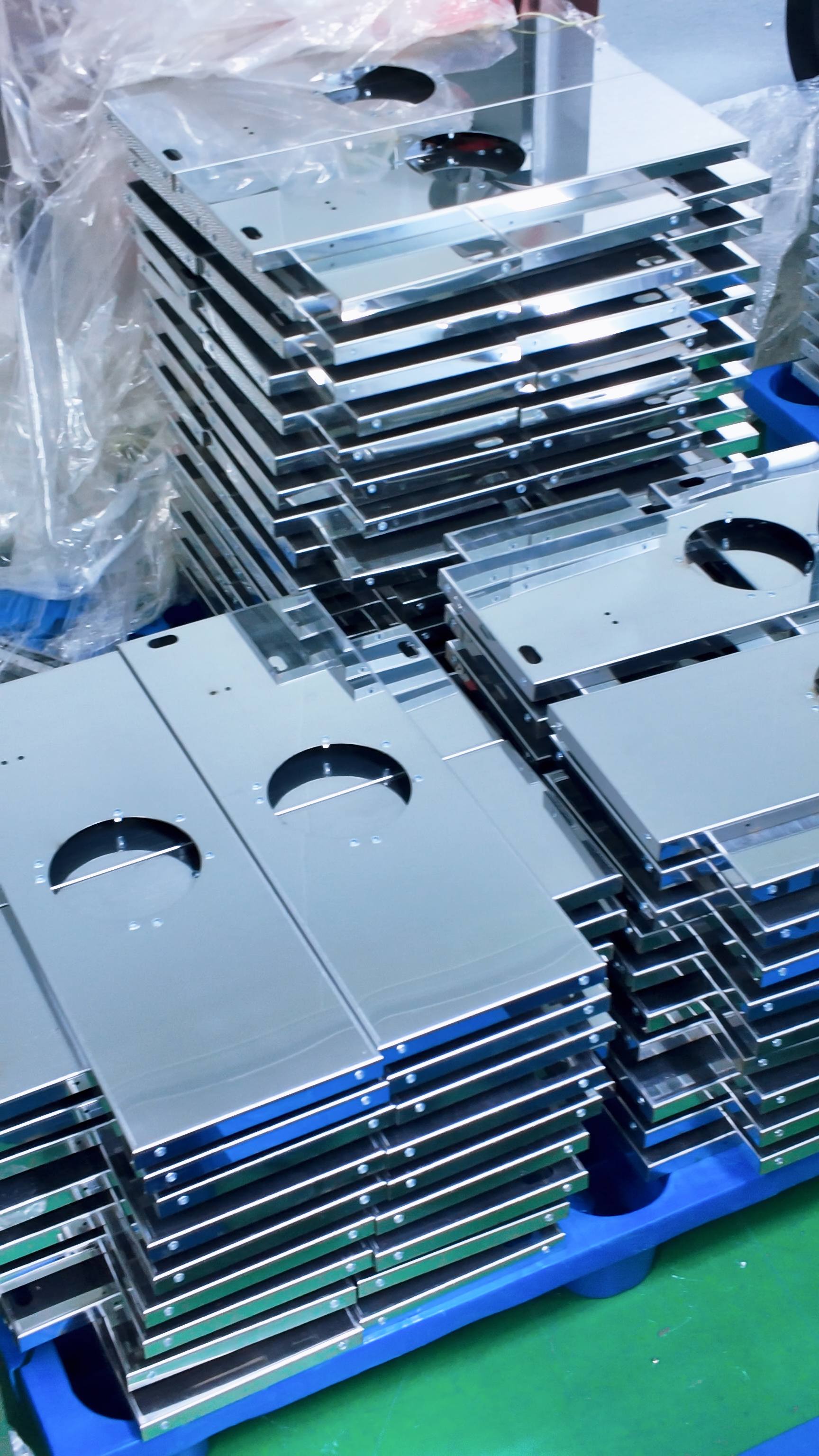
Most people assume that buying a HEPA air purifier automatically solves their indoor air quality problems. But the reality is messier. A filter can only capture what actually reaches it, and that depends on how air moves through your space, where the unit sits, and whether the filter still has life left in it. Without asking a few pointed questions first, you may end up with a machine that runs all day while the particles you care about settle into your carpet and lungs.
Start by checking the clean air delivery rate for the size of your room—not the marketing number on the box. A unit rated for 300 square feet won't do much in an open-plan living area three times that size. Then consider placement. Tucking the purifier behind a couch or against a wall starves it of airflow. And don't ignore filter replacement schedules; a clogged HEPA filter stops being HEPA-like long before the indicator light tells you. Ask whether the unit's pre-filter is washable and how much replacements actually cost over a year.
Finally, think about what you're trying to remove. If odors and gases are the problem, a HEPA filter alone is nearly useless—you need activated carbon or another sorbent stage. If you live in a humid climate, mold spores will grow on a damp filter and then get blown back into the room. The point isn't to distrust HEPA technology, but to treat it as one piece of a system that only works when you match it to your real conditions, habits, and budget.
Air Showers as Habits, Not Just Hardware
Air showers often get treated as a box you pass through, a piece of stainless steel bolted to the floor. But that framing misses what they actually become in a cleanroom: a checkpoint where people recalibrate their attention. The hardware matters less than the pause it forces. Once the doors close and the jets start, there's no multitasking, no phone, no conversation. That forced stillness is the real mechanism. It turns a requirement into a ritual that primes people for the room ahead.
In facilities where contamination control works, the air shower has stopped being a gadget and become a habit. Operators don't think about whether to use it. They just do, the way a cook washes hands before touching food. That shift doesn't come from a better blower or a smarter sensor. It comes from how the space is introduced to new staff, how supervisors model the behavior, and how often the equipment is checked so it never gives people an excuse to skip it.
The most effective cleanrooms treat air showers as a boundary with a rhythm. People learn the cycle—enter, stand straight, raise arms, turn, wait for the airflow to finish—until it's muscle memory. When that happens, the hardware disappears into the background. The cleanroom's first line of defense isn't the door or the nozzles. It's the daily, unthinking routine of the people who pass through.
Tacky Mats: The Low-Tech Barrier That Still Wins
Tacky mats are often overlooked because they have no sensors, no software, and no moving parts, but they still strip a surprising amount of particulate from shoe soles and cart wheels at cleanroom thresholds. A properly maintained mat catches debris that HEPA filters never see, simply by stopping it at the door before it can become airborne. The real trick is replacement cadence: a mat that looks dirty may already be losing peel-away layers unevenly, so teams that track foot traffic and rotate mats by zone get far more consistent results than those that wait for visible grime.
For a low-tech barrier, tacky mats demand a bit of discipline. They only work if people actually step on them—multiple full steps, not a quick toe tap—and if the surrounding floor stays clean enough that the mat doesn't sit like an island in a sea of dust. Some facilities pair mats with a visual cue, such as a colored border or a step-off zone, which nudges visitors into the right walking pattern without adding another layer of training. That combination of simple geometry and a little behavioral design keeps them competitive against far pricier alternatives.
In cost-per-use terms, tacky mats still win because each peel costs pennies compared to disposable shoe covers or more elaborate sticky flooring replacements. But their real value shows up in particle counts near entryways: even a modest drop in floor-level contamination can keep gowning rooms cleaner for longer. This is why many cleanroom managers keep returning to a product that hasn't changed much in decades—it requires no updates, no calibration, just a steady pair of hands and a schedule.
Cleanroom Garments: Why Zippers and Cuffs Matter More Than Posters
When people walk into a cleanroom for the first time, their eyes often land on the laminated posters pinned near the gowning area—step-by-step donning sequences, airflow diagrams, bold reminders about particle counts. Those visuals feel like control. But after a few hours inside, the real story of contamination risk hides in the seams and closures of the garment itself. A poster cannot stop a single skin flake from escaping through a faulty zipper or a loose cuff during a routine reach into a laminar flow hood.
Zippers are especially deceptive. Even a high-quality metal or coil zipper has tiny gaps between its teeth, and those gaps become traps for dead skin cells, textile fibers, and residual moisture. Every time an operator bends, twists, or sits, the zipper flexes and pumps those trapped particles into the clean zone. The same logic applies to cuffs. If a cuff sits loosely against the wrist, the natural bellows effect of arm movement draws contaminated air from inside the suit outward, directly toward the product or the critical surface. No amount of wall signage can compensate for that mechanical failure.
That is why seasoned cleanroom managers spend far more time inspecting zipper covers, storm flaps, and elastic cuff design than they do updating posters. A covered zipper with a self-locking pull and a snug, non-shedding cuff liner does more to protect the environment than any visual reminder. The next time a gowning audit comes up, skip the poster refresh and turn the garment inside out instead.
Particle Counters: Turning Cleanroom Data Into Daily Reflexes
Most cleanroom teams don’t need more data. They need the data they already collect to become second nature. When a technician checks the particle counter before transferring materials into the ISO 7 suite—not because a checklist says so, but because it feels like checking a rearview mirror—you’re seeing a reflex, not a task. That shift is what keeps small contamination events from turning into batch investigations.
Building that reflex usually means attaching particle readings to moments that already happen. A quick glance at the handheld counter after a gowning change, a one-line entry after equipment moves, a standing note on the shift board when the room recovers slower than usual. These aren’t formal reports. They’re small, repeated observations that teach your eyes what normal looks like, so abnormal stands out immediately.
The payoff is quieter than a certification pass. It’s the absence of late-night phone calls about a spike during fill-finish, the confidence that comes from noticing a rising baseline before it crosses an alarm, and a team that treats particle data as a daily rhythm rather than a monthly chore. Once that happens, the cleanroom stops being a place you monitor and starts being a place you read.
FAQ
HEPA and ULPA filters usually top the list. They trap particles down to 0.3 microns and even smaller for ULPA, so the air entering the room is already scrubbed clean. Without them, every other control measure would be fighting an uphill battle.
They’re not just a quick blast of air. A well-designed air shower uses high-velocity, filtered jets to dislodge loose particles from garments before a person steps into the clean zone. It reduces the load on the room’s filtration and cuts down the need for constant re-cleaning.
Yes, because the biggest risk often comes from materials, not people. Pass-throughs with interlocked doors let you move supplies in and waste out without breaking the pressure cascade. They also give you a surface to wipe down items before entry, which gowning alone can’t cover.
They catch particles from shoe soles and wheel treads at transition points. Many teams prefer disposable adhesive layers over older peel-off mats because they’re easier to maintain and you’re not constantly fighting with torn corners. It’s a simple, low-tech line of defense that still works.
Absolutely. If the fabric sheds or doesn’t fit snugly at wrists and ankles, you’re just moving particles around. Look for garments with tight weaves, sealed seams, and materials that are compatible with your cleaning process. People often underestimate how much skin flakes and cotton fibers contribute to particle counts.
Because you can’t manage what you can’t measure. A portable particle counter lets you spot-check areas where contamination spikes, like near equipment or doorways. Instead of guessing, you can trace the source and fix it before it becomes a batch failure.
Laminar flow hoods direct air in a uniform, unidirectional stream, usually downward or across the work surface. This sweeps particles away from the product rather than letting them swirl and settle. Regular ventilation keeps the room clean overall, but a hood creates a local "safe zone" for critical operations.
It’s usually worth it. A dedicated system gives you precise control over pressure differentials, humidity, and airflow patterns. Modifying a standard building system rarely gets you the stability needed for contamination control, and you end up spending more on fixes over time.
Conclusion
The true backbone of cleanroom performance isn't always the most visible piece of gear. Airflow patterns quietly determine whether particles drift toward product or get swept away, so understanding unidirectional flow and pressure cascades matters more than counting air changes. HEPA filters are often treated as a checkbox, but they only earn their keep when you ask pointed questions about seal integrity, face velocity, and leak testing frequency. Likewise, air showers become meaningful only when they're treated as a habit rather than hardware; a rushed cycle or bypassed entry compromises the gowning protocol. And tacky mats, low-tech as they are, still outperform many high-tech solutions at capturing shoe-borne contamination, but only if they're placed at every transition and actually replaced on schedule.
Garment discipline is another quiet differentiator. Zippers and cuffs are the most common failure points, so choosing the right fabric weave and teaching people to check closures before entering beats any motivational poster. Particle counters then bring the whole system into focus. Instead of logging data for audits alone, leading teams treat real-time counts as daily reflexes, adjusting activities the moment numbers trend upward. Optimal contamination control isn't about any single device; it's the interplay of airflow, filtration, entry rituals, floor barriers, garment details, and live monitoring that separates a stable cleanroom from one that merely looks clean.
Contact Us
Contact Person: Amy Yang
Email: [email protected]
Tel/WhatsApp: 008619330882686
Website: https://www.genopharmatech.com/