
Reliable Digital Bus Stop Signs: Smarter Transit for Modern Cities
2026-07-13
In today’s fast-paced urban centers, outdated bus stop signs often leave riders frustrated with guesswork and delays. Imagine a commute where real-time updates, arrival predictions, and service alerts are always within sight—that’s the promise of reliable digital bus stop signs. At the forefront of this transformation is zemso, delivering smarter transit solutions that keep cities moving efficiently. In this post, we explore how these innovative displays are reshaping public transportation and why they’re a game-changer for modern cities.
When the Bus Arrives, Your Phone Isn’t the Only Thing That Knows
The bus pulls up and a quiet signal ripples through the air—not just to your phone, but to a network of sensors embedded in the shelter, the payment kiosk, and even the traffic light down the block. Your transit app pings with an arrival time, but the street itself already adjusted: the crosswalk timer shifted, the shelter display flickered with the route number, and a low-energy beacon tagged your presence anonymously to help predict crowding on the next run.
Behind that seamless moment, a choreography of machine whispers unfolds. The bus broadcasts its identity and position over a dedicated short-range radio, while roadside units relay that data to transit hubs without ever touching the public internet. Your phone listens passively, grabbing only the nuggets it needs—no continuous tracking, just a handshake when the vehicle is near. Meanwhile, the infrastructure uses the same pulse to log headway adherence, trigger priority signals, and feed real-time adjustments into the schedule, all before you’ve even stepped aboard.
This isn’t about constant surveillance but about ephemeral awareness: devices and infrastructure exchanging just enough context to make the journey smoother, then forgetting. The system knows the bus is here, and your phone confirms you’re at the stop, but the data evaporates once the doors close. What lingers is only the improved rhythm of the route—fewer bunch-ups, less guesswork, and a commute that feels a little more like the city is paying attention to the people in it, not just the screens in their hands.
The End of “Is My Bus Ever Coming?”
Remember that old ritual? Stepping off the curb, craning your neck toward a hazy horizon, squinting at any vehicle that might be the 42. You'd check your watch, then your phone clock, then the faded timetable posted at the shelter—none of it helped. The waiting stretched on, filled with silent bargaining and a helpless, creeping certainty that you were stuck in a glitch in the universe where buses simply forgot to appear.
Now, pull out your phone and the mystery evaporates. A little icon glides along a map, updating every few seconds, telling you that your bus is seven minutes and three blocks away. Not a range, not a guess—a calm, precise fact. You can linger over your coffee, grab that extra napkin, stroll to the stop when it actually makes sense. The anxiety is replaced by a quiet control over your own minute and mood.
The question itself feels almost comical now, a relic from a less connected time. Real-time tracking rewired our patience and punctuality. That nagging inner voice that asked "Is my bus ever coming?" has been silenced—not by louder promises, but by a stream of data so reliable that we've forgotten we ever doubted.
Building Transit Infrastructure That Talks to Riders
Modern transit systems are moving beyond static signs and schedules. By embedding sensors and connectivity into bus stops, trains, and platforms, cities can create a responsive network that shares real-time updates directly with passengers. This shift turns infrastructure into an active participant in the journey, rather than a silent backdrop. Riders get a clearer picture of delays, crowding, or route changes, helping them make better decisions on the go.
The real magic happens when the system speaks the rider's language—figuratively and literally. Interactive kiosks, mobile apps, and even audio cues at stations can tailor information to individual needs, whether someone is a daily commuter or a first-time visitor. It's not just about pushing announcements; it's about building a two-way flow where feedback from riders helps refine the service. That on-the-ground insight makes the whole network smarter and more human-centered.
Smart Signs That Learn From the City’s Rhythm
Imagine street signs that don’t just stand there, stiff and unchanging, but actually breathe with the city around them. These aren’t your ordinary metal placards—they’re dynamic displays that tune into the urban pulse, adapting what they show based on real-time data from traffic flow, weather conditions, and even the movement of people on the sidewalks. In the early morning, they might guide commuters to the least congested routes; by midday, they highlight nearby lunch spots with short waits; and when a sudden downpour hits, they instantly switch to point toward sheltered walkways or transit stops. It’s signage that pays attention, learning the daily rhythms and occasional disruptions to offer up truly useful information when it matters most.
The magic lies in the subtle interplay between sensors, local data, and predictive algorithms that quietly crunch the numbers without any human intervention. Each sign becomes a node in a larger urban nervous system, picking up on patterns—say, that park exit that always gets swamped after a concert, or the intersection that mysteriously clogs up at 3 p.m. every Thursday. Over time, the system learns to anticipate these quirks and adjusts its messaging proactively, almost like a considerate local who knows the shortcuts. You might not consciously notice it, but you’d feel the difference: fewer moments of confusion, smoother journeys, and a city that seems to gently steer you away from hassle.
What truly sets this apart from older “smart city” gimmicks is the absence of a one-size-fits-all approach. Instead of bombarding everyone with generic alerts, these signs tailor their guidance to time, place, and even subtle shifts in crowd behavior. A sign near a university might prioritize bike-share availability during the academic year but morph into a tourist-friendly directory over summer break. The design is intentionally invisible—you experience the help without ever feeling watched or managed. It’s a quiet collaboration between technology and everyday life, where the city’s rhythm becomes a teacher and the sign, its attentive student.
Bridging the Gap Between Schedule and Reality
Schedules promise order, yet reality often delivers chaos. The gap emerges when planned timelines collide with unforeseen delays, shifting priorities, or underestimated complexity. Bridging this divide starts by recognizing that a schedule is a living document, not a rigid framework—it must adapt to circumstances without sacrificing core objectives.
Real alignment happens when teams treat discrepancies as feedback rather than failures. Instead of forcing reality to fit the plan, successful projects update the plan based on ground-level insights. This means regularly comparing actual progress against milestones, then adjusting resources or timelines before small drifts become unmanageable gaps.
Practical tools like rolling forecasts, buffer strategies, and daily stand-ups help sync intentions with outcomes. But the real bridge is cultural: encouraging honest communication about setbacks, rewarding proactive problem-spotting, and accepting that perfect adherence to a schedule is often a mirage. When everyone owns both the plan and its evolution, the gap shrinks from a chasm into a manageable crease.
A Digital Upgrade That Pays for Itself in Ridership
Transit agencies often hesitate when faced with the upfront costs of modernizing fare collection and passenger information systems. Yet, those that have taken the leap are discovering something remarkable: the investment comes back not in years, but in months, through a sustained surge in ridership. Riders respond to simplicity. When payment becomes a tap of a card or a phone, and real-time arrival data is reliably at their fingertips, the daily decision to leave the car keys behind gets easier.
The math is surprisingly straightforward. A contactless payment upgrade might cost a few million dollars to roll out system-wide, but each new rider brings fare revenue, reduced road maintenance burdens, and often higher satisfaction scores that strengthen public support for transit funding. In several mid-sized cities, agencies reported breaking even on their digital overhaul within six to eight months, purely from the farebox recovery of additional trips. Every day of frictionless travel converts trial users into regulars, and those regulars tell others.
Beyond the direct revenue, there’s a compounding effect that turns the upgrade into a long-term asset. Cleaner data from digital transactions lets planners optimize routes and schedules based on actual demand patterns, squeezing more value out of every vehicle on the road. Agencies can then market underused lines with precision, further boosting ridership without expanding the fleet. The upgrade isn’t just a cost center—it becomes the engine of a virtuous cycle where service quality and patronage feed each other, all without requiring a perpetual subsidy increase.
FAQ
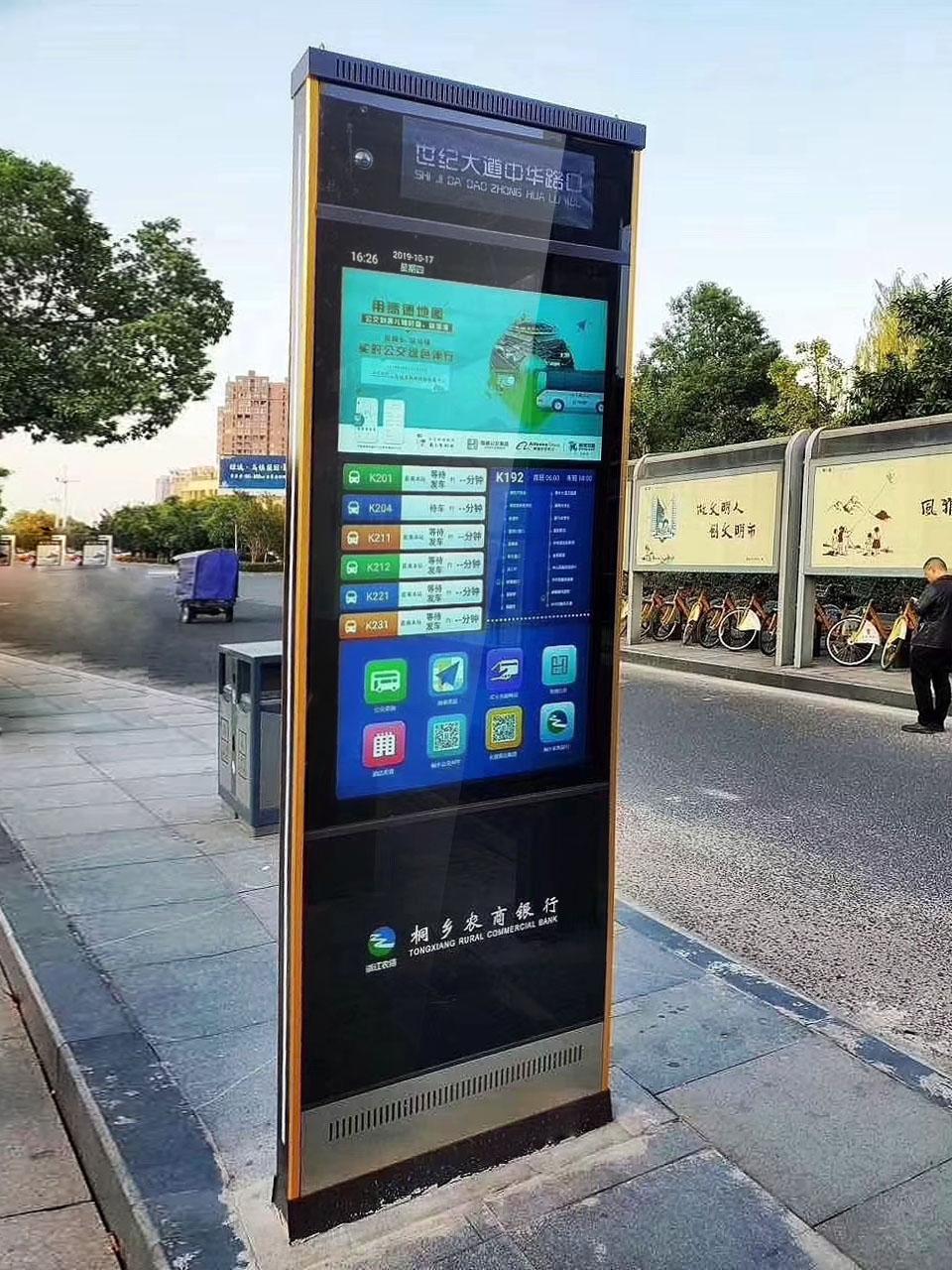
Digital bus stop signs are electronic displays that provide real-time transit information like arrival times, delays, and route changes. Unlike static printed schedules, they dynamically update using live data from buses and control centers, making them far more accurate and responsive to actual conditions.
They connect wirelessly to a central transit management system that tracks each bus using GPS. That system processes the location and speed data, calculates predictions, and pushes updates to the signs every few seconds, ensuring the information you see is always current.
Reliability comes from industrial-grade components: weatherproof enclosures, high-brightness displays readable in direct sunlight, tamper-resistant design, and backup power options. They're built to handle extreme temperatures, rain, dust, and vandalism while operating 24/7.
Absolutely. Many include text-to-speech functionality activated by a push button, high-contrast modes for low vision, and clear visual indicators. Some also integrate with mobile apps to send alerts directly to a user's device, making transit more accessible for everyone.
Yes, they do. By giving riders accurate wait times, they reduce uncertainty and crowding. Transit agencies can also push service alerts instantly, reroute buses, or adjust schedules, which improves on-time performance and passenger satisfaction.
They can be wired into the grid or use solar panels with battery storage for off-grid sites. Maintenance is streamlined through remote monitoring software that alerts technicians if a sign loses connectivity, has a hardware failure, or needs cleaning, minimizing downtime.
While upfront costs are higher than standard signs, the long-term benefits often justify the investment. They reduce the need for printed materials, lower call-center inquiries, boost ridership by improving the user experience, and can even generate revenue through advertising displays.
Conclusion
Picture this: you're at the bus stop, and instead of squinting at a faded paper schedule or refreshing a glitchy app, the sign overhead lights up with an accurate, real-time arrival countdown. That's the quiet shift happening on city streets. Digital bus stop signs aren't just tech add-ons—they're a statement. When the bus rolls in, the sign updates before your phone even buzzes, turning that anxious "Is my bus ever coming?" into a confident "It'll be here in three minutes." These signs bridge the gap between a tidy schedule and the messy reality of traffic, detours, and breakdowns, giving riders a sense of certainty that a smartphone alone can't match.
But the real magic lies in how these signs learn. They tap into the city's pulse—adjusting to rush-hour surges, special events, and even weather patterns—to offer predictions that feel almost instinctive. It's infrastructure that talks back to the people who use it, not just passively waiting but actively communicating. As these systems become more responsive, they build trust. And trust turns into ridership: when people know the bus will show up when the sign says it will, they're more likely to leave the car at home. That makes the digital upgrade pay for itself, shifting transit from a last resort to a first choice. A smarter, friendlier city starts at the curb, one glowing sign at a time.
Contact Us
Contact Person: Leo
Email: [email protected]
Tel/WhatsApp: +86 18901905138
Website: https://www.zemsogroup.com/