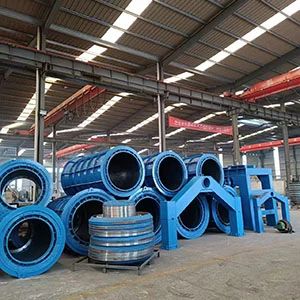

Reliable China Precast Wall Panel Equipment Manufacturer for Modern Precast Plants
2026-11-02
When a precast plant’s wall panel line stalls, every minute of downtime shows up on the balance sheet. That’s why modern plants are looking past glossy brochures to ask harder questions about equipment reliability. Qianfeng Electromechanical Equipment has spent years answering those questions with a focus that’s surprisingly rare: making sure the machines run as promised, day after day. Here’s what to look for in a China-based manufacturer—and why the details matter more than the sales pitch.
What a dependable precast wall panel equipment partner actually looks like in daily operation
On a routine Tuesday, a dependable precast wall panel equipment partner is not the vendor who delivered the tilting table and disappeared. It is the engineer who calls at 6:45 a.m. to ask whether the hydraulic sync on the battery mold drifted after the third shift, not because they want to sell an upgrade, but because the vibration sensor pack already told them something was slightly off. That kind of proactive attention changes how a plant starts its day.
When a magnetic shutter sticks or a concrete batch pours two seconds slower than usual, the partner does not send a PDF manual. They drive to the plant, stand next to your operator, adjust the side rail pressure together, and stay until the next panel demolds clean. Their service van carries spare proximity switches, wear plates, and a PLC already preloaded with your exact cycle parameters, so a two-hour repair does not turn into a three-day wait for parts.
Over months, they learn your specific concrete mix, your crane lifting sequence, and which panel profiles cause the most release agent buildup. They suggest lowering vibration frequency in winter before you notice hairline cracks, and they train new operators on the actual control panel rather than in a classroom. That daily operational intimacy, not the size of the catalogue, is what separates a true equipment partner from a transactional supplier.
How Chinese manufacturing lines are quietly raising the bar for panel consistency
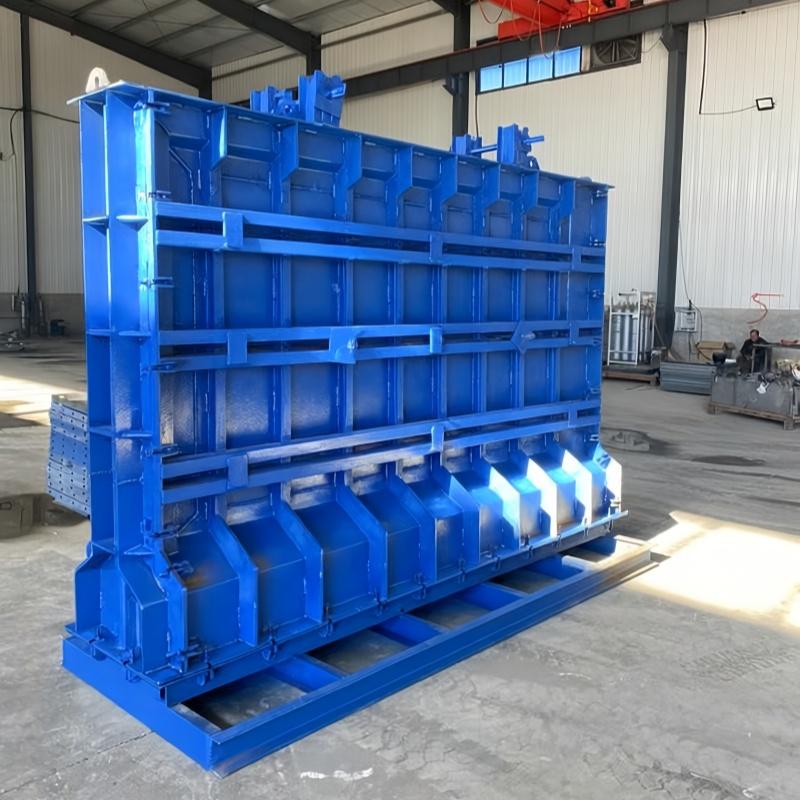
The shift is less about adding new machines and more about closing the loop between measurement and adjustment. On many Chinese panel lines, inline optical inspection now scans every mother glass at multiple wavelengths, feeding thickness and cell-gap deviations back to coating and assembly stations in near real time. Consistency is no longer checked at the end of the line; it is maintained as a variable that drifts only within a few nanometers.
A quieter change comes from calibration data traveling with each panel. Instead of relying on broad binning, downstream integrators receive per-unit spectral fingerprints that let them match luminance and white point across separate production weeks. Some fabs also deploy machine vision that references years of accumulated Mura defect maps, allowing sub-pixel level classification and correction that older sampling methods would have missed entirely.
What emerges is not a dramatic specification jump but a visibly tighter distribution. A 55-inch panel made in one province now lands statistically close to a panel made a month later in another, a result high-end monitor and automotive buyers quietly depend on. It is an unglamorous form of progress, but it challenges the old assumption that Chinese manufacturing competes on price alone.
The hidden costs of poorly matched wall panel machinery—and how to avoid them
Many buyers fixate on the sticker price and miss the real drain: downtime and waste. A machine that can’t handle your usual panel size, adhesive, or production speed will force operators to slow down, rework edges, or scrap miscut boards. If the feeding system isn’t matched to your panel thickness, you might see frequent jams that eat up ten to fifteen minutes each shift—adding up to dozens of lost hours per month. These aren’t dramatic failures; they’re small, recurring costs that quietly erode margin.
Another hidden cost is the retrofit spiral. Buying a base model to save upfront often means adding aftermarket sensors, custom guides, or manual workarounds just to make it usable. Those modifications rarely integrate cleanly, void warranties, and create new maintenance points. Over two years, the total spend can exceed a properly matched mid-range machine—without the performance.
How to avoid it? Start with a detailed production audit: maximum panel dimensions, material types, adhesive cure times, shift output targets, and operator skill levels. Then compare machines not on brochure specs but on how they handle your three hardest jobs. Ask vendors to run sample batches with your actual materials, and check references from factories producing similar panels. Finally, build in fifteen to twenty percent extra capacity for growth—buying a machine that barely fits today’s needs is a guarantee you’ll outgrow it within eighteen months.
Why plant managers are rethinking their equipment source for tighter project timelines
Shorter project windows have a way of exposing every weak link in the equipment supply chain. Plant managers who once leaned on a single preferred vendor are now asking harder questions about lead times, spare parts availability, and whether a supplier can actually hit a date rather than just promise one. The old habit of waiting eight to twelve weeks for a custom skid or a specialized pump no longer fits when the entire line needs to be commissioned before the quarter ends.
That pressure is pushing more teams toward suppliers with regional warehousing, modular designs, and a track record of shipping partial orders ahead of the full package. Some are splitting orders across two or three vendors to keep the schedule moving, even if it means slightly higher unit costs. Others are giving preference to equipment that can be installed in stages, letting construction and utility work proceed in parallel instead of waiting for one long-lead item to arrive. In many plants, the new rule is simple: a supplier's flexibility now matters as much as the equipment's specification sheet.
The tolerances that separate modern precast panel lines from outdated setups
Modern precast panel lines hold edge straightness within ±1 mm over a 3-meter length, while older setups often drift to ±3 mm or worse once formwork wears and vibration tables lose calibration. That gap shows up on site as uneven joints, visible lippage, and extra shimming.
The real difference isn't just the spec sheet—it's repeatability. Newer lines use laser-guided screeds and hydraulic side forms that lock panel dimensions batch after batch. Outdated plants rely on manual measurements and welded steel molds that flex after a few hundred cycles, so the tenth panel rarely matches the first.
Tight geometric tolerances also change what's possible architecturally. With panels that arrive within a millimeter of design intent, facades can use smaller reveals, thinner sealant joints, and crisp shadow lines without the usual site adjustments. Older tolerances force designers to hide discrepancies with wider joints or thicker cladding, which adds cost and dulls the finished look.
What to ask before committing to a wall panel production line supplier
Before you sign anything, pin down the supplier on changeover times and material flexibility. Most wall panel lines are marketed for speed but fail when you switch between panel thicknesses, insulation densities, or facing materials. Ask for documented changeover sequences from their existing customers, not just a demo video. You want to know how long a real crew takes to switch from a 50mm EPS panel to a 150mm mineral wool panel, and whether the line can handle both without rebuilding the entire glue station.
Next, get into the details of support and spare parts. A production line that sits idle for three weeks waiting on a replacement bearing costs more than the initial discount. Ask about on-site commissioning, who exactly will train your operators, and what the average lead time is for critical wear parts. Request a list of parts they recommend you stock on day one, and compare that list against what their service team actually kept in their own van during the last three installations. That tells you more than the warranty wording.
Finally, talk to at least two current owners who have run the line for over a year. Ask them what they wish they had known before purchase, not just whether they are satisfied. Dig into real output versus rated output, noise levels, adhesive waste percentages, and how often they need to call the supplier for software glitches. If the supplier hesitates to provide references or only offers one cherry-picked site, take that as your answer.
FAQ
Pay attention to frame rigidity, vibration consistency, and how precisely the mold sides lock. A plant running multiple shifts needs machines that hold their tolerances without constant recalibration.
Ask for uptime records from existing lines, check the steel thickness in the side rails, and see whether hydraulic components come from known brands. A supplier that lets you talk to current operators is often more credible than one that only shares polished brochures.
Typically you need tilting mold tables, automatic shuttering systems, concrete distributors, and curing chambers with controlled temperature and humidity. Some plants also add robotic cleaning and plotting units to keep cycle times short.
Several have moved beyond low-cost copying and now invest in CNC machining, in-house testing, and European-style hydraulic layouts. The result is equipment that costs less than Western equivalents but still meets tight dimensional specs.
Expect remote troubleshooting, a clear spare parts catalog, and installation supervision. The best suppliers send engineers for commissioning and train your maintenance crew on wear points before handing over the line.
Vibration frequency and amplitude directly influence concrete compaction, while mold flatness determines panel tolerances. If the design allows fast side rail changes and quick cleaning, you spend less time between pours and more time producing.
Yes, many will adapt table lengths, add or remove workstations, and reconfigure transfer systems to match your existing building columns and crane paths. This flexibility often matters more than a standard catalog package.
Conclusion
A dependable precast wall panel equipment partner doesn't just deliver machines—it shows up in daily operations with consistent support, spare parts availability, and a willingness to troubleshoot before problems stall your yard. In modern plants, Chinese manufacturing lines have quietly closed the gap on panel consistency, holding tighter tolerances than many plant managers expect from the price point. The hidden costs of poorly matched machinery—excessive rework, uneven concrete distribution, or vibration systems that can't keep up—tend to surface only after installation. Working with a manufacturer that understands your specific panel profiles and production flow avoids those expensive surprises.
That's why more plant managers are rethinking their equipment source when project timelines tighten; a reliable manufacturer with proven lead times and responsive engineering support becomes a practical advantage. Modern precast panel lines now separate themselves from outdated setups through tolerances in side form straightness, vibration frequency consistency, and automated control repeatability. Before committing to a wall panel production line supplier, it's worth asking about real-world references, changeover complexity for different panel thicknesses, and how the line handles concrete mix variations. The right answer usually comes from a manufacturer that treats your production targets as its own.
Contact Us
Contact Person: Bill
Email: [email protected]
Tel/WhatsApp: 8615063653526
Website: https://www.qianfengjd.com