

Rack Mount Static Var Generator Manufacturer: Best Options for Reliable Power Quality
2026-11-16
Voltage dips, harmonic distortion, and reactive power fines rarely stay hidden for long. Rack mount static var generators have become a compact, fast-acting way to stabilize power quality, but the real difference comes down to the manufacturer behind the hardware. In this guide, we break down what separates dependable rack mount SVG suppliers from the rest and why GEYA continues to gain attention as a practical choice for reliable power quality.
Where Rack Mount Static Var Generator Manufacturers Cut Corners
One of the first places cost gets shaved is in the power stage. You may see the same case and similar nameplate ratings, but the IGBT modules inside can be lower-grade parts with tighter thermal margins. The capacitors are often downsized or sourced from lesser-known suppliers, which shows up as faster aging when the unit runs near its reactive power limit. Cooling gets the same treatment: smaller heatsinks paired with fans that spin harder, so the initial temperature readings look acceptable while dust and bearing wear become long-term problems.
The control side is another quiet area of compromise. Cheaper sampling boards and slower processors reduce how quickly the unit can track changing loads, so it may overshoot or lag on busy factory floors. Some builds also leave out input filtering components or use narrower-gauge internal wiring, which increases switching noise and makes the equipment more sensitive to voltage distortion already present on the line.
Finally, testing and calibration are easy to shorten without changing the bill of materials. A unit might pass a basic functional check but never face a full heat run, insulation test, or step-load response test. Sensors can be left with factory defaults instead of being matched to the actual control board, and that drift shows up later as poor compensation accuracy or nuisance trips in the field.
Matching Response Time and Capacity to Actual Load Behavior
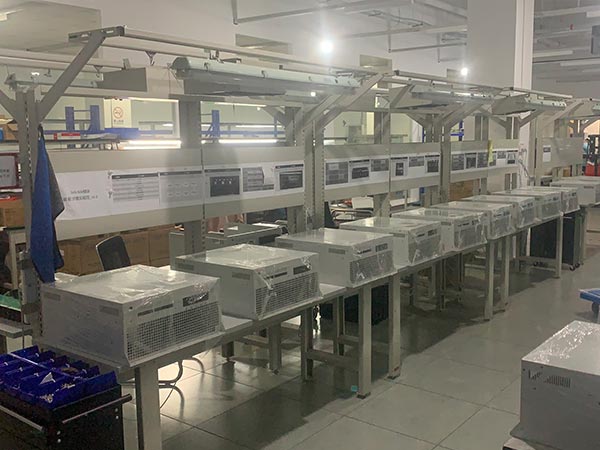
Real traffic does not arrive as a smooth, predictable stream. It pauses, spikes, and occasionally idles without much warning. A deployment sized for a single peak figure tends to carry far more capacity than needed during quiet stretches, then still struggles when a burst hits from an unexpected direction. The first step is to stop designing for averages or headline peaks and instead read the actual arrival patterns: when requests show up, how long they last, and how sharply the volume changes.
Response time rarely follows a straight line as load increases. For a long while it may stay almost flat, then it bends sharply upward as the system approaches saturation. The practical target is to understand where that bend sits for your current mix of traffic and keep usable capacity just ahead of it. Some workloads are read-heavy and tolerate brief queuing, while write-heavy patterns can propagate delays through every downstream service. Measuring tail latency under those distinct conditions gives a more honest picture than a simple average.
Capacity should therefore be adjusted against observed behavior, not against a plan written months ago. Small, frequent changes based on queue depth, latency percentiles, and resource saturation keep headroom close to what the load actually needs. This reduces idle hardware while protecting the experience when traffic shifts. In practice, the systems that stay stable are rarely the ones with the largest buffers; they are the ones whose capacity moves with the shape of real demand.
Why Physical Design Limits Matter More Than Nameplate Ratings
A nameplate rating is a set of assumptions wearing a metal tag. It usually assumes a clean supply, a moderate ambient, and a duty cycle that may not survive contact with the real installation. The physical design is what actually sets limits: how much copper and iron are packed into the frame, how heat leaves the winding, how far live parts sit from grounded metal, and how the structure responds to mechanical shock. Those limits stay fixed no matter what number gets stamped outside.
In a hot, cramped plant, two motors with the same nameplate rating can have completely different lives. One may have end turns with enough spacing for air to move; the other may trap heat around the winding because the frame is just too tight for the cooling path. The failure won't happen at the rated current. It will happen when insulation ages past its thermal class, or when a hot spot forms where no sensor is watching. That gap between nameplate conditions and physical reality is where most premature failures live.
Some physical limits show themselves before any temperature alarm. Partial discharge can start in a small void in the insulation at a voltage that is still within the nameplate range. A busbar can hit a resonant frequency under a harmonic load that the original rating never anticipated. Mechanical fatigue from repeated inrush or load swings is baked into materials and geometry. A tag cannot cover all combinations of load, harmonics, altitude, and ambient. Engineers who treat the nameplate as the final word often learn the real limits by derating equipment after it has already failed on the factory floor.
Thermal Runaway Risks in High Density Rack Mount Installations
In tightly packed rack enclosures, the distance between adjacent battery modules is often measured in millimeters, not centimeters. When a single cell enters thermal runaway, the heat released can exceed 600°C at the casing surface within seconds. That level of heat is more than enough to breach plastic separators, soften busbars, and push neighboring cells past their own critical thresholds. The real danger is not the first failure, but the cascade that follows when there is no meaningful air gap or thermal barrier to slow it down.
High density configurations also concentrate flammable electrolyte vapors in a confined vertical space. Venting from one module can pool around the equipment above it, and rack rails or blanking panels that improve airflow for normal cooling can inadvertently channel those vapors toward power distribution components. Once ignition occurs, the fire has a short, unobstructed path through cable bundles and management arms, which is why standard suppression methods often struggle to reach the source before adjacent racks are involved.
Practical risk reduction starts with acknowledging that conventional spacing assumptions from standalone battery cabinets do not transfer well to high density rack deployments. Thermal breaks between every few modules, localized temperature sensors tied to charge cutoff logic, and early vent detection per shelf can buy critical minutes. Without those measures, a single compromised cell can turn a routine over-temperature event into a rack-level failure that is far more expensive than the battery itself.
Commissioning Tests That Reveal Real Power Quality Performance
Commissioning tests often pass with clean waveforms and balanced loads, yet the same system can stumble once variable speed drives, LED banks, and lightly loaded transformers enter the picture. A more revealing approach loads the distribution path with a mix of non-linear and step-changing equipment, then watches the neutral current, crest factor, and harmonic spectrum at multiple points. The goal is not to confirm the design math but to catch interactions the one-line diagram cannot predict.
Transient response is where many power quality problems first become visible. Instead of relying on soft starts or slow ramp profiles, staged block loading and unloading can expose voltage sags, frequency excursions, and recovery behavior that static measurements miss. Capturing high-speed waveforms at the service entrance, automatic transfer switch, and critical branch panels shows whether control loops are fighting each other and whether capacitor banks are switching at the wrong moment.
It also helps to run the system under partial redundancy and simulated fault-clearing events. Open a feeder, drop a major load, or transfer between sources while recording power factor, unbalance, and inrush. These are the conditions that reveal whether protective coordination and power quality correction actually work together. When commissioning data includes those events, the accepted system is far less likely to surprise operators during the first real production shift.
What to Ask Before You Accept a Manufacturer’s Reliability Claims
Reliability numbers rarely mean much until you know what actually counts as a failure in the manufacturer's testing. Ask for the specific conditions, the sample size, and how long the product was observed before the claim was made. A figure produced in a clean, temperature-controlled lab can look impressive while saying very little about dusty floors, voltage swings, or the way your team actually handles equipment day to day.
Then push past the headline rate and ask what the data looks like underneath. Were early failures included or quietly removed? Were repaired units still counted, or did dropping them from the math make the reliability appear higher? If the manufacturer cannot show raw counts, a confidence interval, or field return data, the number is probably closer to marketing than engineering.
Finally, ask what happens when that number turns out to be wrong. A company that is willing to share wear-out curves, derating guidance, and clear warranty language usually has more confidence than one hiding behind a polished spec sheet. If the answers get vague around load limits, maintenance intervals, or environmental tolerances, treat the reliability claim as a starting point rather than a guarantee.
FAQ
Look for a documented track record with industrial or mission-critical sites, in-house testing procedures, and the ability to customize control parameters. A supplier that asks about your load profile before quoting is usually more useful than one pushing a standard box.
The power stage responds within milliseconds, typically under 15 ms for full compensation, while the controller continuously samples voltage and current. This keeps flicker and voltage sags under control even when large motors or welding equipment cycle frequently.
Rack units slide into existing 19-inch enclosures, which saves floor space and shortens cable runs. Maintenance is also simpler because modules can be swapped from the front without clearing a large footprint.
Confirm the nominal voltage, kvar range, number of power modules, harmonic filtering capability, and whether the cooling path works with your rack airflow. Also check the derating curve at higher ambient temperatures.
Data halls, telecom exchanges, water treatment plants, manufacturing lines with variable drives, and commercial buildings with heavy HVAC loads all see fewer voltage complaints and lower penalty charges after installation.
Expect commissioning assistance, fault waveform analysis, firmware updates, and a clear escalation path. The best suppliers keep replacement modules in regional stock so downtime stays measured in hours rather than weeks.
Yes, and many sites combine them. The SVG corrects fundamental reactive power while the active filter cleans up harmonic orders. Just make sure the control coordination is set so the two systems do not fight over the same compensation target.
Frequent overcurrent alarms, audible buzzing that changes with load, overheating at partial load, or a power factor that barely improves in the monitoring system all point to sizing or tuning issues that need manufacturer intervention.
Conclusion
Many buyers focus on advertised kvar ratings and response speed, but field performance often tells a different story. Some rack mount SVG manufacturers save money in places that are not visible on a spec sheet: undersized magnetics, fewer IGBT modules, weak busbar connections, and limited thermal margins. Matching response time and capacity to actual load behavior matters more than a generic millisecond claim. A frequent mistake is treating the nameplate kvar number as the only sizing factor. Physical layout, cable entry, cooling airflow, and internal clearances determine whether the unit can sustain output when harmonics, reactive swings, and voltage flicker occur together. In dense rack installations, heat does not escape the way a standalone cabinet does. Without proper derating and airflow separation, thermal runaway can begin long before the control system flags a fault.
Commissioning is where real power quality performance shows up. Load steps, unbalanced phases, and harmonic-rich conditions often expose weaknesses that factory tests miss. Before accepting a reliability claim, it is worth asking how the manufacturer verifies continuous operation at elevated ambient temperatures, how they handle repeated overcurrent events, and what happens when one module fails. Request test waveforms and site references with similar load profiles, not just MTBF figures. The best options usually come from manufacturers who are willing to discuss physical constraints, derating curves, protective coordination, and failure containment in detail. If a vendor keeps the conversation only on nominal ratings and generic features, that is a warning sign. Reliable power quality depends less on bold claims and more on transparent engineering choices and verified performance under realistic operating conditions.
Contact Us
Contact Person: Leo
Email: [email protected]
Tel/WhatsApp: +86-13567770207
Website: https://www.geyapower.com/