
Professional Baseball Caps Worth Adding to Your Collection
2026-08-15
Every serious cap collector knows the thrill of finding a professional-grade baseball cap that blends heritage styling with modern performance. But with so many options flooding the market, how do you separate the true standouts from the forgettable? Whether you're chasing that perfect game-day look or a durable everyday staple, the right cap should feel like an extension of your personality. At 4ugear, we've spent countless hours testing brims, stitching, and sweatbands to bring you a curated list of professional baseball caps that deserve a spot in your rotation. From vintage-inspired wool blends to breathable performance fabrics, these picks aren't just accessories—they're statements. Ready to upgrade your headwear game? Let's dive into the caps that truly earn their place on your shelf.
What Actually Separates a Pro Cap from a Souvenir
Most people can spot the difference the moment they pick both up. Souvenir caps tend to have a stiff, almost cardboard-like front panel and a lightweight polyester shell that warps after a few wears. A pro cap, the kind actually worn on the field, uses wool-blend or performance fabric with a structured but flexible crown that holds its shape without feeling rigid. The brim is pre-curved to a specific angle and keeps that bend season after season.
Then there's the sweatband and interior taping. On a souvenir, the sweatband is usually thin cotton or foam that starts to fray at the seams. On a pro model, the band is thicker, often quilted or moisture-wicking, and the inner seams are taped to prevent blowouts. You also get a proper fitted or adjustable closure with reinforced eyelets instead of a flimsy plastic snap.
The biggest tell is the details you don't see in photos. Pro caps have raised, dimensional embroidery with tighter stitch density, a slightly deeper crown for a snug fit, and a brim made from multiple layers so it doesn't develop that wavy ripple. It's the difference between something made to commemorate the game and something made to be worn in it.
The 59Fifty's Reign Isn't an Accident—Here's Why
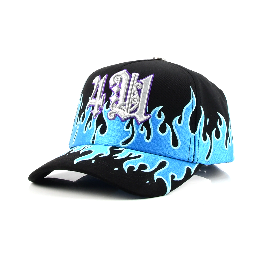
It starts with the crown. Not the logo, not the colorway—the crown. The 59Fifty's tall, structured front panels give it a silhouette that flatters nearly every face shape, and that's rare in a market flooded with low-profile dad caps and shapeless five-panels. New Era figured out decades ago that a fitted cap needs to sit like a piece of architecture, not a beanie.
Then there's the on-field credibility. This is the exact cap worn by Major League Baseball players, not a replica with a snapback and a different fabric weight. The wool blend, the moisture-wicking sweatband, the flat brim you can curve or leave crisp—these details matter to people who treat a cap as a uniform, not an accessory. When a player tips his cap after a walk-off, you're seeing the same crown and stitch lines that end up on store shelves.
But the real engine is cultural staying power. Spike Lee in the 1996 Yankees cap didn't just promote a team; he made the 59Fifty a symbol of New York cool. Hip-hop, film, and streetwear all adopted the fitted as a blank canvas for identity. Limited drops, city-specific colorways, and the ritual of leaving the size sticker on the brim turned a functional ballcap into a collector's item. That's why the reign isn't accidental—it's built on fit, authenticity, and a refusal to chase trends.
Minor League Gems Most Collectors Overlook
Plenty of collectors chase the same Bowman Chrome autographs year after year, but the real value often sits further down the organizational ladder. Guys who were drafted after the tenth round, signed for a few thousand bucks, or spent three seasons grinding in Low-A before anything clicked can end up carrying a hobby following that nobody saw coming. Their cards usually surface in less glamorous products—team sets, minor league issues, or obscure Panini lines—and because print runs are lower and demand starts near zero, a breakout can turn a dollar box card into something people actually hunt for.
What makes these overlooked minor leaguers worth tracking isn't just stats, though a sudden jump in velocity or contact rate helps. Look for players whose skills translate in ways scouts underweighted: catchers who frame and call a game, lefty relievers with a weird arm slot, utility infielders who suddenly add power, or older international signs who finally get a visa and a full season. The market tends to ignore them until the debut is close, so the window to buy cheap is short. Staying ahead means reading box scores from Double-A and Triple-A instead of waiting for a prospect list to tell you who matters.
Material Tell-All: Polyester, Wool, and the Blends in Between
Polyester rarely gets credit for its stamina. It shrugs off wrinkles, dries in the time it takes to brew a pot of coffee, and holds its shape after countless spins in the washing machine. That resilience is why your favorite travel blazer still looks sharp after being rolled into a carry-on for a week. But polyester has a stubborn side too: it traps heat, clings to odors, and lacks the breathability that natural fibers offer on a humid afternoon.
Wool sits at the opposite end of the spectrum. It regulates temperature like a seasoned thermostat, keeping you warm when the air turns cold and surprisingly cool when the sun breaks through. Wool's crimped fibers trap air pockets, which explains that cozy feeling without the weight. Yet pure wool can be fussy—it demands gentle washing, attracts moths with alarming enthusiasm, and sometimes feels scratchy against bare skin.
Blends try to split the difference. A 60/40 wool-polyester mix borrows wool's temperature control and polyester's crease resistance, creating a fabric that survives a full workday without looking rumpled. The tradeoff? You lose a bit of wool's natural softness and gain a fabric that pills slightly after repeated wear. But for most of us, that compromise beats choosing between a suit that breathes and a suit that still looks presentable after a cross-country flight.
Shaping the Perfect Brim Without Cracking the Cardboard
Most brim damage happens when you try to force a curve into dry, stiff material. The cardboard hidden inside the brim needs a little moisture before it will flex without snapping. Grab a clean spray bottle and mist just the underside of the brim until it feels cool to the touch but not soaked. Work the bend slowly with your fingers, pressing along the edge rather than folding it like paper. If you hear any crackling, stop immediately and let the dampness sink in deeper.
Brim shape usually sets better when you use a form instead of free-hand bending. A large coffee can or a rolled-up towel taped into a cylinder gives the cardboard something to wrap around evenly. Place the damp brim over the form, smooth out any wrinkles with the flat of your hand, and secure it with a strip of cloth or an old tie. Leave it overnight somewhere cool and dry so the cardboard hardens into the new curve gradually.
For stubborn brims that refuse to hold a shape, a second light mist followed by low heat can coax the fibers into place. Use a hairdryer on the lowest setting held at least six inches away, moving constantly so one spot never gets hot. The goal is to dry the outer fabric while the inner cardboard still has some give, then clamp or weight the brim in the exact position you want for a few hours. Rushing this step is what usually leads to that brittle, snappy-feeling brim later.
Why a Well-Stored Cap Can Outlive the Trend It Started
Most caps die long before their fabric gives out. Sunlight fades the crown, sweat stiffens the brim, and a careless toss onto a shelf crushes the structure until it looks like roadkill. But a cap that's cleaned gently, dried away from direct heat, and stored with something supporting the front panels can keep its shape for a decade. The trend it rode in on might vanish in eighteen months, yet the cap itself stays wearable.
Think of it like a decent leather jacket: the style cycles, but the object remains useful if you don't abuse it. A brushed cotton twill cap folded brim-side down in a drawer will develop a permanent crease. A cap stored upside down on a clean jar or a simple hat form holds the curve of the brim without flattening the front. The difference isn't effort, just habit.
And when that trend inevitably swings back, you won't be chasing a reissue. Yours will already have the soft patina of something kept well, which is rarer than any fresh drop.
FAQ
It rarely comes down to just the team name. The story matters more: a cap tied to a specific season, a player milestone, or a one-off stadium event often holds value that a generic retail version never will. Build quality, original tags, and even the underbrim color all play a role, but personal connection and scarcity are what make a cap worth chasing.
Absolutely. On-field caps use heavier wool or performance polyester blends, not the thin fashion fabric you find in department stores. The sweatband should feel dense, the crown should hold its shape without collapsing, and the embroidered logo needs tight, even stitching with no loose threads. The batterman logo on the back is also a tell: authentic versions have crisp, slightly raised embroidery.
New Era dominates, especially the 59FIFTY fitted model worn by MLB players. '47 Brand has a loyal following for its relaxed, broken-in feel and vintage washes. Mitchell & Ness is the go-to for throwback wool caps from defunct teams. Collectors of Japanese baseball often hunt down Majestic and SSK models, which rarely appear in Western markets.
Check for unique patches, special underbrim prints, or a commemorative side embroidery. Limited runs usually have a holographic sticker, a numbered tag inside, or a specific colorway that matches an event like a World Series or All-Star Game. If the cap is tied to a one-day game or a stadium anniversary, demand tends to spike quickly.
Stacking fitted caps crushes the crown and bends the brim. Direct sunlight fades colors fast, especially on wool. Folding the brim to fit in a drawer creates a permanent crease that is hard to fix. The best approach is to keep each cap on a shelf or in a cap carrier, with acid-free tissue inside the crown to hold its shape.
The 2001 Arizona Diamondbacks purple-and-teal cap is a cult favorite that often gets overlooked. The 1990s Cincinnati Reds black crown with red brim is another classic with a strong visual identity. Also worth tracking down: the 2021 Field of Dreams game cap, which combined a vintage look with modern materials and sold out almost immediately.
It usually comes down to era, materials, and condition. A 1980s wool cap with a green underbrim and original tags can fetch far more than a modern polyester version of the same design. Patch variations, stitching differences, and whether the cap was actually issued to a player versus sold at retail all push the price in different directions.
Fitted caps mirror what players wear on the field, so they carry a level of authenticity that snapbacks or strapbacks rarely match. The lack of an adjustable closure also gives the cap a cleaner silhouette. Serious collectors tend to prefer fitted models because sizing is precise, which makes them feel more like a tailored piece of gear than a casual accessory.
Conclusion
Most people grab a hat at the stadium and never notice the gap between a pro cap and a souvenir, but it's that gap that makes certain pieces worth collecting. A true pro-level cap sits deeper, holds a structured crown without slouching, and uses sweat-wicking tape or mesh inside the front panels. The wool-polyester blends on a 59Fifty aren't just about feel; they hold shape through sun, rain, and repeated wear while cheaper polyester shells start to ripple after a season. That's why the 59Fifty's long reign feels less like hype and more like earned consistency, especially when you compare its high, rigid crown to the flimsy give of a giveaway hat.
Beyond the flagship model, minor league caps often deliver more personality than the majors, with odd nicknames, local color, and shorter production runs that make them hard to find later. Pay attention to the fabric label before you buy: a higher wool content usually means a stiffer, more traditional break-in, while modern polyester keeps things lighter but can look shiny under direct light. When it comes to the brim, steam it gently and curve it by hand rather than snapping it over a bedpost, because cracked cardboard is the fastest way to ruin an otherwise solid cap. And if you store them properly—cool, dry, resting on their crowns or in a dedicated case instead of piled under gym gear—you'll keep the shape and stitching intact far longer than the original hype cycle lasts.
Contact Us
Contact Person: Tommy
Email: [email protected]
Tel/WhatsApp: 8613546956008
Website: https://www.4ugearsupply.com/