

Professional Automotive Shunt Resistor: Precision Current Sensing for Modern Vehicles
2026-07-16
In the rapidly evolving world of automotive electronics, precision current sensing is no longer a luxury—it's a necessity. From battery management systems to motor control, every milliamp matters. Enter the professional automotive shunt resistor, a component engineered to deliver accuracy and reliability under the harshest conditions. At the heart of these solutions is Milliohm, a brand that has redefined low-resistance measurement with innovative designs tailored for modern vehicles. Whether you're tackling thermal drift, space constraints, or high-current demands, this post will guide you through why shunt resistors are the unsung heroes of vehicle electrification.
Shunt Resistor Fundamentals in Vehicle Electronics
In modern vehicle electronics, precision current sensing is critical for battery management, motor control, and power distribution. Shunt resistors serve as the backbone of these measurements by providing a low-resistance pathway that generates a tiny voltage drop proportional to current flow. Unlike Hall-effect sensors or current transformers, shunts offer a direct, galvanically connected method that remains immune to magnetic interference—a key advantage in the electrically noisy environment under the hood.
The selection of a shunt resistor in automotive design goes beyond simple resistance value. Thermal stability, power rating, and parasitic inductance must be carefully balanced. A resistor with a low temperature coefficient of resistance (TCR) ensures accuracy across the wide temperature swings typical in vehicle operation, from frigid cold starts to high-load driving. Meanwhile, a Kelvin (four-terminal) connection becomes essential to eliminate lead resistance errors, especially when measuring currents that can exceed hundreds of amps in traction inverters or 48V mild-hybrid systems.
Packaging and layout also play an outsized role. Surface-mount metal alloy shunts are increasingly popular for their compact size and integrated Kelvin sensing pads, but thermal management remains a challenge. PCB copper pours and thermal vias must be designed to spread heat effectively, preventing self-heating from skewing readings. In high-power paths, designers often opt for bare metal element shunts bolted directly to busbars, coupling the resistor’s structural integrity with low-inductance measurement. This holistic approach—blending materials science, analog front-end design, and thermal engineering—makes the humble shunt resistor a fascinating cornerstone of vehicle electrification.
Precision Current Sensing for Battery Management
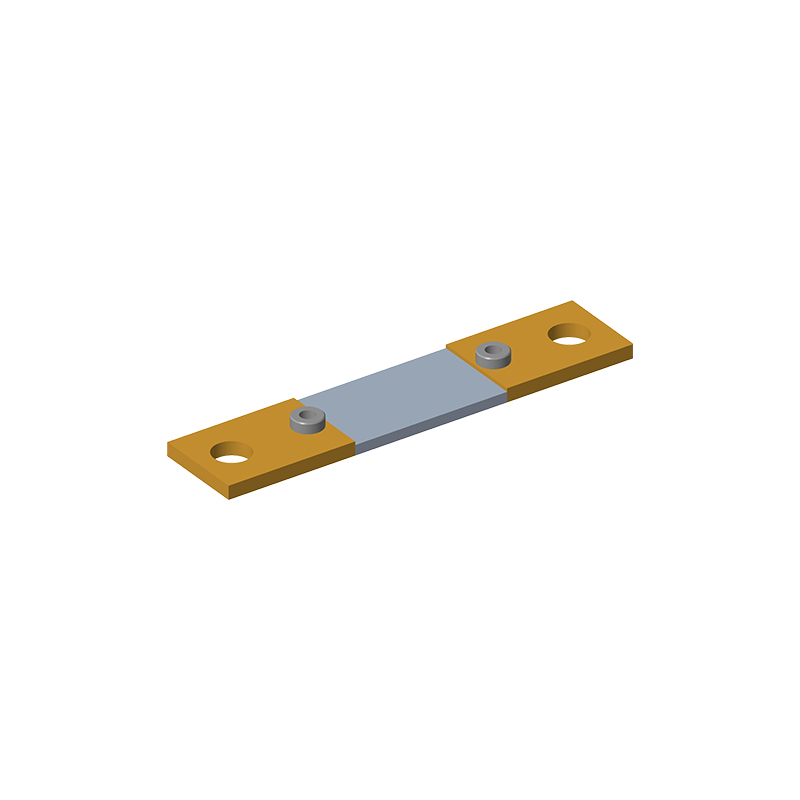
Measuring current in battery systems is not simply about tracking energy flow—it’s the key to unlocking safe, long-lasting performance. In lithium-ion packs, even small inaccuracies can lead to overcharge, deep discharge, or thermal runaway. Precision current sensing captures the minute voltage drops across a shunt resistor with minimal offset and drift, allowing the battery management system (BMS) to monitor state of charge and state of health with confidence. The challenge lies in detecting currents that range from milliamps during sleep modes to hundreds of amps under load, all while maintaining linearity and rejecting noise in harsh electrical environments.
Advanced designs employ low-side or high-side shunt amplifiers with chopper stabilization and digital filtering, achieving resolutions in the microvolt range. This granularity helps the BMS implement coulomb counting with less than 1% error, directly extending battery life and preventing premature aging. In electric vehicles and grid storage, the temperature coefficients of both the shunt and the amplifier must be tightly matched to avoid measurement drift across extreme operating conditions. By pairing a robust analog front-end with synchronous sampling, engineers can capture transient spikes that might otherwise go undetected, ensuring that protection circuits react in microseconds to prevent damage.
Combating Thermal Drift in High-Temperature Zones
Even the most meticulously engineered systems tend to lose precision when temperatures climb. In foundries, power plants, and chemical processing lines, heat-induced material expansion slowly pushes sensors, actuators, and mechanical references off their original calibration points. This shift—often called thermal drift—doesn't announce itself with a fault code. Instead, it creeps into measurements, gradually distorting control loops until product quality degrades or safety margins erode.
The first defense is acknowledging that no single fix works everywhere. Some teams rely on active cooling jackets or Vortex tubes to maintain a stable microclimate around sensitive instruments. Others redesign mounting structures using Invar alloys or ceramic composites that barely budge with temperature swings. Increasingly, software compensation takes center stage: real-time thermal models fed by strategically placed thermocouples adjust output signals on the fly, canceling drift before it reaches the controller.
Field experience shows that the most resilient setups blend mechanical isolation with predictive algorithms. For instance, differential measurement layouts cancel out common-mode expansion by sensing only relative displacement. Regular drift audits—where readings are compared against a known reference at operating temperature—turn unpredictable errors into manageable offsets. The goal isn't to eliminate thermal effects entirely, but to make their impact so small and so predictable that the process never notices.
Ultra-Low Ohmic Designs for EV Power Trains
Electric vehicle power trains push the boundaries of efficiency, and reducing even fractional resistances in high-current paths can yield significant gains. Ultra-low ohmic designs target the interconnects, busbars, and shunt resistors that carry hundreds of amps continuously. By minimizing milliohm-level losses, these designs cut heat generation, preserve battery energy, and allow more compact thermal management systems—a critical advantage in modern EVs where every watt counts.
Material selection stands at the heart of achieving ultra-low resistance. Copper alloys with minimal impurities, advanced welding techniques, and surface treatments that prevent oxidation all contribute to stable, low-contact interfaces. In high-vibration environments, maintaining low ohmic connections over the vehicle’s lifetime requires careful mechanical integration, ensuring that expansion, flexing, and thermal cycling don’t degrade performance. Some manufacturers now employ laser-welded cell-to-busbar connections that eliminate traditional bolted joints, dropping resistance values well below conventional thresholds.
The ripple effects extend throughout the drivetrain. Inverters and motor windings benefit from lower resistive losses, leading to cooler operation and higher peak power density. As silicon carbide semiconductors become more common, their fast switching amplifies the impact of any parasitic resistance, making ultra-low ohmic design not just a goal but a necessity for next-generation platforms. The ongoing shift toward 800V architectures heightens these demands—double the voltage halves the current for the same power, but resistive losses scale with current squared, so even modest reductions in resistance deliver outsized benefits at lower operating currents.
Durability and Stability Under Vibration and Shock
Real-world applications often subject equipment to persistent vibration and sudden mechanical shocks. On factory floors, nearby heavy machinery can generate continuous low-frequency hums that, over months and years, gradually loosen fasteners and fatigue solder joints. In transportation, a device might endure jolts from potholes, rail gaps, or rough seas. Without intentional design, these seemingly minor disturbances compound, leading to intermittent failures, reduced accuracy, or outright breakdown.
Achieving true durability starts with a mechanical architecture that distributes stress away from sensitive components. Board-level strategies include adding underfill to ball grid arrays, using flexible circuit interconnects, and locking critical connectors with positive retention clips. At the enclosure level, tuned mass dampers or viscoelastic mounts can absorb energy across a wide frequency spectrum. Rather than adhering to a single standard, experienced engineers often blend requirements from MIL-STD, IEC, and automotive profiles, then push beyond them with highly accelerated life testing that overlays thermal cycling with multi-axis excitation.
The goal isn’t mere survival through a single lab test—it’s predictable stability over a product’s entire service life. This requires careful material selection: avoiding tin whisker-prone finishes, choosing high-vibration-rated capacitors, and selecting alloys that resist fretting corrosion at contact interfaces. Even the form factor matters; a slim, densely packed assembly might shift its resonant modes into dangerous territory. Prototyping evolves into iterative resonance sweeps, where stroboscopic imaging and laser vibrometry reveal micro-deformations invisible to the naked eye. When a design consistently holds alignment and electrical continuity after thousands of hours of aggressive random vibration, you know it’s ready for the world it’s destined to face.
Intelligent Shunts and Signal Conditioning Advances
The evolution of current sensing has taken a decisive leap with intelligent shunts that now integrate signal conditioning directly into the measurement element. These devices embed precision amplifiers, analog-to-digital converters, and even microcontrollers alongside the shunt resistor, dramatically reducing noise pickup and eliminating the headaches of routing tiny millivolt signals across a noisy PCB. The result is a robust digital output that can be read over standard interfaces like I2C or SPI, simplifying system design and enhancing accuracy in everything from motor control to battery management.
On the signal conditioning front, the move toward fully differential, high-input-impedance amplifiers with programmable gain has opened new doors for low-side and high-side current measurements in harsh industrial environments. By dynamically adjusting gain and offset, modern conditioning ICs can maintain resolution across a wide dynamic range without sacrificing speed. This adaptability is critical in applications like fast overcurrent detection, where a fixed-gain approach would either clip large transients or miss fine leakage currents.
Perhaps the most exciting advance lies in the convergence of shunt technology with digital isolation and real-time diagnostics. Isolated intelligent shunts now provide reinforced galvanic isolation right at the sensing node, protecting low-voltage circuitry while transmitting current data and fault alerts across an isolation barrier. Meanwhile, built-in monitoring of supply voltage, temperature, and shunt integrity transforms a humble resistor into a self-aware sensor that can predict maintenance needs and flag aberrant conditions before they cause system failure.
FAQ
A shunt resistor is a precision low-resistance component placed in a current path to measure flow by detecting the voltage drop across it. In modern vehicles, it’s critical for accurate battery management, motor control, and overload protection, ensuring systems run efficiently and safely.
Unlike Hall-effect sensors, shunt resistors provide direct, galvanic contact measurement that inherently rejects magnetic interference and offers higher linearity across a wide current range. This leads to more stable readings in electrically noisy vehicle environments, especially under rapid load changes.
High-performance alloys like manganin or constantan combined with robust metal-element construction and welded joints ensure minimal drift under temperature extremes, vibration, and thermal cycling. A low temperature coefficient of resistance (TCR) and optimized geometry keep measurements precise from cold start to full load.
It enables real-time coulomb counting for state-of-charge estimation, detects parasitic drain, and supports cell balancing logic by providing continuous, high-bandwidth current data. This data helps prevent overcharge, deep discharge, and thermal runaway.
Key factors include the resistor's power rating to handle peak currents without self-heating errors, resistance value (often micro-ohms) to minimize voltage drop and power loss, package size for PCB or busbar mounting, and AEC-Q200 qualification for reliability. Connectivity—such as direct PCB soldering or screw terminals—also matters for system integration.
One major mistake is routing the sense traces inside the high-current path loop, which picks up electromagnetic noise. Sense lines must be differential, closely coupled, and tapped directly at the resistor’s terminal pads to avoid including trace resistance in the measurement. Thermal relief on pads can also cause uneven current distribution and local heating, so solid connections are preferred.
Metal alloy shunts offer a much lower TCR, typically below 50 ppm/°C, and near-zero voltage coefficient of resistance, ensuring stable reading regardless of temperature or applied voltage. They also have superior pulse-handling capability and long-term resistance stability, which thick film technologies struggle to match under automotive stress cycles.
Yes, by monitoring subtle changes in current signatures, the system can detect corrosion in connectors, partial short circuits, or motor winding degradation early on. Combined with pre-stored profiles, it enables predictive maintenance alerts and reduces the risk of sudden breakdowns.
Conclusion
In the evolving landscape of modern vehicle electronics, the professional automotive shunt resistor has become indispensable for precise current measurement. These low-resistance components are fundamental to battery management systems, where accurate state-of-charge calculations and protection algorithms depend on reliable shunt data. Yet their deployment in high-temperature zones near engine compartments or power electronics demands careful material selection to combat thermal drift. Manganin and other specialized alloys maintain stable resistance coefficients, ensuring measurement integrity even under fluctuating thermal conditions. The integration of ultra-low ohmic designs further supports EV power trains by minimizing energy loss while still providing usable voltage signals for high-current monitoring.
Beyond electrical performance, durability against vibration and shock is non-negotiable in automotive environments. Robust welded constructions and rugged packaging protect the resistive element from mechanical stress, preserving long-term stability. Advances in intelligent shunts now incorporate integrated signal conditioning, amplifying the tiny sense voltage and converting it to digital outputs, which reduces noise susceptibility and simplifies wiring. These combined attributes—precision, thermal resilience, mechanical toughness, and smart interfacing—make the modern shunt resistor a cornerstone of safe and efficient vehicle operation, seamlessly bridging the gap between raw current flow and the sophisticated electronic control units that govern everything from regenerative braking to advanced driver-assistance systems.
Contact Us
Contact Person: Yuying Gao
Email: [email protected]
Tel/WhatsApp: +86 18926013721
Website: https://en.milliohm.net/