

ODM Swing Goggle Valve Essential Design Features and Application Insights
2026-09-06
A swing goggle valve either gives you bubble-tight isolation or becomes a maintenance headache. The difference isn’t brand hype—it’s in the disc radius, seat overlap, and how the actuator handles the final degrees of swing. Here we dig into those design features and real-world application insights, using THT's ODM swing goggle valve range as the reference point.
Why a Swing Goggle Valve Beats a Standard Swing Check in Dirty Service
In dirty service, a standard swing check valve has a frustrating habit of turning into a maintenance headache. The hinged disc relies on a metal-to-metal seat and a pivot that constantly fights against grit, sludge, or fibrous debris. When those particles wedge between the disc and seat, the valve either leaks on backflow or fails to seal at all. Even worse, the pivot pin can become packed with solids, causing the disc to hang open. You end up with a check valve that no longer checks anything, and cleaning it out usually means pulling the whole unit from the line.
A swing goggle valve takes a fundamentally different approach. Instead of a disc that swings shut against flow, it uses a flat plate that rotates 90 degrees between a fully open bore and a fully closed blind position. There is no seat pocket for debris to collect in, no hinge pin exposed to the process stream, and no reliance on gravity or reverse flow to achieve a tight seal. In dirty service, the goggle valve simply rotates its plate out of the way when you need full flow, or rotates it closed when you need positive isolation. Nothing gets trapped, nothing jams, and the sealing surfaces stay clear of the line fluid until the moment of closure.
That difference becomes critical in slurries, wastewater, tailings lines, or any stream carrying enough solids to punish a conventional check valve. Operators often install a swing check valve for backflow prevention, only to discover it is the first component to fail. Swapping in a swing goggle valve may mean losing automatic backflow prevention, but for many dirty-service applications the real requirement is reliable, bubble-tight isolation on demand. When you pair the goggle valve with a simple actuator or manual gear operator, you get a robust shutoff point that shrugs off abrasive particles and keeps working long after a standard swing check has been overhauled twice.
The Hinge Design Trick That Lowers Cracking Pressure Without Leakage
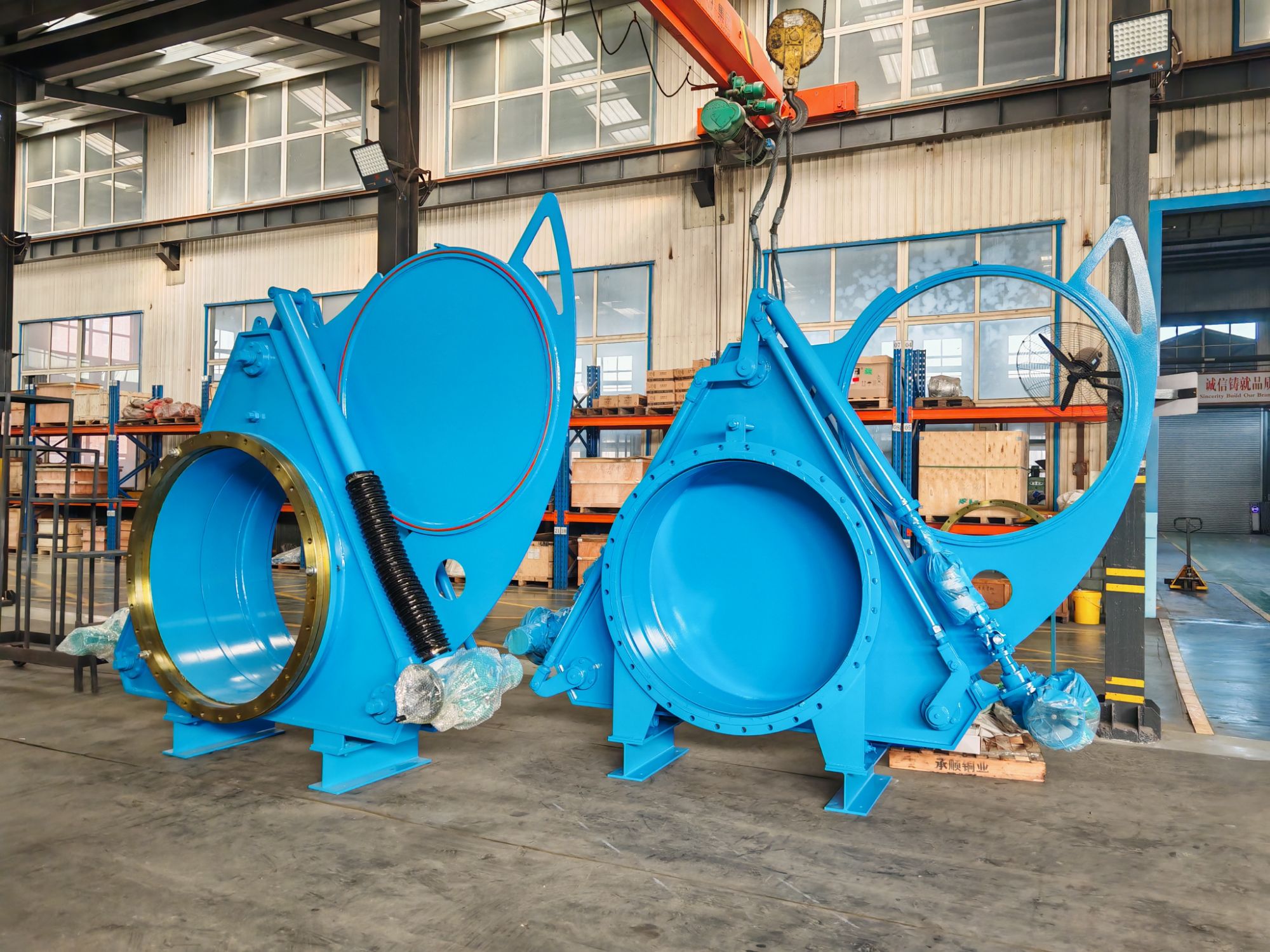
Most low-cracking-pressure valves achieve easy opening by sacrificing seal tightness—softer seats, shorter overlaps, or lighter springs all reduce the force needed to break the seal but invite micro-leakage. The hinge design trick flips this trade-off by relocating the pivot point away from the sealing face. Instead of the sealing element rotating around a point near the orifice, the hinge is set back behind the seal, creating a lever arm that multiplies the opening force right where it matters. When closed, the seal still sees full system pressure pressing it against the seat, so leakage stays zero. When you start to open the valve, that same pressure acting on the larger effective area of the hinged plate generates enough torque to unseat the seal with a fraction of the usual force.
The key detail is the angle and length of the hinge arm relative to the sealed port. By tilting the hinge axis so the plate approaches the seat at a slight incline rather than straight down, the initial cracking motion becomes a peeling action rather than a direct pull. A peel separates the seal from the seat progressively along a line, which requires far less force than lifting the entire contact ring at once. At the same time, the hinge's spring-back or a small bias magnet can hold the plate firmly against the seat during closed condition, adding to the fluid pressure rather than fighting it. This means the sealing line never relaxes, so there is no leakage path even at pressures well below the cracking threshold.
In practice, this trick shows up in miniature pneumatic valves, fuel tank caps, and even beverage closures where users expect a light touch but zero drips. By tuning the hinge arm length and the seat's shore hardness, designers can drop the cracking pressure from several psi down to under one psi while maintaining a bubble-tight seal at ten times that pressure. The hinge design also reduces wear because the peeling motion avoids the high local stress of a direct lift, so the seal lasts longer and the opening force stays consistent over thousands of cycles. It is a mechanical workaround that makes low cracking pressure and zero leakage no longer mutually exclusive.
Pick the Right Seat and Coating for Abrasive Slurries
In abrasive slurry service, the seat usually fails before the body or trim because it absorbs the full force of particle-laden flow during throttling and shutoff. Hard facing materials like tungsten carbide or Stellite work well against fine, high-velocity particles that grind away softer metals, but their brittleness becomes a liability when the stream carries large, heavy solids that cause impact cracking. For those tougher conditions, a resilient polyurethane or natural rubber seat can deflect and recover, provided the carrier fluid does not swell or chemically degrade the elastomer.
A coating is not a cure-all; it has to bond and flex with the substrate under real operating temperatures. Sprayed chrome oxide or tungsten carbide can raise surface hardness enough to stop grooving, yet a mismatch in thermal expansion between coating and base metal often leads to spalling during temperature swings or rapid depressurization. Solid ceramic seats bypass the bonding problem and handle both heat and abrasion, but they require flat, precisely lapped mating surfaces and controlled bolt torque to prevent fracture at the flange.
Rather than relying only on supplier data sheets, run a short side-by-side trial at your actual solids concentration and differential pressure. After a few hundred cycles, inspect the seats for embedded grit, washout, and loss of interference. Sharp crystalline solids tend to favor harder seat materials, while rounded sand or mill scale often wears a tough elastomer with a low-friction coating more slowly than an expensive ceramic. Matching the seat and coating to the particle shape, velocity, and fluid chemistry is what keeps a slurry valve sealing long after the first maintenance interval.
What High Cycle Fatigue Does to a Goggle Plate and How to Prevent It
A goggle plate that sees thousands of load cycles each day may look perfectly fine on the outside, but inside the metal, tiny cracks are already spreading along grain boundaries. High cycle fatigue doesn't announce itself with obvious deformation or discoloration. The plate simply loses stiffness bit by bit until one morning a routine flex cycle snaps it clean through the middle. This kind of failure often catches maintenance teams off guard because the part passes every visual inspection right up until the final break.
The root cause is usually a combination of stress concentration at the goggle's mounting tabs and repeated bending near the frame's sharpest curvature. Micro-cracks start at surface scratches, laser-cut edges, or even tiny inclusions left over from stamping. Over time, those cracks propagate deeper with every cycle, eventually reducing the effective cross-section to the point where a single moderate load finishes the job. The plate doesn't fail because it's weak; it fails because it's repeatedly loaded just below its yield strength, and that's a very different beast.
Prevention comes down to three practical moves. First, increase the fillet radius at the tab-to-plate transition and avoid sharp inside corners — smooth transitions cut local stress in half without adding weight. Second, shot peen the critical edges and both faces of the plate to introduce beneficial compressive residual stress that slows crack growth. Third, if the plate lives in a rotating or vibrating assembly, switch from thin stamped metal to a slightly thicker laser-cut or machined part with a polished edge finish. None of these changes alter the external dimensions, so retrofitting existing goggle mounts is straightforward. The key is to treat fatigue as a design parameter from the start, not as a surprise failure mode to chase after the first cracked plate shows up in the field.
Swing Goggle, Dual Plate, or Tilting Disc Which Fits Your Line
When a line needs backflow prevention, the choice rarely comes down to a single factor. Swing checks handle slurries and low-velocity flows with a full-ported disc that swings out of the way, but they slam hard on rapid reversals. Dual plate designs are far lighter and fit between flanges, making them the go-to for tight spaces and high cycle counts. Tilting disc models split the difference: their offset pivot and short stroke let them close faster than a swing check while still passing solids better than dual plates.
The real question is what your line does when flow stops. If a column reversal is sudden and frequent, a dual plate's low inertia and spring assist will keep water hammer in check. For raw water, wastewater, or anything with debris, a tilting disc gives a larger clear opening and a less abrupt seating action. Swing checks, despite their simplicity, can be a liability in vertical lines or fast-closing systems because the disc has to travel a long arc before it seals.
Think about installed orientation and maintenance too. Dual plates are inherently compact but their hinge pins and springs wear faster in dirty service. Tilting discs usually allow in-line inspection through the top cover without removing the valve from the line. Swing checks are the easiest to field-repair with basic tools, yet they may require extra straight pipe upstream to avoid flapper flutter. Match the mechanism to the flow profile—not just the pipe size.
Real Applications Where These Valves Cut Downtime
A petrochemical plant in Louisiana replaced aging gate valves with high-performance triple-offset butterfly valves on a critical feedstock line. During a sudden pressure spike, the new valves sealed instantly, preventing a leak that would have forced a shutdown for pipe inspection and weld repairs. Since then, the unit has logged over 18 months without an unplanned stoppage traced to that section.
Municipal water treatment operators often deal with lime scale buildup that jams conventional ball valves. A facility in Ohio switched to full-port, PTFE-lined plug valves with a scraping action that clears deposits on every cycle. The result: manual rodding of the valves dropped from twice a week to once a quarter, and the clarifier backwash sequence no longer stalls mid-cycle.
In pharmaceutical freeze-drying, every hour of downtime between batches costs tens of thousands of dollars. A contract manufacturer installed sanitary diaphragm valves with quick-clamp bodies and encapsulated seats. Changeover cleaning that used to take six hours now takes ninety minutes, because the valve internals pop out without tools and no hidden cavities trap product residue.
FAQ
The swing design uses a pivoting blind disc rather than a sliding wedge, so there's no seat friction during travel. That means the sealing faces stay undamaged until the final clamping stage, which matters a lot when cycling exposes parts to thermal expansion. An ODM version often adds a metal-to-metal seat with a secondary soft insert, allowing tighter shut-off without relying on grease.
Spectacle blinds require spreading flanges and often drain the line, but a swing goggle valve rotates the blind or spacer into position without disassembly. Operators can switch from open to positive isolation in minutes, and the swing mechanism keeps the unused disc out of the flow path, reducing turbulence and erosion.
The key is a floating disc carrier that absorbs differential expansion between the body and disc. Instead of a fixed pivot, it uses a slotted hinge or eccentric cam so the disc can align itself with the seat after temperature swings. Combined with a spring-loaded seat ring, the seal pressure stays consistent even when flanges shift a few millimeters.
Avoid recessed cavities where particles can pack. Look for a full-bore opening with hardened disc edges—usually Stellite or tungsten carbide overlay—and a purge port to flush the seat pocket. A top-mounted actuator with a scraper on the swing arm keeps solids from jamming the pivot, and the blind disc should have a replaceable wear ring rather than an integral hard-facing.
Coke plants, gasification units, and fluid catalytic cracking units tend to benefit most because they combine high temperatures with frequent isolation needs. A custom ODM can integrate steam jacketing, purge connections, and remote actuation that standard valves don't offer. The swing layout also handles coke fines better than a slide gate, which tends to bind when solid deposits build up.
Cycle the valve at least once a week to prevent the pivot from seizing, and blow down the seat cavity every shift if solids are present. For high-temperature lines, retorque the body bolts after the first thermal cycle, then check the swing arm clearance annually. If the blind disc shows scoring, resurface it before the damage reaches the seat—waiting only multiplies the repair cost.
Not in every jurisdiction, but where a single positive isolation barrier is accepted, yes—provided the valve has a verified metal seat and a locking mechanism on both open and closed positions. The swing design gives visual confirmation because the disc swings out of the pipe, so a quick glance at the indicator shows whether the blind or spacer is in line. Always confirm with local codes and a pressure test before relying on it for confined space entry.
Conclusion
In dirty, slurry-heavy lines, a standard swing check often becomes a maintenance headache because solids pack around the hinge and seat, causing slam and leakage. ODM's swing goggle valve solves this by using a pivoting disc that swings completely out of the flow path, reducing debris accumulation and allowing the disc to close with a controlled, non-slamming motion. The hinge geometry is not just a copy of a conventional check; it incorporates a carefully tuned pivot offset that lowers cracking pressure while still achieving tight shutoff. This means the valve opens more easily under low differential pressure, which is critical for gravity-fed or low-energy slurry systems, without sacrificing seal integrity. When dealing with abrasive slurries, the choice of seat and coating matters more than the valve body material. ODM typically pairs resilient seats with hardened coatings like tungsten carbide or ceramic-filled epoxies, depending on particle size and velocity, to prevent wire drawing and premature wear.
High cycle fatigue is another overlooked failure mode. A goggle plate that opens and closes thousands of times per month can develop stress cracks at the hinge pin or around the disc perimeter if the design does not account for dynamic loading. ODM reinforces these zones with finite element analysis and, where needed, uses duplex or precipitation-hardened alloys to extend service life. When comparing swing goggle, dual plate, and tilting disc designs, the choice often comes down to line size, flow reversal frequency, and solids concentration. The swing goggle valve excels in larger diameter, slow-closing applications where a dual plate would be too compact and a tilting disc would slam. Real installations in mining tailings, fly ash handling, and dredge lines show that the swing goggle valve cuts downtime by surviving conditions that would destroy standard check valves within weeks. Field reports from nickel and copper concentrators highlight fewer unplanned shutdowns and lower maintenance costs after switching to ODM goggle valves.
Contact Us
Contact Person: Su Zhang
Email: [email protected]
Tel/WhatsApp: +86-25219206
Website: https://www.tht-valve.com/