

ODM Stacking Door: The Ultimate Space-Saving Solution for Modern Interiors
2026-11-02
When square footage feels tighter than ever, the way a door moves matters as much as how it looks. ODM stacking doors from NORTON rethink that motion—panels fold and glide to one side, freeing up floor space that hinged or sliding doors quietly steal. It's a practical shift that fits open-plan living, compact apartments, and high-end interiors alike. But the real appeal isn't just the saved inches. It's how these doors blur the line between rooms and make transitions feel effortless. Before you settle for another conventional opening, take a closer look at what stacking design can actually do.
When Every Square Foot Counts, Hinged Doors Stop Making Sense
A hinged door demands a clear arc of floor space every time it swings open. In a cramped apartment, a narrow hallway, or a compact bathroom, that arc is often the difference between a usable corner and a dead zone. You end up arranging furniture around a door's travel path instead of actually using the room.
Pocket doors and sliding panels solve this by disappearing into the wall or gliding along it. No swing radius means you can place a shelf, a laundry hamper, or a small desk right where a traditional door would have swooped through. Even a 30-inch-wide hallway feels wider when the door doesn't cut across it.
The shift makes the most sense in tight retrofits and tiny homes, but it's creeping into mainstream design too. Once you stop treating the door swing as a fixed given, layouts open up in ways that hinged hardware quietly prevented all along.
The Quiet Physics of a Door That Stacks Away
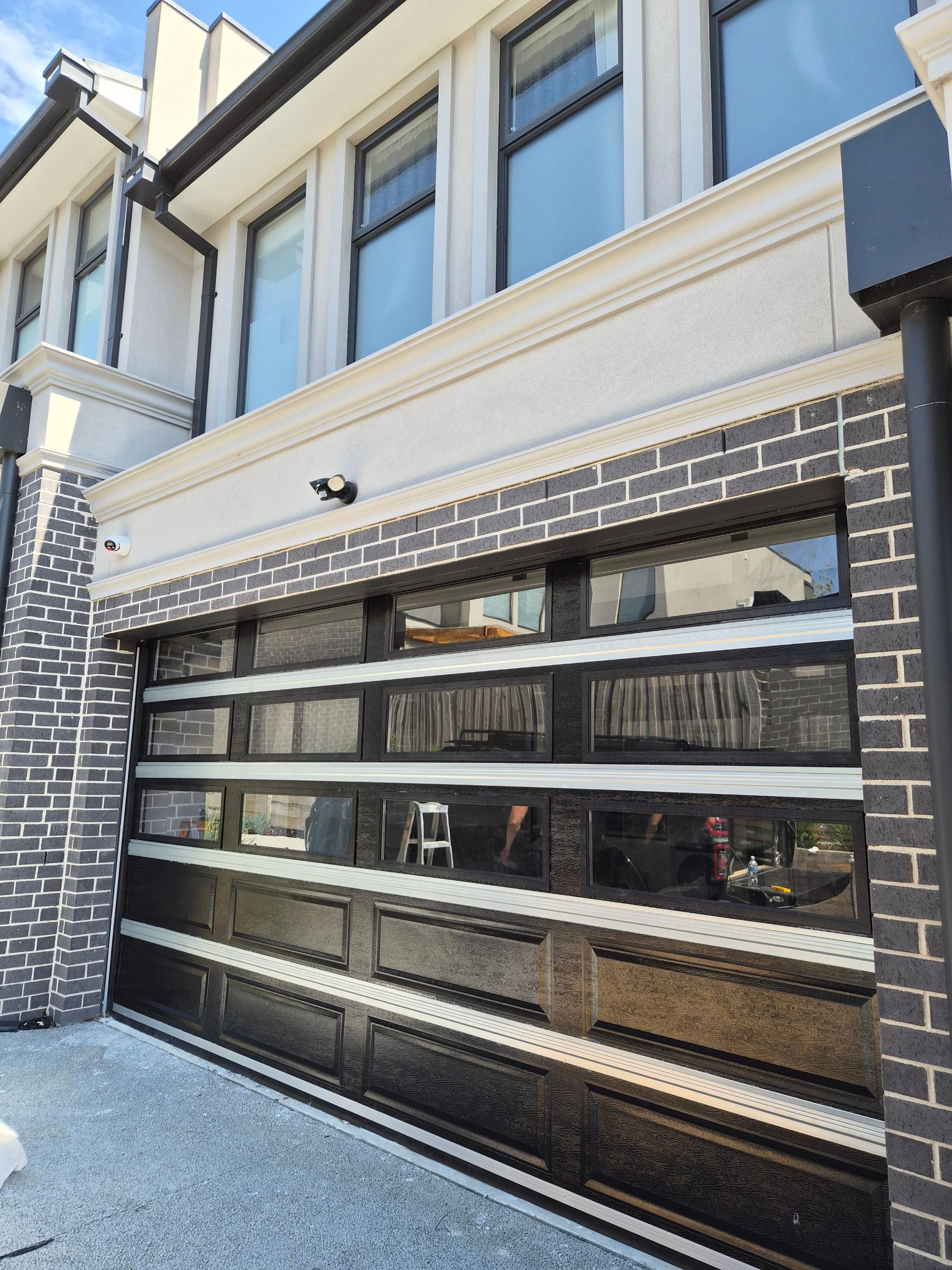
Most people never notice the small steel carriers gliding along the upper track, but that's where the real work happens. A stacking door doesn't swing on hinges; it hangs from a set of trolleys that transfer the entire weight to a barely visible rail. The bottom guide is just there to stop the panels from flapping sideways. As you pull the lead edge, each panel folds against its neighbor and the load redistributes, so the force you feel at the handle is only a fraction of the door's actual mass.
The quietness isn't accidental. Nylon wheels, ball bearings, and a soft-close damper soak up the energy that would otherwise rattle through the frame. When the door reaches the end of its travel, a small pin drops into a floor socket or an alignment catch engages, locking the stack in place without a thud. It’s a balance between momentum and restraint: too much damping and the door feels lazy, too little and it slams.
There's also a trick in how the panels stack. Because they fold rather than slide completely out of the opening, the total clearance needed is roughly one panel width per leaf, not the full width of the doorway. That changes the pressure on the track: instead of one long rolling line, you get concentrated point loads at each hinge. Good hardware spreads those loads back into the header, so the door doesn't sag over time. When it's done right, the whole thing nearly disappears, both in space and in sound.
Slim Frames, Big Light: Choosing Glass That Works Overtime
Thin frames often get a bad rap for being delicate, but the real workhorse is the lens you pair with them. A slim metal or acetate front doesn't have to mean compromised vision. High-index materials let you keep the silhouette sleek while packing in serious light control—whether that's filtering blue light from your screen, cutting glare off wet roads, or simply keeping your eyes from squinting through the afternoon.
Look for lenses that do more than sit there. Photochromic options adjust from clear to tinted without a second pair, while a good anti-reflective coating keeps the view crisp under office lights and streetlamps. If you spend hours outside, a subtle gradient tint can soften the harshest midday sun without turning your frames into a statement you didn't ask for.
The trick is matching the glass to your daily rhythm. Ask about edge thickness before you commit—some materials shave off enough bulk to keep slim frames from bowing. And don't overlook durability: a scratch-resistant topcoat means your thin, light-catching lenses won't turn cloudy after a month in your bag.
Track Systems Without the Guesswork: Wall-Mount, Pocket, or Curved
Choosing between wall-mount, pocket, and curved track systems often comes down to the architecture you already have. Wall-mount tracks sit surface-level, making them easy to retrofit in rooms where recessing a channel isn’t practical. Pocket tracks disappear into the ceiling or wall, providing a cleaner line for heavier drapery or room dividers. Curved tracks handle bay windows, arched openings, or any layout that standard straight rails can’t follow.
Instead of guessing from a spec sheet, start with the window’s shape and the weight of the fabric. A curved track might need a custom bend radius, while a pocket system may require more ceiling clearance than expected. Wall-mount hardware is often the simplest to adjust later, but it will be visible, so the bracket finish matters as much as the rail itself.
If you’re still torn, mock up the path with string or painter’s tape before committing. This quick check shows where the stackback will land, whether the track will clear existing trim, and how the hardware will read from across the room. Once you see the line in place, the right system becomes obvious rather than a compromise.
From Awkward Corners to Open Plans: Sizing ODM Stacking Doors for Real Interiors
Most sizing advice for stacking doors assumes a rectangular opening with plenty of wall on both sides. Real interiors rarely cooperate. In an awkward corner, the stack needs somewhere to land without blocking a window, a light switch, or the only sensible route to the sofa. Before you settle on panel widths, measure not just the rough opening but the actual clear wall available for the stacked leaves—and then subtract at least 4 to 6 inches for the frame and hardware projection. That leftover number, not the headline opening width, is what determines whether a four-panel or six-panel ODM stacking door will actually work.
Open-plan spaces bring their own trap. Wide openings are great for flow, but a run of tall glass panels can get heavy, and the track system has to carry that weight without sagging over time. If the room has a long, uninterrupted wall, it is tempting to specify as many panels as possible; in practice, fewer, broader panels often move more easily and stack into a tighter bundle. Check the floor structure too. A concealed track sits flush, but it needs a recess that may not exist in a slab with underfloor heating or old floorboards. In those cases, a low-profile surface track or a top-hung system may save you from an expensive subfloor job.
Then there is the question of height. Standard door panels can look stubby in rooms with tall ceilings, while floor-to-ceiling panels can make a low ceiling feel heavier. For awkward corners, think about how the stacked panels change the room's shape when the door is open. Leaving a narrow service strip between the stack and the adjacent wall—about 3 to 4 inches—makes cleaning and hardware access much easier. Measure that gap now, not after the installers have left.
Daily Wear, Zero Creaks: What a Low-Maintenance Stacking Door Actually Needs
The real difference between a door that stays quiet for years and one that starts complaining after a few months comes down to the hardware you never see. Cheap nylon rollers wear down quickly, especially if the panel gets pushed with a little force. A low-maintenance stacking door needs sealed ball-bearing rollers running on a hardened stainless steel track. That combination shrugs off dust, pet hair, and the occasional sideways shove without turning into a squeak factory.
Track design matters just as much as the roller quality. Deep bottom channels might seem sturdy, but they become collection points for grit, crumbs, and small stones. Once that debris gets under a roller, the panel starts to jump or scrape. The practical fix is a shallow, flat track or a recessed guide that can be cleaned with a quick vacuum pass or a damp cloth. Top-hung systems take this further by keeping the floor track nearly flush, so there is almost nothing for dirt to grab onto.
Long-term quiet also depends on how easy it is to adjust the panels after installation. Even a slight settling of the frame can change the alignment, causing lock points to rub and seals to wear unevenly. A low-maintenance stacking door should let you fine-tune each panel without removing it from the track. Look for accessible height adjustment screws on the rollers or hinges. That small feature means you can correct minor drift in minutes, keeping the door gliding smoothly instead of forcing it and inviting creaks.
FAQ
It's a door system made of multiple panels that slide along a track and stack neatly to one side or both sides when opened. ODM refers to the manufacturer's design and production approach, meaning the door can be tailored to specific project needs rather than being a one-size-fits-all product.
A hinged door needs clearance to swing open, which eats into floor area. A stacking door's panels tuck against each other, so the space in front of and behind the doorway stays completely usable. You can place furniture right next to the opening without blocking access.
Compact apartments, open-plan offices, and rooms with awkward corners see the biggest difference. They're also great for closets, pantries, or laundry nooks where a swinging door would always be in the way.
Yes. Common options include solid wood, engineered timber, glass with aluminum frames, and even mirrored panels. Finishes range from matte lacquer to wood veneers, so they can match existing cabinetry or become a design feature themselves.
That's one of the main advantages of going the ODM route. Panel widths, heights, track length, and stacking direction can all be adjusted to fit non-standard wall openings, including floor-to-ceiling installations or extra-wide closets.
Installation usually requires a level top track and proper alignment, but most systems come with clear instructions and can be done by a competent DIYer or a professional in a few hours. Maintenance is minimal: occasional track cleaning and checking roller alignment keeps it running smoothly.
It depends on the panel material and seal quality. Solid wood or engineered panels with soft-close mechanisms and brush strips offer decent sound reduction and visual privacy. For bathrooms, frosted glass or solid panels work well, though they won't match a solid-core hinged door's acoustic seal.
They fit well with minimalist, Japandi, industrial, and contemporary interiors. The clean lines and reduced visual bulk help maintain an uncluttered look, while custom materials let them blend into the wall or stand out as a focal point.
Conclusion
When floor space is tight, a traditional hinged door becomes a daily annoyance—its swing arc eats into usable area and forces furniture into awkward corners. ODM stacking doors remove that compromise by folding panels neatly to one side or into a pocket, leaving the opening fully clear. The hardware does the heavy lifting: slim-profile frames hold large glass panels, so natural light passes through even when the door is closed, while the stacked sections rest quietly without visual bulk. This approach works especially well in open-plan renovations where a fixed wall would feel heavy, but a standard door would block flow.
Choosing the right track system matters as much as the door itself. Wall-mount, pocket, and curved options each solve different layout problems—curved tracks can follow a corner, while pocket systems hide the stack completely inside the wall. ODM stacking doors can be sized to fit narrow hallways, wide living areas, or awkward transitions, so you are not forced to rebuild the opening. For daily use, the details make the difference: quality rollers, aligned guides, and sealed edges keep the panels moving smoothly for years without creaks or sticking, which means the space-saving benefit never comes with extra maintenance.
Contact Us
Contact Person: Cyril He
Email: [email protected]
Tel/WhatsApp: 8613969697307
Website: https://cqyqgd.en.alibaba.com/