

Lost Foam Casting Factory Innovations That Transform Metal Component Production
2026-10-15
Lost foam casting is no longer the slow, messy option it used to be. Inside Zhaoyuqi's factory, small but radical changes are letting complex metal parts come out cleaner, faster, and with far less finishing work. If you think this process has hit its ceiling, the next few minutes might change your mind.
What Actually Happens When the Foam Pattern Meets Molten Metal
When molten metal first contacts the foam pattern, the surface doesn't simply melt. The extreme heat causes the polymer to flash-vaporize, shrinking back from the metal front and leaving a thin gap that the metal immediately fills. This retreat-and-advance cycle happens in fractions of a second.
As the foam decomposes, it releases a mix of hydrocarbon gases and liquid residues. Those byproducts have to escape through the permeable refractory coating and the surrounding loose sand. If the coating is too thick or the sand too tightly packed, the gases can get trapped, leading to surface defects or carbon pickup in the casting.
The metal continues to occupy every cavity the foam abandons, picking up fine details from the original pattern. But the process only works cleanly when the pour temperature is high enough to keep the metal fluid while the foam fully evacuates. A pour that's too cool or a pattern that's too dense can leave behind incomplete sections or ash inclusions.
Cutting Core Assembly Steps with Single-Piece Lost Foam Designs
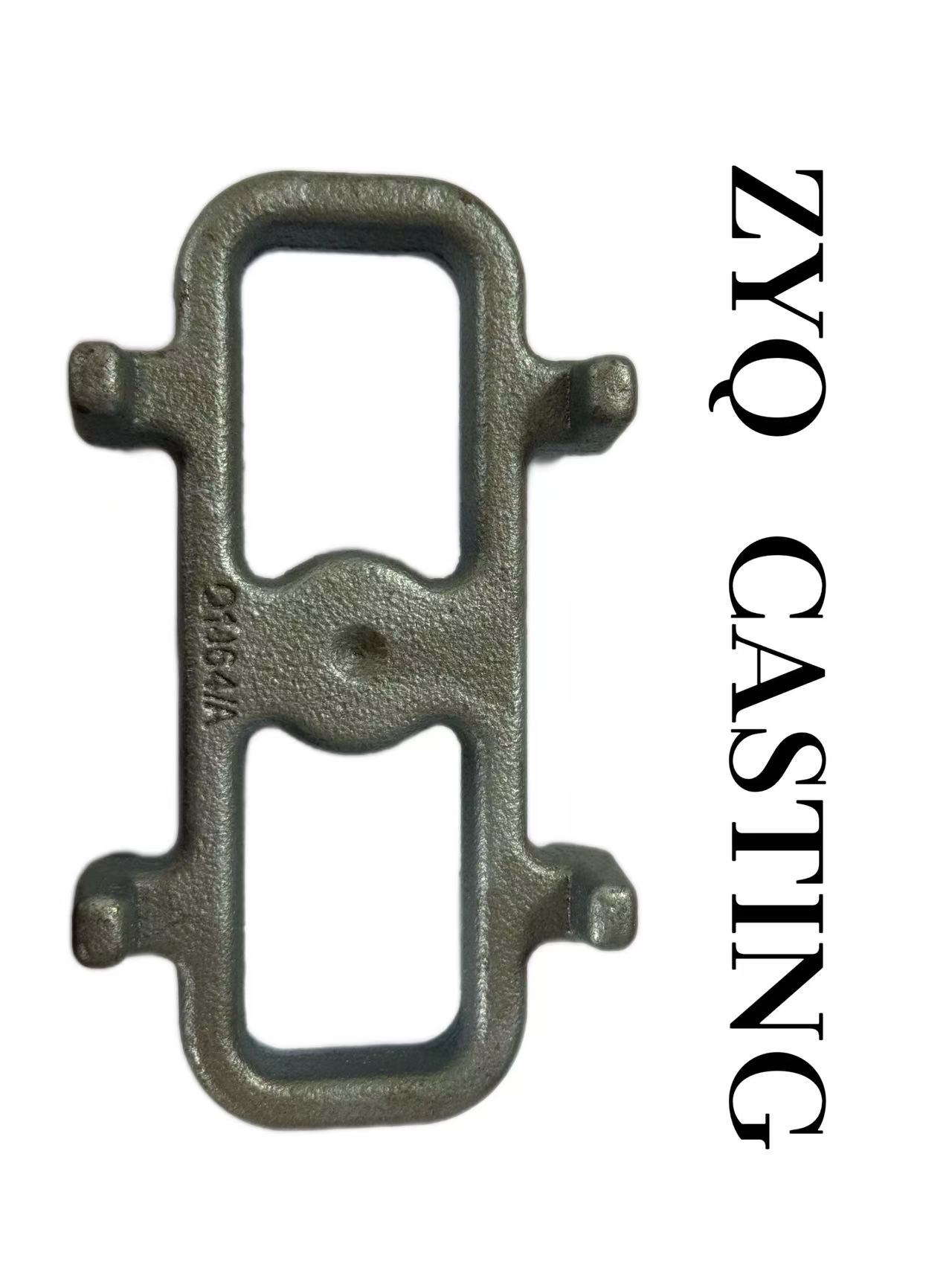
Working with single-piece lost foam patterns changes the rhythm of core assembly entirely. Unlike traditional multi-part cores that demand careful alignment and glue lines, a one-piece core simply drops into the foam cavity and seats against the printed registration surfaces. The trick is to check the foam's edge profile first—any fuzz or slight collapse from cutting can keep the core from sitting fully home. A quick pass with a fine sanding sponge along the contact rim usually solves it before you even reach for adhesive.
Once the core is in place, you don't need to fight gravity the way you would with split patterns. A thin bead of hot melt around the top edge is often enough, since the foam itself grips the core's outer contour. But watch for gassing channels: if you block a vent path with excess glue, the metal will push the core out of alignment during pour. I've found it helps to dry-fit the core, mark the vent openings with a pencil, and then apply adhesive only in short dashes between those marks rather than a continuous line.
After the core is secured, take thirty seconds to run a fingertip along the seam where foam meets core. Any step or mismatch becomes a casting defect, no matter how small it looks on the pattern. Single-piece designs remove most of the assembly guesswork, but the final check is still yours—blow out loose foam beads, confirm the core doesn't rock, and then close the flask. It's a faster process, but speed only works if every seating is dead flat.
From 3D Printed Patterns to Production Lines: The New Workflow
The shift from prototyping with 3D printed patterns to integrating those very prints into full-scale production lines has quietly reshaped how small manufacturers think about tooling. Instead of treating additive manufacturing as a one-off step for form checks, many workshops now print jigs, fixtures, and even sacrificial patterns that move directly into casting or molding stages. This trickles down to faster changeovers and fewer idle machines, because the same digital file can be tweaked and reprinted overnight without waiting on external suppliers.
A practical example sits in foundry work: a pattern that once took three weeks to carve from wood or machine from aluminum can be printed in a day, coated, and placed into a sand mold. The real workflow change isn't the printer itself—it's the removal of the handoff between pattern maker and production floor. Engineers adjust wall thickness or gating on the screen, print a new iteration, and test it on the line the same afternoon. That loop, repeated a few times, builds a library of validated patterns that can be called up for repeat orders without new tooling costs.
Of course, the transition isn't automatic. Print materials need to survive the heat, pressure, or chemical exposure of production, and that often means pairing printed patterns with conventional backings or coatings. But the core idea stands: production lines no longer wait on a separate pattern shop. The line itself becomes the place where patterns are born, tested, and retired—shrinking lead times from months to days and letting small-batch runs behave more like continuous improvement loops.
How Real-Time Thermal Monitoring Keeps Wall Thickness Honest
In blow molding or extrusion, wall thickness often drifts before anyone notices. A heater band slightly hotter on one side, a cooling line partially blocked, or a barrel zone lagging behind its setpoint can thin out a section without triggering an alarm. Real-time thermal monitoring catches these deviations not by measuring the wall directly, but by watching the heat signature that predicts it. When the temperature profile across the die or mold shifts beyond a narrow band, the system flags the trend long before the finished part fails a thickness check.
The real advantage comes from coupling thermal data with the timeline of the process. A sudden spike in melt temperature near the parison exit doesn't just mean wasted energy; it translates to lower viscosity and a tendency for the wall to sag or stretch inconsistently. By logging these thermal events against the corresponding production cycle, operators can see exactly which zone, which timing, and which product run correlates with wall thinning. That turns a vague quality complaint into a specific thermal adjustment, often restoring thickness uniformity without touching the mechanical tooling.
Over time, this monitoring builds a reference model of what a healthy thermal profile looks like for each mold and material. Deviations from that model become early warnings, not post-mortem findings. The result is a process where wall thickness stops being a surprise and becomes a predictable outcome of staying inside the thermal envelope. Honest wall thickness, in other words, is simply what happens when the heat tells the truth.
Turning Post-Casting Waste into Reusable Media: A Closed Loop
Most foundries treat spent sand and slag as a disposal problem. A better approach is to view them as raw material in waiting. By screening, thermal reclaiming, and blending with controlled binders, what was once hauled off-site becomes a high-performance blasting or filtration media. The process cuts virgin material demand and turns a liability into a steady internal supply.
The loop closes when the reclaimed media itself reaches end of life. Instead of landfill, it can be re-crushed, re-screened, and fed back into the same production stream. In practice, this means the foundry no longer depends on outside suppliers for media, and waste volumes drop sharply. Operators track grain shape and contamination levels to keep the cycle running without compromising casting quality.
The real shift is operational, not just technical. Once incoming waste is sorted at the source and reclaim equipment is treated as a core part of the line, the payback comes from avoided disposal fees and reduced raw purchases. More than sustainability rhetoric, it is a quieter, leaner way to run a casting floor.
Why Designers Now Trust Lost Foam for Thin-Walled Housings
Lost foam casting has become a practical workhorse for thin-walled housings that previously forced engineers into compromises. The foam pattern allows wall sections down to a few millimeters while holding shape during metal pour, so designers can specify intricate internal channels and thin ribs without risking collapse or porosity. Fewer machining passes and fewer joints mean the final housing is both lighter and stiffer.
A major reason for the shift is the freedom from draft angles and split lines. Traditional casting methods often require adding unnecessary thickness just to release the part from a mold. Lost foam eliminates that constraint, letting designers place bosses, mounting lugs, and reinforcement ribs exactly where the load path demands. The result is a cleaner, more efficient shape that performs well in tight assemblies.
Production consistency also plays a big role. Because the foam patterns are molded with high repeatability, each thin-walled housing comes out nearly identical run after run. That dependability, combined with lower tooling cost for complex geometries, is why lost foam now shows up in pump housings, valve bodies, and compact electric motor enclosures where every millimeter counts.
FAQ
Lost foam casting starts with a foam pattern that replicates the final part. The pattern is coated with a refractory material, placed in a sand flask, and molten metal is poured directly onto it. The foam vaporizes instantly, leaving a precise metal replica. Modern factories have refined this process with automated pattern molding, controlled coating application, and computer-monitored pouring to achieve tight tolerances.
Several changes stand out. Robotic foam pattern assembly reduces human error, vacuum-assisted sand compaction eliminates voids, real-time thermal imaging during pouring catches fill issues early, and advanced ceramic coatings produce smoother surface finishes. Some plants also use simulation software to predict metal flow and solidification before a single part is poured.
The process excels at producing intricate internal passages, thin walls, and near-net shapes without cores or parting lines. That reduces machining time and allows designers to consolidate multiple parts into one casting. Factories that have embraced automation and tighter process controls now deliver repeatable quality that rivals machining for many geometries.
Components with complex internal geometry benefit most, such as engine blocks, cylinder heads, exhaust manifolds, pump housings, and hydraulic valve bodies. The process also works well for parts that would otherwise require multiple cores or welded assemblies, since the foam pattern can include internal cavities that would be impossible with traditional sand casting.
By producing near-net shapes, the process removes less metal during machining, so there is less scrap. Unused sand is recyclable, and modern foam recovery systems capture and reuse vaporized pattern material where feasible. Some factories also use induction melting with tighter temperature controls to avoid overheating and cut energy use per ton of metal poured.
Simulation lets engineers model metal flow, gas escape, and solidification before production, so they can adjust gating and venting without trial runs. During pouring, sensors track temperature and pressure, and cameras detect incomplete fills or coating failures in real time. That data feeds back into process control, reducing defect rates and shortening development cycles.
Yes, with adjustments. Aluminum and magnesium are common because lower pouring temperatures give the foam more time to vaporize cleanly. Cast iron and steel require higher temperatures, so factories use specialized coatings and venting to manage gas evolution and prevent carbon pickup. Modern plants have tuned recipes for each alloy family to maintain consistent quality.
Additive manufacturing of foam patterns is a major one, as 3D-printed foam eliminates tooling for prototypes and low-volume runs. Machine learning for predictive defect detection, automated coating thickness measurement, and hybrid casting plus machining cells are also emerging. These moves point toward smaller batch sizes, faster design changes, and tighter dimensional control without sacrificing cost efficiency.
Conclusion
In a lost foam casting facility, the moment a foam pattern meets molten metal is less a violent clash and more a precisely choreographed displacement. The metal vaporizes the pattern almost instantly, but the real breakthrough is how modern sensors and pattern coatings control that burn-off so gas escapes without trapping porosity in the final part. This tight control lets engineers drop the old habit of assembling multiple cores. Instead, a single-piece foam pattern can now include internal passages, undercuts, and complex hollow sections that would have required five or six separate sand cores before. With 3D printed patterns moving straight from CAD to the production line, the workflow compresses from weeks to days. Design changes no longer mean rebuilding core boxes or waiting for tooling; a new foam geometry can be printed overnight and poured the next morning.
That same directness shows up in quality control. Real-time thermal monitoring watches the solidification front as it creeps through thin walls, flagging any spot where actual thickness drifts from the model. Instead of cutting a casting apart to check wall integrity, the foundry adjusts pouring temperature or gating on the fly. The push for closed-loop thinking also reshapes the back end of the process. Post-casting sand and leftover foam scrap are now cleaned, screened, and fed back as reusable media, cutting both virgin material costs and disposal burden. Because of these advances, designers increasingly trust lost foam for thin-walled housings and brackets that used to be reserved for die casting or machined billet. The factory no longer treats lost foam as a low-volume oddity; it has become a legitimate route for tight-tolerance, lightweight metal components at production scale.
Contact Us
Contact Person: Nico Yin
Email: [email protected]
Tel/WhatsApp: 8618561567088
Website: https://www.ductileironparts.com/