

Lightweight Bendable Stone Wall Cladding Supplier: How to Find the Best Fit for Your Project
2026-09-05
Finding a lightweight bendable stone wall cladding supplier often starts with excitement and ends with a pile of samples that crack at the corners or fade after one season. That gap between promise and performance is why your supplier choice matters more than the stone itself. Magic Stone is one of the names that keeps surfacing in serious project discussions, but before you lock in a vendor, you need to know which tests and track records actually predict long-term success. This guide cuts through the noise.
Why Some Bendable Stone Panels Still Snap on Curved Walls
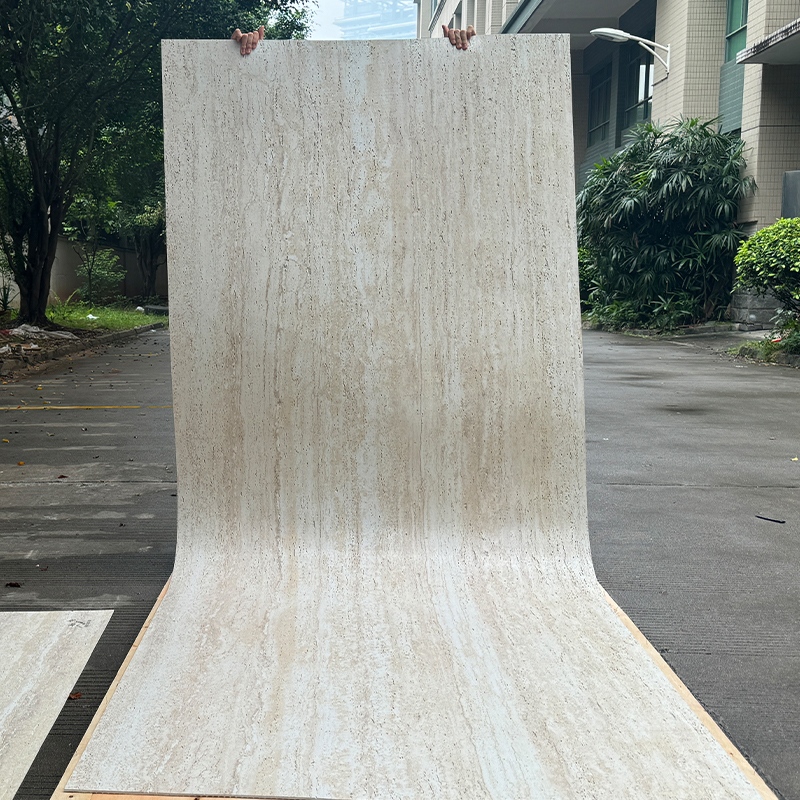
Flexible stone veneer owes its bendability to a thin layer of real stone bonded onto a polymer or fiberglass backing. That backing lets the panel curve around gentle arcs without cracking. But on tighter radii, the stone surface itself reaches a strain limit far sooner than the backing does. Even a millimeter of over-flexing can initiate micro-fractures that spread invisibly until the panel snaps during installation or shortly after.
Another factor is moisture absorption. Stone is naturally porous, and once water seeps into the micro-cracks from bending stress, freeze-thaw cycles or daily humidity swings act like wedges. The backing may stay intact while the stone layer delaminates or tears. Installers often mistake this for poor adhesive, but the real culprit is repeated flexural fatigue combined with expansion of trapped moisture.
Temperature also plays a quiet role. On exterior curved walls, the stone expands and contracts at a different rate than the polymer backing. Over seasons, that differential movement concentrates stress at the bend apex. If the panel was cold-formed during installation, it may hold initially, but the first heat wave can cause the stone to buckle near the curve and snap audibly. Using a heat gun to pre-relax the panel or choosing a larger bend radius often prevents the failure, yet many skip this step to save time on site.
Reading a Supplier Technical Sheet Like a Site Inspector
Most people flip straight to the spec table and call it a day. A site inspector doesn't. Start by looking at the document date, revision number, and any stray annotations. If a supplier sends you a technical sheet from three years ago, that's a red flag before you even read the first data point. Check whether the sheet references specific test standards, lot numbers, or factory codes. If those fields are blank or filled with generic placeholders, assume the document was templated without verification. Real technical sheets carry fingerprints of actual production: a hand-corrected tolerance, a note about a moisture batch, or a signature from a shift lead.
Next, read the values the way an inspector would on-site—not as isolated numbers, but as ranges that interact with each other. A tensile strength of 42 MPa sounds fine until you notice the elongation at break is listed as 2%, which doesn't match the polymer family they claim. Cross-check the oil resistance against the operating temperature: if the sheet says -30℃ flexibility but the customer's application runs at -25℃ with vibration, that margin is thinner than it looks. Pay attention to footnotes and small print. Suppliers often bury conditional values there: "tested at 23℃, 50% RH, after 24h conditioning." Real-world assemblies don't live in that environment.
Finally, treat the sheet as a hypothesis rather than a promise. An inspector trusts but verifies. If something feels off—like an unusually high dielectric strength that would require a coating thickness twice what's listed—call it out. Ask for the raw test report, not the polished summary. Compare the sheet to the actual part in your hand: check the color code, the mark, the batch engraving. A technical sheet is most useful when you read it against the physical sample, not instead of it. That's the difference between data entry and real inspection.
Matching Panel Weight to Your Wall Surface and Adhesive Choice
Heavier panels—think solid wood slats, stone veneer, or thick MDF—demand a wall that can actually hold them without sagging or pulling away. Before you even open a tube of adhesive, check whether your wall is drywall over studs, plaster, concrete, or tile. Drywall alone is rarely enough for anything over a few pounds per square foot; you’ll want to locate studs and screw into those as your primary anchor, then use adhesive as a supplement, not the main event.
For lightweight foam, PVC, or thin acrylic panels, a high-tack construction adhesive on a clean, flat surface often does the job. But “clean” means no dust, grease, or loose paint—otherwise even the best glue will peel off in a sheet. On porous surfaces like bare brick or unpainted plaster, use a polyurethane-based adhesive that can fill tiny gaps and grip uneven texture. On non-porous surfaces like glass or glossy tile, you’ll need something more specialized, such as a neutral-cure silicone or a two-part epoxy, because standard construction adhesives can’t bite into a sealed surface.
If you’re working with a truly heavy panel—say, a full-height mirror or a thick butcher-block accent wall—skip the adhesive-only route. Mechanical fasteners placed at load-bearing points are non-negotiable. You can still use adhesive to eliminate rattling or minor warping, but pair it with screws or Z-clips rated for the weight. And always test a small hidden area first: apply a dab of your chosen adhesive, wait 24 hours, and try to pry it off with a putty knife. If it pops off cleanly, the wall surface or product choice needs rethinking before you commit to the whole panel.
Sample Testing That Goes Beyond a Brochure Photo
A glossy brochure can make any product look flawless, but the real story unfolds when you hold it in your hands. Sample testing strips away the studio lighting and airbrushed angles, revealing how a material actually bends under pressure, how a finish wears after repeated use, and whether the weight feels substantial or disappointingly hollow. It's the difference between admiring a photograph of a steak and cutting into one fresh off the grill.
Our approach to sampling doesn't stop at a quick visual check. We run our fingers along edges to catch burrs the camera missed, drop samples onto concrete to see how they bounce or crack, and leave them in direct sunlight for days to expose any fading that would embarrass you later. These quiet, hands-on trials expose the gap between a product's curated image and its everyday reality, saving you from costly surprises long before production begins.
When you request a sample from us, expect to receive something that has already been pushed, pulled, and questioned. We encourage you to do the same with it — spill coffee on it, scratch it with keys, leave it in a hot car. A brochure photo only promises perfection; a sample that survives your own abuse delivers proof.
Uncovering the Real Installed Cost Before You Sign
The sticker price on a furnace, heat pump, or water heater rarely reflects what leaves your bank account. Before you sign anything, ask for a line-by-line breakdown of the installed cost—freight, old unit disposal, new venting, electrical upgrades, local permits, and even the trip charge for a second tech. If a contractor shrugs and says everything is included, ask where exactly the $487 for miscellaneous goes.
Next, demand the quote states total installed price in writing, with no open-ended clauses about unforeseen conditions. Compare two or three bids by making each one list labor hours, materials, and tax separately. A verbal promise about a rebate or waived disposal fee won't hold up when the final invoice arrives. If the salesperson won't itemize the number, walk—serious installers expect this question and answer it without hesitation.
Supplier Claims Worth Testing on Your Own Substrate
It's easy to get swept up in a supplier's numbers, but lab conditions rarely match your production line. A coating that bonds beautifully to polished steel might fail on the textured aluminum you actually run. Before scaling up, run a small batch on your own material and watch for edge lifting, discoloration, or adhesion loss after thermal cycling. Testing on your substrate exposes whether the claimed performance survives your surface prep, curing window, and even your operators' habits.
Some vendors highlight universal compatibility, but that phrase usually hides narrow testing. If a primer or adhesive is touted to work on everything from polypropylene to powder-coated metal, treat that as a red flag, not a guarantee. A quick crosshatch test with tape, followed by a 48-hour humidity soak, can reveal more than a polished datasheet. Pay attention to how the material behaves at the corners and cut edges—those are where weak bonds show first.
Also, ask for substrate-specific data, not just general TDS sheets. If they cannot provide it, that is a sign the claim has not been validated for your use. Running your own test is not about distrust; it is about matching the claim to the reality of your line speed, film thickness, and surface contamination. A few hours of testing can prevent weeks of rework.
FAQ
Ask for actual physical samples rather than brochure photos. Check how the surface handles a tight bend, look at the edge finish, and confirm minimum order quantities plus realistic lead times.
Request the technical data sheet and pay attention to weight per square meter and the minimum bending radius. Then test a sample on a mock-up with the exact curvature you plan to use.
Find out if the supplier offers site guidance, recommended adhesives, substrate preparation advice, and specific instructions for curved or irregular surfaces.
It matters a lot. Ask for photos of completed projects with similar curves or complex shapes, and try to speak with a previous client about long-term performance and installation challenges.
Confirm whether panels are shipped rolled or flat, what protective packaging is used, and how to store them on site to avoid creasing or moisture damage before installation.
Most specialized suppliers can cut panels to custom dimensions. Color matching is often possible but depends on the stone source, so ask about acceptable variation and always approve a small sample before full production.
Look beyond the square meter price. Include sample quality, technical backup, delivery reliability, and potential waste factor. A slightly higher quote can save you money if it reduces on-site breakage or installation delays.
Be cautious if a supplier cannot provide physical samples, avoids sharing bending test data, or gives vague delivery dates. Extremely low prices may indicate a thinner stone layer or weaker backing material that will fail over time.
Conclusion
Choosing a bendable stone cladding supplier starts with understanding why some panels still snap on curved walls. Many datasheets quote a minimum bending radius from a flat single-axis test, but walls curve in two directions and installers often force the material beyond its elastic limit. Ask for tensile elongation at break and a three-point bend test on the actual stone veneer, not a generic resin film. Read the technical sheet like a site inspector: check thickness tolerance, fiber backing weight, and whether the stated flexibility is measured after UV and moisture aging. Then match panel weight to your wall surface and adhesive choice. A lightweight panel might flex easily but can telegraph substrate waves; a slightly heavier one may need a high-shear adhesive to prevent creep on vertical curves. If your substrate is drywall, plywood, or concrete, the required adhesive open time and mechanical fixing pattern change dramatically.
Sample testing has to go beyond a brochure photo. Ask the supplier for a full-size offcut, not a hand-sized swatch, and wrap it around the smallest radius on your project—hold it there for 72 hours with temperature cycles. Check for micro-cracking at the edges and whitening on the face. Before you sign, uncover the real installed cost: include waste from snapping, corner returns, moisture barrier, primer, and a flexible adhesive that costs more than standard thin-set. Many quotes leave out freight for crated rolls or the need for a specialty installer. Finally, test supplier claims on your own substrate: apply the panel to the exact wallboard and adhesive you will use, expose it to rain and sunlight, and see if the bond holds. Ask for local installed projects and call the contractor, not just the supplier. The best fit is rarely the lowest per-square-meter price—it is the panel that survives your actual radius, your wall movement, and your local weather without surprises.
Contact Us
Contact Person: Vito
Email: [email protected]
Tel/WhatsApp: 86 13088879266
Website: https://www.magicstonemcm.com