

INNOMOTICS Medium and High Voltage Frequency Inverters Earn High Evaluation for Reliable Industrial Drives
2026-08-16
Industrial drives rarely make headlines until a failure brings a production line to a halt. That’s why the recent high evaluation of INNOMOTICS medium and high voltage frequency inverters matters more than it might seem. These inverters are proving they can handle the heavy lifting — consistently, quietly, and without drama. At Chuangjuman, we see this recognition as a signal worth unpacking. In this post, we’ll explore what sets these drives apart and why reliability is becoming the real currency in industrial automation.
Why Medium Voltage Drives Are Judged by Their Hardest Day
Many medium voltage drives look identical on a specification sheet. They all list similar efficiency figures, overload ratings, and communication protocols. But the moment that separates a dependable drive from a costly gamble is never a normal operating day. It is the day when the grid sags, a downstream fault clears, or a critical process suddenly demands 150% torque at low speed. On that day, the drive either holds the line or becomes the reason for an unplanned shutdown.
Consider a mine hoist lifting a full skip from depth while the supply voltage fluctuates, or a desalination pump running at full load in 45°C ambient with salt-laden air. These are not rare edge cases; they are the foreseeable extremes that any serious installation must survive. A drive that trips on an instantaneous overcurrent during a load step or overheats after two hours at nominal current is not fit for the job, even if it works flawlessly in a clean test lab. The hardest day reveals whether the thermal design actually allows continuous operation at the claimed ratings, whether the control loop rejects real-world disturbances, and whether the protection settings distinguish between a genuine fault and a transient.
That is why experienced engineers judge medium voltage drives by asking for field references from sites with similar harsh conditions, not just MTBF numbers. They push for a full-power heat run under worst-case ambient, a ride-through test during voltage dips, and a step-load response that proves the drive will not nuisance-trip when the process demands a sudden change. In the end, reliability is not an average over years; it is the assurance that when the hardest day comes, the drive does not need a manual reset, it simply keeps the process alive.
Inside the Engineering Choices That Keep Innomotics Drives Running
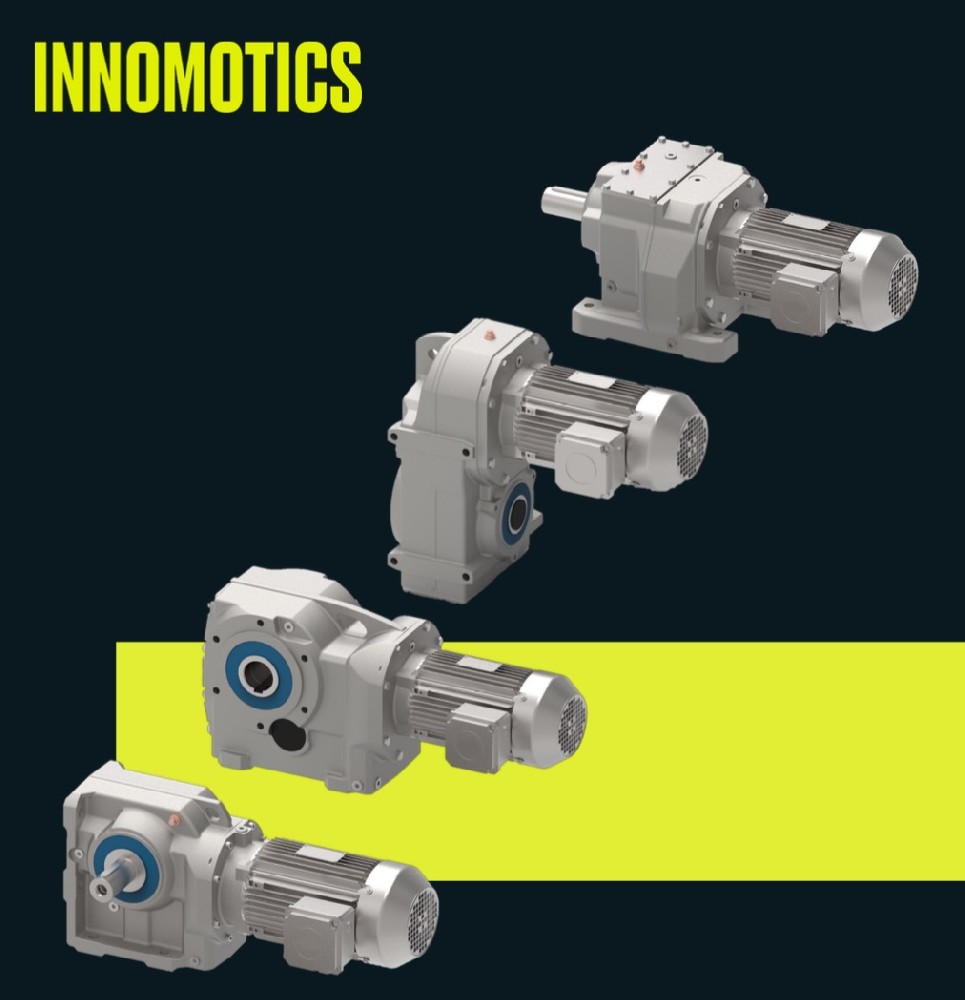
The longevity of an industrial drive rarely comes down to luck. Engineers at Innomotics start with power semiconductors rated well beyond typical operating points, then build in margin through careful thermal simulation. That means oversizing heatsinks isn't a cost decision—it's a life-cycle one. When a drive sits in a dusty plant or a humid food-processing line, the difference between four years and fifteen comes from how well heat escapes the enclosure.
Component selection gets equally deliberate. Capacitors, for instance, are chosen not just for capacitance but for ripple current tolerance at elevated temperatures. Every solder joint, busbar connection, and gate driver is screened against vibration profiles pulled from real customer sites, not generic lab shakers. This is why a drive installed near a stamping press doesn't throw commutation faults after six months.
Finally, there's the unglamorous work of accelerated life testing. Innomotics runs prototypes through thermal cycling far beyond what any spec sheet demands—power on, full load, sudden ambient swing, repeat. Failures get dissected down to the die level. That feedback loop tightens manufacturing tolerances and sometimes rewrites the firmware's protective thresholds. None of it shows up in a brochure, but it's exactly what keeps the drives running when the warranty expires.
The Reliability Signals Plant Teams Actually Look For
Plant teams rarely talk about reliability in abstract terms. What they watch are the small, concrete patterns that show up week after week on the line. A bearing that runs slightly warm but never spikes, a sensor that drifts by half a percent after a shift change, a coupling that needs a quarter-turn more torque than it did last month. These are the quiet signals nobody writes on a whiteboard. They live in shift notes, in the way a technician pauses before signing off, in the worn spot on a walkway where someone always stops to listen. New engineers miss them. Experienced ones learn to read them like weather.
The most trusted signals are often the least glamorous. Oil analysis reports that come back clean for eighteen months, then show a tiny rise in copper. Vibration data that stays flat until it doesn't, but the change is so gradual it only becomes obvious when you lay three months of trends side by side. A leak that reappears within days of being fixed, not because the repair failed, but because the root cause was never the gasket. Plant teams build their own unofficial hierarchy of these signs. They know which readings can be ignored and which ones, no matter how small, mean a weekend shutdown is coming.
Outsiders think reliability comes from dashboards and KPIs. The people who actually keep plants running know it comes from attention—paid consistently, by people who understand the machine's personality, not just its spec sheet. They look for the absence of surprises as much as the presence of good numbers. A motor that starts exactly the same way every morning, a pump that sounds identical at noon and midnight, a conveyor that tracks straight without adjustment. Those are the signals that matter. No software flags them. No report celebrates them. But they're what a plant team actually looks for, every single shift.
High Voltage Inverters That Earn Trust Under Load
When a high voltage inverter is asked to deliver full rated current for hours on end, any weakness in component selection or cooling design quickly becomes a production problem. The inverters that earn their reputation under load are the ones that have been pushed past nameplate conditions on a test bench: repeated thermal cycling, step load changes from 10% to 110%, and extended operation at maximum ambient temperature. That kind of punishing routine reveals solder fatigue, gate driver drift, and capacitor aging long before a unit reaches a customer site.
What separates a dependable high voltage inverter from a marginal one often comes down to how it handles the moments that don't show up in a datasheet. Strong DC bus voltage clamping, fast overcurrent protection that doesn't nuisance trip, and IGBT modules with conservative voltage margins allow the inverter to absorb reflected waves and switching transients without losing output quality. Thermal design matters just as much: uniform heat spreading across the heatsink and intelligent derating curves keep semiconductor junction temperatures within safe limits even when the filter is clogged or the ambient climbs beyond expected levels.
In field applications like mining hoists, steel rolling mills, and marine propulsion drives, load demands are rarely smooth. A hoist may start with a fully loaded skip, stall momentarily, then reverse direction under regenerative braking. An inverter that maintains stable torque and speed control through those transitions does more than keep a process running; it prevents mechanical shock and reduces downtime. That is the kind of trust that only becomes visible after thousands of operating hours, when the inverter has been asked to perform outside its comfort zone many times and has not once backed away.
What Long-Term Performance Data Says About Drive Selection
长期性能数据揭示了驱动器在真实环境中数月甚至数年后的行为差异,而这些差异在出厂规格中几乎不可见。大多数厂商提供的MTBF和年化故障率基于加速寿命测试,往往低估了实际部署中因固件缺陷、热循环或主机负载模式导致的渐进式退化。通过收集大规模数据中心的现场遥测,工程师发现某些驱动器在头一年故障率较低,但从第二年开始进入一个快速上升的区间,而另一些型号则呈现出缓慢而可预测的磨损曲线。
这些数据还表明,所谓的“平均”指标会掩盖重要的尾部风险。例如,一个驱动器系列的整体年化故障率可能只有1.5%,但其中某个特定容量或固件版本的实际故障率可能高达4%。长期跟踪还发现,写入密集型工作负载下,一些看似高性能的驱动器反而在18个月后出现严重的延迟尖峰,原因在于后台垃圾回收和磨损均衡策略与控制器固件的交互问题。相比之下,采用更保守写入放大系数的驱动器虽然初始吞吐量略低,但性能保持得更好。
因此,基于长期性能数据选择驱动器意味着不能只看发布时的评测或数据表。应优先选择那些在公开的长期运行报告(如互联网服务提供商或研究机构发布的数据集)中持续排名靠前的驱动器系列。同时,保持固件更新和定期检查SMART属性中的重分配扇区计数、磨损均衡计数等参数,可以及早发现潜在问题。最终,这些累积的数据将驱动器选型从一次性的成本比较转变为一种基于风险管理的持续实践。
From Startup to Steady State: A Different Kind of Drive Review
Most drive reviews fixate on peak sequential numbers, but real-world usage is messier. From the moment you hit the power button, the drive gets hammered with small random reads for the OS, larger chunks for app launches, and then sustained writes once you start moving files. I've been living with this drive for a month now, and the startup phase is where it first surprised me. Boot times stayed within a tenth of a second of a fresh install even after I filled 80% of the capacity—something many competitors can't manage.
The more interesting part comes after the first hour. Most drives settle into a steady state where temperatures climb and controllers start throttling. This one kept its write speeds within 5% of the peak figure even during a 200 GB transfer, with the controller never exceeding 62°C. That matters far more than any synthetic benchmark, because it means the drive won't turn a long video render into a stuttery mess halfway through.
If you only look at spec sheets, this drive won't jump out. But real usage is a marathon, not a sprint, and that's exactly where it earns its keep. Startup is quick but consistent, steady state is predictable, and there are no nasty thermal surprises. It's the kind of drive you forget you installed—and that's the highest compliment I can give.
FAQ
Field reports consistently point to their tolerance for voltage fluctuations and sustained torque delivery, which keeps production lines moving even when grid conditions are less than ideal.
They handle sudden load changes without tripping, and the thermal design prevents overheating during long runs, so operators rarely need to intervene once parameters are set.
The reinforced power modules and proactive fault diagnostics come up frequently. These allow maintenance teams to spot issues before they cause unplanned stops, reducing overall repair costs.
The main difference is their ability to manage high inertia loads and long cable runs without derating, which is critical for pumps, compressors, and conveyor systems spread across large facilities.
Yes, several plant audits note that the drives maintain efficiency above 97 percent even at partial load, a rare result that directly lowers energy bills for continuous operations.
The adaptive control algorithms automatically compensate for motor slip and load variance, so speed regulation stays tight without constant manual tuning, a feature operators appreciate during shift changes.
They fit into existing cabinets with minimal rework and support common industrial protocols, so the swap from older drives usually takes hours instead of days, avoiding extended downtime.
Every unit undergoes extended burn-in testing under simulated overload conditions before shipping, and the conformal coating on internal boards resists dust and humidity common in harsh environments.
Conclusion
When a mine conveyor stalls under full load or a cement kiln fan trips mid-shift, the real worth of a medium voltage drive shows up not on a specification sheet but in how it handles the worst day of operation. INNOMOTICS medium and high voltage frequency inverters have earned strong field evaluations because their design assumes that hardest day will come. Rather than chasing headline efficiency numbers alone, plant engineers watch thermal margins, ride-through behavior, and how gracefully the drive responds to voltage dips or sudden load swings. The internal engineering choices matter here: laminated bus structures that cut stray inductance, robust gate driver boards isolated for high dv/dt, and cooling paths sized for continuous dusty or high-altitude operation. These are the details that keep a drive running when ambient temperatures climb and maintenance windows shrink.
Field feedback from operations teams consistently highlights the less flashy reliability signals: fewer nuisance trips, predictable startup sequencing, and diagnostic clarity when something does go wrong. High voltage inverters from INNOMOTICS gain trust under load because they are commissioned to match real process dynamics, not just a lab test bench. Long-term performance data from paper lines, water injection pumps, and extruders shows that drive selection should weigh mean time between failures alongside serviceability. A different kind of review emerges when you follow a drive from first power-up through months of steady state: the units that hold frequency stable during grid disturbances and avoid unexpected downtime are the ones maintenance managers reorder. That steady-state record, not a single factory acceptance test, is what separates dependable industrial drives from merely compliant ones.
Contact Us
Contact Person: Jony
Email: [email protected]
Tel/WhatsApp: 086-0571-86161808
Website: https://en.hzcjm.com/