

Industrial Air Conditioning Solutions That Cut Energy Costs Without Sacrificing Performance
2026-11-02
In today's competitive industrial landscape, reducing energy costs while maintaining peak cooling performance is a constant challenge. Many facilities managers assume that saving money means accepting lower output—but that's no longer true. Tongbaote industrial air conditioning solutions are engineered to deliver both: significant energy savings without any compromise on performance. In this article, we'll uncover how these systems work, why they outperform traditional units, and what real-world savings look like. If you're ready to cut costs without turning down the temperature on productivity, keep reading.
Rethink Cooling Loads Before You Oversize
Cooling load calculations often get treated as a formality—plug in the square footage, assume a few occupants, add a safety margin, and move on. That habit quietly leads to equipment that’s 20 to 40 percent larger than the building actually needs. Instead of relying on rule-of-thumb tonnage, start with the actual schedules, window orientations, internal gains, and ventilation requirements. A smaller, right-sized system tends to run longer at partial load, which improves humidity control and reduces short-cycling wear.
One overlooked factor is the difference between peak load and average load. Oversizing for a few hours of extreme heat means the system spends most of its life cycling on and off at low output, wasting energy and leaving spaces clammy. Revisit the load profile before adding capacity: check if thermal mass, night flushing, or zoning can shave the peak. In many retrofit cases, simply recalibrating the design day assumptions trims a full ton or more without any comfort penalty.
Finally, question the safety factors stacked on safety factors. If every layer adds ten percent, the final unit can be twice the sensible load. Ask for a load calc that separates sensible and latent gains, rather than one blended number. That way you can match the equipment to the coil’s real performance. Right-sizing is not about cutting corners—it’s about giving the building a chance to operate the way it was drawn.
Variable-Speed Compressors Cut More Than Just Noise
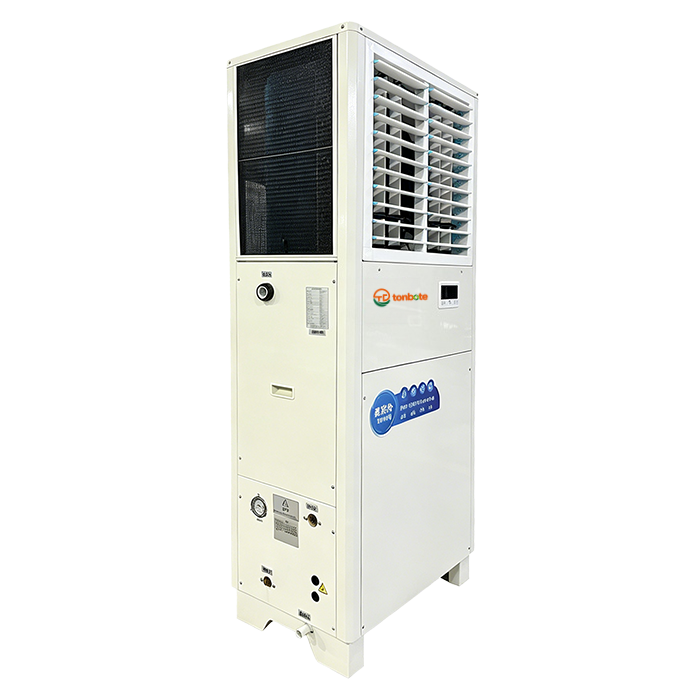
Walk into a workshop running a fixed-speed compressor and the first thing that hits you is the constant roar. Switch over to a variable-speed unit, and the drop in decibels feels almost too good to be true. But the real story isn't just about a quieter room. It's about a machine that matches its output to the actual demand, instead of running flat out all day. That simple shift changes how the system behaves under partial loads, and the benefits stack up in ways that have nothing to do with your ears.
Think about what happens when a compressor cycles on and off repeatedly. Every start sends a jolt through the motor, the belts, the bearings. Now picture a drive that ramps the motor up gradually and holds it at the exact speed needed for the job, whether that's 40% or 85% of capacity. The wear and tear from those harsh starts disappears. Oil lasts longer because temperatures stay more stable. Filters don't clog as fast. Even the electrical side gets a break, since inrush current drops dramatically compared to a direct-on-line start.
For many operations, the biggest surprise comes from the electric bill. A fixed-speed compressor running at partial load wastes energy by compressing air nobody uses. A variable-speed drive trims that waste by adjusting the motor's RPM to match real-time air demand. In plants where demand swings throughout the day, the savings can reach 30% or more. Add in reduced maintenance intervals and fewer unplanned shutdowns, and what started as a search for a little peace and quiet becomes a solid case for rethinking the entire air system.
Heat Recovery Turns Waste Into Free Cooling
Most cooling systems burn electricity to chase heat out of a building, but a growing number of facilities are turning that logic on its head. Waste heat from compressors, exhaust stacks, or industrial processes—normally vented into the air—can be captured and fed into thermally driven chillers. These units use the heat itself to produce chilled water, effectively converting a liability into an asset without adding load to the electrical grid.
The principle is familiar: absorption and adsorption cycles replace mechanical compression with a heat source. A lithium bromide solution, for instance, absorbs refrigerant vapor, then releases it when heated by recovered waste. The result is a cooling loop that runs on energy already paid for. In cogeneration plants, this means the same fuel that generates power also supplies air conditioning. In food processing or chemical manufacturing, hot effluent that once needed cooling towers now drives chilled water loops for process or comfort cooling.
The payoff shows up in operating costs and equipment life. Because thermal chillers have few moving parts, maintenance drops sharply compared to electric compressors. And when waste heat is abundant, cooling becomes nearly free—shaving peak demand charges and reducing the need for backup electric chillers. It is a quiet shift: instead of paying twice, once to run a process and again to remove its heat, facilities let the waste do the work.
Smart Controls That Learn Your Facility’s Rhythm
Instead of forcing you to program rigid schedules, these controls quietly observe how your building operates over days and weeks. They notice when the first shift arrives, when the loading dock buzzes with activity, and when the last light flickers off. From those patterns, they build a dynamic model of your facility’s natural rhythm—then adjust temperature, ventilation, and lighting to match it without constant manual input.
That learning never really stops. A sudden change in production hours, a new weekend crew, or a seasonal shift in daylight all get folded into the system’s understanding. Within a few cycles, it anticipates the variance and responds early, trimming waste during idle stretches while keeping occupied zones comfortable. You don’t reconfigure anything—the controls simply adapt, as if they’ve been part of the building for years.
The result is less guesswork and fewer overrides. Rather than reacting to a fixed schedule that’s always slightly wrong, your facility runs on a living profile that mirrors actual use. Energy use dips when spaces empty, airflow ramps up before people arrive, and comfort stays consistent even as routines drift. It’s control that feels less like programming and more like a building that pays attention.
The Hidden Cost of Neglected Air Filters
Most people only think about the price of a replacement filter, but that's the smallest expense in the whole equation. When airflow gets choked by dust and debris, your HVAC system has to work noticeably harder just to push air through the ducts. The result isn't just a warmer living room or a colder bedroom—it's a steady climb in your monthly energy use that you won't see until the bill arrives. Over the course of a single cooling or heating season, those extra kilowatt-hours quietly add up to far more than a new filter would have cost.
There's also a mechanical toll that rarely gets mentioned. A blower motor straining against a clogged filter runs hotter, bearings wear faster, and the system cycles more often than it should. That constant overexertion shortens the lifespan of components that are expensive to replace—sometimes pushing a unit toward an early failure years before its expected retirement. You might not hear the strain, but your equipment feels it every single day.
Then there's the air itself. A neglected filter stops capturing the fine particles it was designed to trap, letting dust, pollen, and pet dander recirculate through your home. For anyone with allergies or respiratory issues, that means more than just stale air—it can turn a comfortable space into a source of constant irritation. And once that dirt passes the filter and settles on coils or inside ductwork, the cost to clean or repair the system climbs even higher.
Commissioning: The Untapped Efficiency Lever
Most buildings are handed over with systems that technically work but never quite run as intended. Sensors drift, setpoints stay at default values, and controls sequences remain unverified against actual occupancy patterns. The result is a quiet, persistent waste that compounds monthly on utility bills. Commissioning — done properly — treats the building not as a static delivery but as a living system that needs tuning to its real-world conditions. It is less about checking boxes and more about asking why a chiller runs at 3 a.m. or why a fan runs at full speed when the space is empty.
The untapped part comes from how rare it is to see commissioning beyond the initial construction phase. Existing buildings, especially those 10 to 20 years old, often have no formal process for revisiting control logic or recalibrating sensors. Operators get used to complaints about hot and cold spots, and maintenance teams patch symptoms instead of tracing root causes in the sequences. A focused re-commissioning effort can uncover issues that were designed in from day one — oversized equipment, conflicting zone priorities, or schedules that ignore actual usage. These are not dramatic failures; they are small misalignments that accumulate into a significant efficiency gap.
What makes commissioning a true lever is its cost-to-benefit ratio. Unlike capital-intensive retrofits, many commissioning fixes involve adjusting parameters, enabling existing features, or recalibrating sensors — work that can be done within a normal maintenance budget. The savings show up quickly in energy data and in fewer tenant comfort complaints. For building owners looking for a practical next step after an energy audit, commissioning provides a way to turn findings into action without waiting for a major renovation cycle. It is the discipline of verifying that what should be efficient actually is efficient, now and over time.
FAQ
Rather than simply running compressors at full tilt, modern systems lean on staged or variable capacity operation. That means the unit matches its output to the real heat load instead of wasting electricity on short cycling. Combined with improved heat exchanger surfaces and better airflow management, the system can hold target temperatures steady while drawing far less power.
Look for electronically commutated motors, multiple cooling stages, and intelligent controls that can adapt to changing production schedules. Heat recovery options also matter in many plants—capturing waste heat for processes or space heating can turn a cooling cost into a useful resource. And don't overlook the coil design; microchannel or enhanced fin geometries often deliver better heat transfer per watt.
In most cases, yes. A retrofit with modern compressors, variable frequency drives, and updated controls can often cut energy consumption by 20 to 40 percent compared to a unit that's ten or fifteen years old. The key is matching the upgrade to the actual load profile—oversized equipment wastes energy even when new, so a detailed load assessment is worth the effort before spending money.
Variable speed drives allow compressors and fans to run at partial load instead of cycling on and off. Since industrial spaces rarely need full cooling capacity at all times, this avoids the spikes in demand that come with frequent starts. Over a year, the reduction in peak demand charges and wasted runtime can be substantial, often paying for the drive within a couple of seasons.
Smart controls gather data from temperature, humidity, occupancy, and even production equipment status to anticipate cooling needs. Instead of reacting after a space overheats, the system can ramp up gradually or shift cooling to zones that actually need it. That prevents overcooling empty areas and keeps compressors from fighting against heat sources that could be managed with simple ventilation.
Yes—low global warming potential refrigerants like R-32 or ammonia-based systems can offer better thermodynamic performance in certain industrial settings, though they require careful handling. On the coil side, microchannel condensers and evaporators with hydrophilic coatings shed moisture faster and transfer heat more effectively, which is especially useful in dusty or high-humidity plants.
Dirty coils and clogged filters can erase efficiency gains quickly. A routine that includes coil cleaning, filter replacement, refrigerant charge verification, and calibration of sensors will keep energy use in check. It's also worth checking ductwork and dampers for leaks—air that escapes before reaching the conditioned space means the system works harder for nothing.
Track energy use before and after the change, normalized for weather and production volume. Simple metrics like kilowatt-hours per ton of cooling or per unit of output give a clearer picture than total utility bills. If you have sub-metering on the chiller or rooftop unit, even better—comparing the specific energy ratio over a few months removes guesswork.
Conclusion
Many industrial facilities oversize their cooling systems out of caution, but rethinking actual cooling loads before specification often reveals that a smaller, more precisely matched unit handles peak demand with lower capital and running costs. Pairing this with variable-speed compressors means the system modulates output to match real-time load instead of cycling on and off—reducing energy spikes, mechanical wear, and noise while maintaining tight temperature control. Heat recovery further shifts the economics: instead of rejecting condenser heat outdoors, it can preheat process water or supply building heat, turning a waste stream into free thermal energy and offsetting boiler load. Smart controls tie these elements together by learning a facility's weekly rhythm—occupancy, shift changes, batch processes—and automatically adjusting setpoints, staging, and ventilation to avoid unnecessary cooling during low-activity periods.
Yet performance also depends on maintenance and commissioning details that are easy to overlook. Neglected air filters raise static pressure, forcing fans to work harder and evaporator coils to run colder than intended, quietly eroding efficiency and capacity. A thorough commissioning process, conversely, verifies that sensors, dampers, refrigerant charge, and control sequences actually match the design intent under real operating conditions—often uncovering 5–15% energy waste with no new hardware. Together, these strategies let industrial plants cut energy costs without sacrificing cooling performance, because the savings come from eliminating oversizing, recovering heat, learning occupancy patterns, and keeping the system tuned—not from turning down comfort or process requirements.
Contact Us
Contact Person: Wanshu Chen
Email: [email protected]
Tel/WhatsApp: +86-13662871206
Website: https://www.mbcee.com