

High Quality Labels Inkjet Coding Machines for Reliable Product Coding
2026-08-22
Nothing slows a production line like a smudged batch code or a label that won’t scan. Yet for many manufacturers, that’s a daily frustration. Reliable product coding isn’t just about compliance—it’s about keeping your reputation intact and your line moving. That’s where Danmajet high-quality inkjet coding machines come in. Built for clarity, speed, and consistency, they turn a common pain point into a non-issue.
Why Premium Inkjet Coders Outperform Basic Labeling Setups
Basic labeling setups often rely on pre-printed labels that must be purchased, stored, and manually applied or fed through a separate labeling machine. This creates bottlenecks when product lines change, material types vary, or batch sizes shrink. Premium inkjet coders eliminate that dependency by printing directly onto the package surface, whether it’s film, glass, metal, or corrugated board. The result is faster changeovers, no label inventory to manage, and far less risk of running out of the exact label you need mid-production.
The performance gap widens when you consider print quality and adhesion. Label edges peel, smudge with condensation, or get scraped off during handling, while high-resolution inkjet droplets bond into the substrate itself. Premium coders use solvent or UV-curable inks formulated for specific surfaces, maintaining legible barcodes, lot numbers, and expiry dates even after freezing, pasteurization, or rough transit. This reliability means fewer reworks, fewer rejected cartons, and no quiet degradation of your traceability data.
Operationally, a basic labeling setup quietly costs more than the sticker price. Workers lose minutes per roll change, label misalignment causes scanner failures downstream, and storage space for multiple label SKUs adds overhead. A premium inkjet coder with automated printhead cleaning, self-diagnostics, and recipe-driven message selection runs unattended through long shifts. When you factor in reduced downtime, less material waste, and consistent code placement, the total cost of ownership often flips in favor of the coder—even before accounting for the flexibility to add variable data, graphics, or real-time counters that labels simply can’t match.
Precision Coding for High-Speed Production Lines
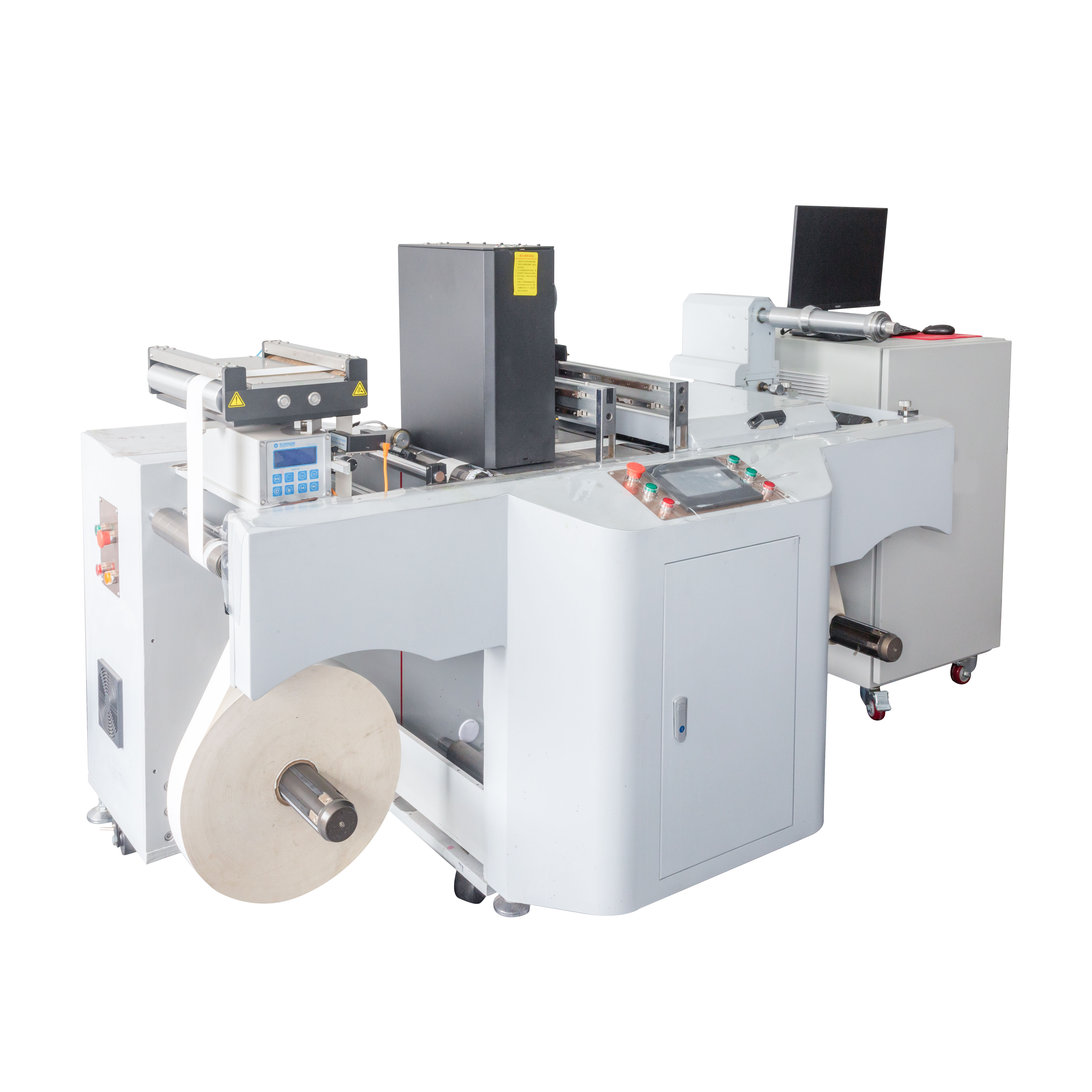
High-speed lines don't forgive sloppy code placement. A few milliseconds of drift in the printhead timing or a fraction of a millimeter in substrate alignment, and the result is a barcode that scanners can't read or date code that smears across the packaging. Precision coding here means more than just choosing a reliable printer—it means synchronizing the print trigger, encoder feedback, and product sensor so tightly that every mark lands exactly where it should, at line speeds exceeding 600 containers per minute.
The real differentiator often shows up in the software layer. Modern controllers compensate for acceleration and deceleration on variable-speed conveyors, adjust throw distance on curved surfaces, and switch between multiple printheads without missing a beat. And when the line changes over to a new SKU or a different package size, the coding system should pull the correct layout and print parameters automatically rather than forcing an operator to recalibrate by hand. That's the kind of precision that keeps reject rates low and throughput high.
Choosing the Right Ink Formula for Durable Product Labels
Ink selection often gets treated as an afterthought, yet it decides whether a label survives a single warehouse shift or a decade of rough handling. The first step is matching the ink chemistry to the surface energy of your label stock—polypropylene demands a different resin system than coated paper, and guessing here leads to smeared bar codes or flaking text. Beyond adhesion, consider the environment your product will actually meet: chemical splash, UV exposure, temperature swings, and even frequent hand contact all leave their mark on print integrity.
Rather than chasing the cheapest option, think about the failure mode you cannot afford. A label on a motor oil bottle that fades under sunlight creates warranty confusion, while a medical device label that rubs off after repeated sanitizing wipes becomes a safety issue. Durable inks fall into rough families—solvent-based for aggressive adhesion, UV-cured for scratch resistance and fast production, water-based with crosslinkers where regulations restrict solvents—and the right choice hinges on whether you prioritize abrasion resistance, chemical inertness, or long-term legibility.
Testing matters more than spec sheets. Run a small batch through your actual printing process, then subject it to the real-world abuse your label will face: tape pulls, alcohol wipes, a week under a heat lamp, or a soak in whatever liquid sits next to your product. Pay attention to edge definition and ink thickness, since over-linking causes smears while under-linking leaves voids that turn into weak spots. The best formula is rarely the one with the highest advertised durability—it is the one that holds up under your specific conditions without overengineering the cost.
Real-World Applications Where Reliable Coding Matters Most
When someone's life depends on a machine, a segmentation fault is not an abstract annoyance. Inside an infusion pump, the loop that meters out micrograms of fentanyl has to be deterministic; there is no room for a heisenbug that only appears under a specific timing load. Hospitals now routinely demand that vendors show evidence of static analysis and formal verification for pacemaker firmware, because a missed interrupt can mean an extra pacing spike or a skipped beat. Reliable coding here is less about elegant abstractions and more about boring, provable behavior under every possible branch.
Aviation software offers another sharp example. The Traffic Collision Avoidance System that tells pilots to climb or descend runs on logic that must remain coherent even when two aircraft generate conflicting advisories. Developers building such systems often write in restricted subsets of C or Ada and lean heavily on model checking, because a single uninitialized variable could translate into a midair conflict. The same mindset now appears in automotive driver assistance, where a sensor fusion bug at highway speed can turn a routine lane change into a catastrophic event.
Then there is the world of clearing and settlement, where code reliability is measured in milliseconds and in dollars. A trading platform that goes down during a volatility spike does not just annoy customers; it can trigger cascading margin calls across counterparties. Teams working in this space tend to favor boring, repeatable patterns over cleverness—idempotent retries, append-only ledgers, failover tested with actual network partitions. The application is less glamorous than a rocket launch, but the same principle applies: if the software breaks, real assets move in ways nobody intended.
Smart Maintenance Habits That Extend Coding Machine Lifespan
A lot of downtime on coding machines traces back to simple things people overlook—like dust collecting near the printhead or a slightly loose cable connector. Instead of waiting for a fault light, get into the habit of a quick visual sweep before each shift. Run a dry cloth over guide rails, check that air filters aren't clogged, and give the ink or ribbon path a glance for any stray debris. It takes under five minutes, but those small catches keep minor issues from turning into expensive repairs.
Firmware updates and calibration routines often get skipped because the machine still “works fine.” That mindset shortens lifespan faster than most mechanical wear. Schedule a monthly fifteen-minute slot to check for manufacturer patches, especially if you run different substrates or code types. After any update, run a quick test print and adjust sensor sensitivity if needed. Staying current prevents the controller board from working harder than it should, which directly reduces heat stress on internal components.
Keep a simple maintenance log—not a spreadsheet nightmare, just a note on your phone or a clipboard by the machine. Record odd noises, slight misalignments, or any time you replace a wear part. Patterns show up surprisingly fast: if a ribbon brake needs adjusting every three weeks, you can pre-order the part and replace it during a planned pause. That forward-looking habit beats emergency fixes and gives your coding machine a much longer, steadier run.
How Modern Inkjet Systems Reduce Downtime and Rework
Modern inkjet systems have quietly eliminated many of the routine stops that used to plague production lines. The biggest change comes from built-in nozzle monitoring that runs continuously during printing, not just at shift start. When a nozzle begins to misfire or clog, the system compensates by rerouting the print data to adjacent working nozzles, keeping the job moving without a hard stop. This real-time correction means operators no longer discover a banded print halfway through a roll and face a full restart.
Another overlooked factor is how automated maintenance cycles are now scheduled around actual usage rather than fixed timers. Sensors track ink viscosity, temperature, and even the idle time between runs, then trigger a short purge or wipe only when conditions genuinely demand it. This avoids both unnecessary downtime from over-cleaning and surprise failures from under-cleaning. As a result, the machine stays in a ready state far more consistently, and the number of times a job is ruined by a dried-out printhead drops sharply.
Rework is further reduced by tighter integration between the ink system and the substrate feed. Modern printers measure the exact absorption rate and surface energy of the media on the fly, adjusting droplet size and drying energy to match. That kind of adaptive control was virtually unheard of a decade ago, and it stops the two most common causes of rework: ink bleeding on porous stocks and poor adhesion on coated ones. Fewer rejected sheets mean less time spent resetting jobs, cleaning platens, and re-ripping files — which, in a busy shop, is often the difference between hitting a deadline and missing it.
FAQ
The printheads handle continuous shifts without overheating, and the ink dries fast enough to keep pace with conveyors running at full tilt. You don't need to slow the line just to get a crisp code.
They manage quite a range—coated cardboard, flexible films, some metals, even uneven glass. The trick is picking the right ink cartridge for the substrate, and the reps can usually narrow that down with a sample.
Built-in sensors check nozzle performance between prints and trigger self-cleaning before clogs build up. Operators can also set a quick purge cycle at shift change, which takes about the time of a coffee refill.
Not really. Most models accept standard bracket mounting and talk over common PLC protocols, so they drop into a line with a bracket, a sensor, and maybe an afternoon of wiring.
Weekly wipe-down of the printhead, monthly ink filter swap, and replacing the occasional pump diaphragm. If the line runs dusty or humid, you might double that.
Yes, the message library stores hundreds of templates, and operators can call one up with a barcode scan or two taps. Changeover usually takes under a minute once the layout is saved.
Depending on the printhead, from micro-text around 0.8 mm up to large case codes over 50 mm tall. The same unit can often cover both date codes and box-level logistics labels.
Conclusion
A basic labeling setup often looks cheaper until production speeds climb and misprinted codes force rework. High quality labels inkjet coding machines earn their place on high-speed lines by combining precise drop placement with fast-drying inks that keep text, barcodes, and batch numbers sharp even on curved or uneven surfaces. Rather than relying on pre-printed stickers that peel or smear, these systems print directly onto packaging, so every carton, bottle, or pouch carries a code that resists moisture, abrasion, and chemical exposure. The right ink formula matters as much as the printhead itself—solvent-based inks bond well to plastics and films, while pigmented inks stand up to light and heat on corrugated boxes. In food and beverage plants, pharmaceutical packaging, and automotive parts distribution, that durability translates into fewer rejected lots and clearer traceability from the line to the end user.
Keeping a coder running reliably does not demand constant intervention. Smart maintenance habits—such as cleaning the printhead with the manufacturer's recommended solvent, replacing filters on schedule, and running nozzle checks between shifts—prevent the small clogs that lead to illegible codes. Modern systems further reduce downtime by automating ink viscosity control and self-cleaning cycles, so operators spend less time troubleshooting and more time monitoring output. The payoff shows up in rework numbers: when a coder prints crisp, scannable codes on the first pass, there is no pile of mislabeled product waiting to be redone. Over months and years, that consistency lowers cost per print and extends the machine's service life well beyond a basic labeling station. For any operation where a missed or unreadable code can trigger a recall or halt a shipment, investing in a high-quality inkjet system is less about equipment and more about protecting the entire production flow.
Contact Us
Contact Person: Jacky
Email: [email protected]
Tel/WhatsApp: 086 15000607053
Website: https://www.danmajet.com