

High Containment Valve Manufacturer Guide to Safer Material Handling
2026-11-02
Handling high-potency APIs or toxic intermediates leaves no room for guesswork—especially when a single valve failure can mean exposure, cross-contamination, or a costly line shutdown. Yet many teams still treat containment valves as an afterthought. In this guide, we look at what actually separates a reliable high containment valve manufacturer from the rest, and why AVM has become a name worth knowing for safer material handling.
Seal the Deal: Design Essentials for Zero-Leak High Containment Valves
Achieving a true zero-leak claim in high containment valves starts well before the first pressure test. The seat and sealing surfaces need to be machined to optical flatness tolerances, often lapped together in matched pairs so that microscopic irregularities cannot form a leak path under thermal cycling. Instead of relying solely on elastomer compression, many designs now use a live-loaded packing system combined with a metal bellows seal on the stem—this dual barrier approach handles both fugitive emissions and the tiny stem movements that occur during actuation.
Material selection plays an equally critical role. The sealing elements must remain dimensionally stable across the full operating temperature range, which often means pairing a hard alloy seat with a softer, creep-resistant insert rather than using a single homogeneous material. For corrosive or particulate-laden media, the body-to-bonnet joint should include a controlled compression metal gasket or a spring-energized polymer seal, and every weld or threaded connection needs to be helium leak-tested individually before final assembly. Only by treating the entire valve as a series of potential leak interfaces—not just the main seat—can a manufacturer honestly specify zero leakage.
Material Matters: Choosing Valve Components for Harsh and Hazardous Media
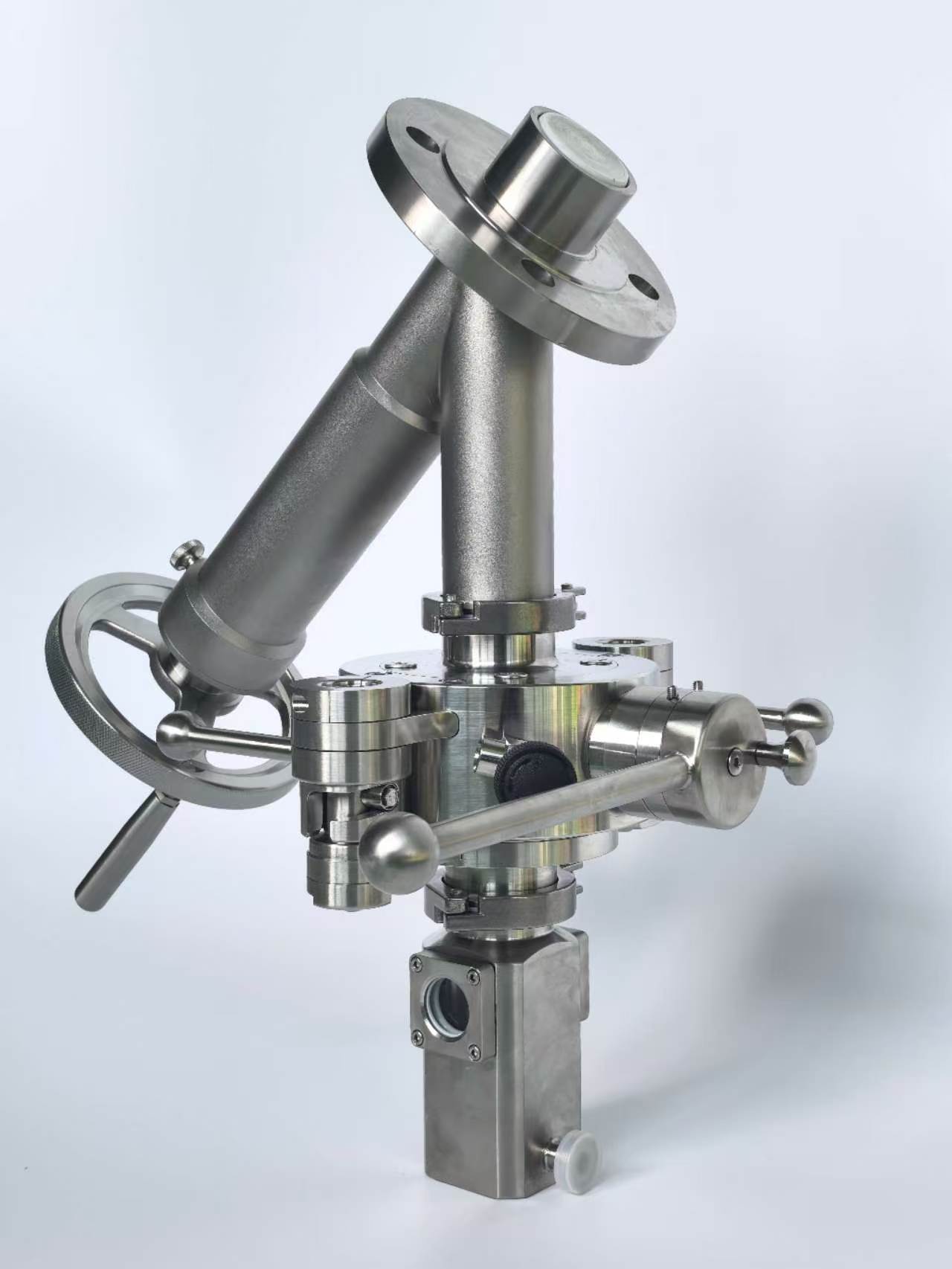
Every engineer who has watched a valve crumble in weeks under chemical attack knows that material selection is not a specification detail but a survival strategy. Harsh media—strong acids, abrasive slurries, hot chlorides, or flammable solvents—do not forgive generic choices. A stainless steel body might look identical to a high-nickel alloy one on the shelf, but inside a sulfuric acid line at 80°C, the former dissolves while the latter holds for years. The real challenge is that a single medium rarely behaves predictably; temperature swings, trace contaminants, and flow velocity can all shift corrosion mechanisms from uniform thinning to pitting or stress cracking. So the first step is not picking a material from a catalog but interrogating the actual process conditions, including upset scenarios that never appear on the P&ID.
For many tough applications, 316 stainless steel is a starting point but rarely the endpoint. Duplex stainless steels offer better chloride resistance and strength, while super austenitics like 254 SMO handle seawater and bleach without pitting. When the medium is genuinely aggressive—think hot hydrochloric acid or wet chlorine gas—nickel alloys such as Hastelloy C-276 or titanium become the workhorses, though cost and machinability quickly become constraints. Non-metallic components also earn their place: PTFE seats and seals resist almost everything chemically but creep under high pressure, while PEEK offers better dimensional stability up to 250°C. The art lies in combining materials so that the valve stem, ball, seat, and body each contribute the right property without creating galvanic couples or thermal expansion mismatches that quietly destroy the seal over time.
A common trap is optimizing one component while neglecting its neighbors. A Hastelloy valve body paired with a standard O-ring in a hot aromatic solvent will leak at the seal long before the body shows any sign of attack. Likewise, choosing a hard ceramic ball for abrasive slurry makes sense, but if the stem material is soft, galling and seizure will follow. Field experience also teaches that hazardous media demand materials with predictable failure modes: a brittle ceramic may shatter under water hammer, while a ductile alloy will deform first, giving operators a warning. Ultimately, the right choice balances corrosion data, mechanical loads, lifecycle cost, and the reality that no material is universally immune—just better suited to the particular form of punishment your process delivers.
Integration Without Interruption: Retrofitting High Containment Valves into Existing Lines
Retrofitting high containment valves into an existing line usually means draining the process, breaking containment, and accepting downtime—an expensive proposition for any plant. However, with the right valve architecture, you can introduce a split-body or replaceable-cartridge design that slips around the existing piping without cutting the line or interrupting flow. This approach relies on a temporary isolation spool and a double block-and-bleed arrangement that lets operators bolt on the new valve while the system remains sealed. The key is to match the valve's face-to-face dimension to the existing gap so that no hot work or re-routing is required.
Planning the retrofit starts with a detailed walk-down of the line to map current stresses, flange ratings, and any dead legs that could trap product. Instead of a standard flanged valve, consider a wafer-style high containment body with live-loaded packing and a purge port that can be flushed after installation. This design gives you the same containment performance as a fully welded unit but without the need to shut down upstream supply. During installation, use a temporary bypass or a double-valve isolation to keep production moving while the new valve is torqued into place. The result is a retrofit that happens over a single maintenance window, not a multi-day outage.
Stay Safe, Stay Running: A Practical Maintenance Checklist for High Containment Valves
High containment valves sit at the intersection of process safety and operational uptime. A missed check here doesn't just risk a leak; it can quietly degrade seal integrity until a routine batch turns into a containment breach. The most practical maintenance approach strips away the generic and focuses on three friction points: stem packing torque, seat wear indicators, and actuator response time under partial stroke tests. By logging these values against manufacturer baselines every 30 days, you shift from reactive tear-downs to planned interventions that match real wear patterns.
Where most checklists fail is treating all valves alike. A high containment valve on abrasive slurry behaves differently than one on clean solvent. So after the baseline checks, walk the line with a thermal camera and a listening rod: hotspots near the bonnet suggest packing overtightened to mask a leak, while a faint hiss during stroke reversal points to seat lapping needs. Write these observations in short, non-template phrases—'slurry valve #4: slight galling on stem, third cycle'—so the next technician sees a story, not a box ticked.
Finally, make the checklist trigger-based rather than calendar-only. Attach a simple go/no-go threshold to each reading: packing friction above 15% of baseline, actuator stroke time drifting beyond 200 milliseconds, or seat leak rate doubling between tests. When any threshold trips, the checklist demands a focused inspection, not a full overhaul. That keeps the maintenance effort proportional, avoids unnecessary disassembly risks, and keeps the line running long enough to plan the right fix.
In the Field: How High Containment Valves Solve Real-World Handling Challenges
On a pharmaceutical manufacturing floor, the transfer of potent active ingredients between vessels and reactors is where safety risks spike. Operators once relied on split valves or cumbersome bagging systems, but those methods left room for dust release, cross-contamination, and even operator exposure during disconnects. High containment valves change that reality by integrating a double-seat design that seals both the active and passive halves before separation, ensuring no product escapes into the room or onto personnel.
A common bottleneck in biotech facilities is cleaning between batch changeovers. Traditional valves require line breaking and manual swabbing, which drags downtime and introduces human error. High containment valves are engineered with clean-in-place ports and polished internal surfaces that eliminate dead legs. This means a single operator can run a validated wash cycle without disassembling the line, cutting turnaround from hours to under thirty minutes while preserving sterility assurance.
During a recent expansion at a cytotoxic drug facility, engineers replaced six conventional butterfly valves with high containment models on the charging and discharge lines. The result was a measurable drop in surface wipe samples near the transfer points, from double-digit nanograms per square centimeter to below detection limits. More importantly, operators reported a visible difference: no powder residue on gloves or gowns after routine connections, which reinforced both compliance and workforce confidence in daily handling tasks.
The Next Frontier: Smart Valves and Automation for Safer Material Handling
Traditional material handling systems often rely on manual valve adjustments and fixed flow paths, leaving room for operator error and slow response when pressures spike or abrasive media shifts. Smart valves change that by pairing sensor feedback with local actuation, so each stage of a transfer line can react before a blockage or overpressure becomes a hazard.
Automation adds another layer: valve positions, seal wear, and flow rates are monitored continuously, with anomalies flagged for maintenance rather than discovered after a spill or unplanned shutdown. This shift from scheduled checks to condition-based response cuts downtime and keeps workers away from high-risk zones during normal operation.
In practice, facilities using networked smart valves can sequence isolation, purging, and relief actions automatically. That coordination matters most with corrosive or combustible materials, where a few seconds of delay can turn a routine transfer into an incident. The result is a handling line that adjusts to real conditions instead of waiting for a person to notice trouble.
FAQ
It creates a sealed connection that prevents powders or granules from escaping into the workspace, protecting both workers and the product from contamination.
Request independent test data and ask about their validation methods under conditions that mimic your actual process, not just ideal lab settings.
Features like split-body construction, inflatable seals, and glove-compatible access points limit direct contact and make cleaning safer without opening the line.
Buyers tend to focus on flange size and pressure class, but elastomer and metal choices must be matched to the specific chemical traits of the powder to avoid premature failure.
Inspect seals after every batch campaign, check clamping force periodically, and replace wear parts on the manufacturer's recommended schedule instead of waiting for visible leaks.
Yes, automated docking and split-valve technology allow quick transfer changes without breaking containment, so you get both throughput and reduced exposure.
They should provide installation training, documented operating procedures, and responsive technical help to address any containment concerns that come up in daily use.
Yes, expect GMP-compliant design, full material traceability, and surfaces that can withstand frequent CIP/SIP cycles without compromising the seal integrity.
Conclusion
A reliable high containment valve doesn't just prevent leaks—it earns trust through every design decision. The guide opens with sealing geometry and stem packing choices that hold up under repeated cycling, then moves into material selection for bodies, seats, and diaphragms that must face corrosive or toxic media without degrading. Retrofitting gets equal attention, because swapping a standard valve for a high containment unit often means working around limited space, existing flanges, and process lines that can't be offline long. The emphasis stays on solutions that keep the line moving while raising the safety floor.
Day-to-day performance depends on a practical maintenance rhythm: checking torque on fasteners, watching for seat wear, and replacing soft goods before they become a problem. Real-world examples show how these valves handle abrasive powders, sticky slurries, and high-pressure gases in pharmaceutical, chemical, and mineral processing settings. The final section looks at smart valves with embedded sensors and automated actuation—giving operators a clearer view of seal health and reducing manual intervention. Taken together, the guide makes a strong case that safer material handling comes from careful component choices, honest maintenance habits, and a willingness to adopt controls that keep people away from the hazard.
Contact Us
Contact Person: Ananda
Email: [email protected]
Tel/WhatsApp: 8619016718200
Website: https://www.wzaomi.com