

Healthcare RFID Tag Manufacturing Concerns Are Reshaping Medical Supply Chain Decisions
2026-11-17
Medical supply chains don’t fail in boardrooms—they fail when a single tag stops reading in a cold chain handoff or a sterile pack gets scanned twice at the loading dock. As healthcare RFID tag manufacturing shifts toward thinner inlays, harsher sterilization cycles, and tighter UDI compliance, procurement teams are rethinking what actually makes a tag reliable. The conversation is moving away from price-per-unit and toward failure rates that can’t be hidden in a pilot. At OSRFID, we’ve watched this shift force manufacturers to prove their process, not just their product. The result is a quieter kind of disruption—one where label adhesion, memory stability, and read consistency on curved vial surfaces decide which suppliers stay in the program.
The Overlooked Link Between Tag Materials and Patient Safety
Tag materials rarely surface in patient safety discussions, yet the choice of substrate and adhesive can quietly shape outcomes at the bedside. A wristband that irritates fragile skin, a label that smears after repeated sanitizing, or a tracking tag that degrades inside a sterilizer does not announce itself as a hazard. Instead, it creates small failures—blurred barcodes, lost identifiers, or allergic reactions—that accumulate into delayed care or misidentification.
The risk becomes sharper when materials meet conditions their designers never intended. Polyester and vinyl behave differently under high heat, cold storage, or alcohol-based disinfectants, and a material that survives one cycle may shed particles or turn brittle by the tenth. Even metal components in some tags can become a concern near imaging equipment or in procedures where conductivity matters. Clinicians often assume that if a tag is on the shelf, it must be compatible with the surrounding environment, but supply chains rarely test that assumption.
A more grounded approach treats tag selection as part of the clinical workflow rather than a procurement afterthought. Small in-house trials—rubbing, freezing, autoclaving, applying to skin patches—can reveal failures before they reach a patient. When materials staff, nurses, and sterile processing teams compare notes on how tags actually perform, the conversation shifts from cost per unit to cost per reliable identification.
How Sterile Processing Exposes Weak Spots in RFID Design
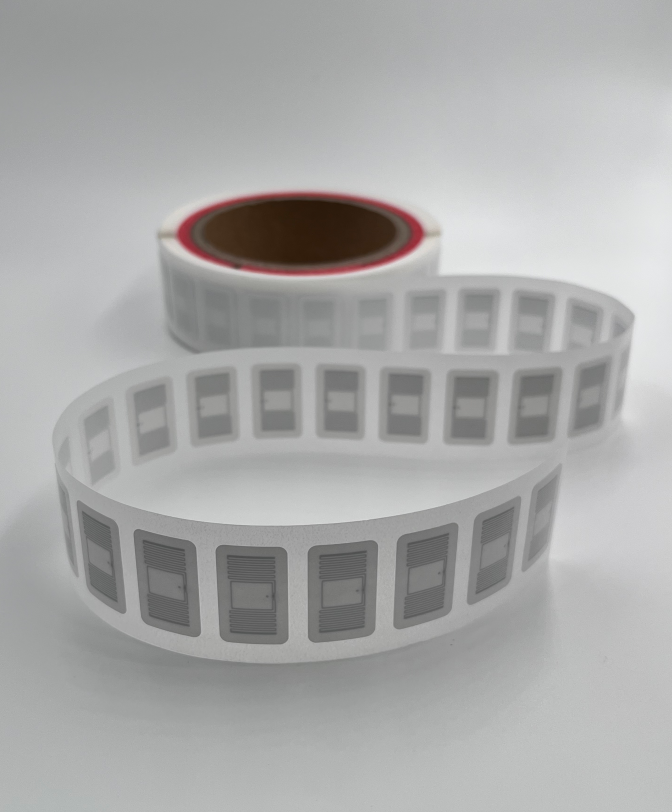
Sterile processing departments are where RFID hardware meets reality. A tag that works fine in a warehouse starts to fail after a few hundred autoclave cycles. Steam pressure, hydrogen peroxide plasma, and alkaline detergents find every seam in an encapsulated tag. Once moisture gets inside, the antenna corrodes and the chip dies without any visible warning. That silent failure creates a bigger problem than no tag at all, because staff keep trusting a tool that has stopped reporting.
The second weak spot is less about chemistry and more about physics. Instrument trays are dense, curved, and stacked. Readers tuned for open spaces struggle with reflections off stainless steel, and tags buried in the middle of a set often fall into a dead zone. Orienting every item for a clean read is not practical when technicians are trying to turn over trays quickly, so the system has to cope with poor angles and metal shadows instead of demanding perfect placement.
Finally, the RFID design often ignores the human rhythm of the department. Technicians work in short, high-pressure batches between cases. If a reader needs a slow pass, a precise distance, or a clean line of sight, it will be bypassed. Reliability in sterile processing comes from forgiving antenna geometry, encapsulation that survives thermal shock, and read points that fit into existing workflows rather than forcing a new one.
Why More Hospitals Are Questioning Single-Source Tag Suppliers
For years, many hospital purchasing teams treated label and wristband contracts as a set-and-forget decision. That comfort has started to crack. When a single supplier owns the entire tag pipeline—from blank stock to print drivers and encoding formats—even a minor disruption can stall admissions, lab processing, or medication labeling. Supply chain managers now talk about the week a regional plant went down, or a firmware update quietly broke compatibility, and they were left waiting on a vendor ticket while nurses created workarounds.
The deeper concern is less about stockouts and more about control. Hospitals are layering new patient-safety systems onto older infrastructure, and tag specifications are rarely static. A single-source arrangement often means the hospital inherits the supplier’s roadmap, not its own. When the ED needs a smaller wristband, or pharmacy wants barcode symbology that survives refrigeration, the request can turn into a waiting game. That friction has pushed more facilities to evaluate multi-vendor tag strategies, not as a cost play, but as a way to keep clinical workflows moving on their own terms.
There is also a growing recognition that tag data should remain portable. If the label format lives only inside one vendor’s proprietary template, switching costs climb steeply and hard conversations get postponed. More hospitals are questioning whether that lock-in is necessary—or just familiar. The shift is visible in procurement language: fewer long-term exclusivity clauses, more requests for open file formats, and a preference for suppliers that can coexist with existing print infrastructure.
The Hidden Cost of a Tag That Fails Mid-Shipment
A shipment label seems trivial until it stops doing its job halfway through a route. A barcode that smears, an RFID tag that loses adhesion, or a thermal print that fades under humidity can send a carton into limbo. The carrier may scan it as an exception, park it for manual handling, or return it to a depot, and each extra touch erodes the margin that shipment was supposed to protect.
The costs rarely show up as a single line item. They scatter across expedited replacements, wasted customer service hours, repeated pick attempts, and inventory that sits in a reconciliation queue. For perishable or high-value goods, a failed tag can mean spoilage or a missed installation window, which turns a logistic nuisance into a contractual breach.
What makes these failures expensive is their timing. A label checked at the dock can look perfect, then fail after vibration, condensation, or contact with strapping. Designing for the middle of the journey means testing tags under real conditions: scuffing, temperature swings, and the odd angle of a handheld scanner at 6 a.m. That upfront attention is cheaper than discovering the issue through an angry customer and a lost reorder.
New Procurement Conversations Focus on Durability Over Spec Sheets
The conversation has moved away from the first page of the datasheet. Buyers now want to know how a unit behaves after exposure to washdown chemicals, fine dust, or repeated thermal cycles. A horsepower figure rarely comes up until someone asks what happens in year four.
Suppliers are adjusting to that. Instead of handing over glossy brochures, more of them bring teardown photos, worn bearing samples, and repair histories from the field. It turns out a great spec sheet can still hide thin seals, fragile connectors, and control boards that fail weeks after the warranty ends.
The underlying math is cost per operating hour. A slightly lower rated machine that stays running is often worth more than a higher spec model that eats spare parts and steals maintenance time. Durability has become the quiet filter that decides who gets invited back for a second meeting.
What Medical Supply Chains Can Learn from a Cracked Antenna
A cracked antenna rarely announces itself. The signal doesn't vanish; it becomes slightly less dependable, with occasional static that gets blamed on weather or distance. Maintenance teams often log the issue, route around it, and move on to louder failures. Medical supply chains carry the same quiet fractures. A batch of vaccines sits a few degrees outside range for an hour. A shipping label gets smudged, so a hospital floor doesn't know what is in the box. A supplier misses a deadline by a day, but no one records it because the patient outcome was fine. The crack is there, waiting for stress to find it.
The deeper problem is that both systems keep functioning while degraded. A cracked antenna still receives, just with patches of noise. A supply chain still delivers, just with patches of blindness. Temperature logs may exist but not be readable in real time. Inventory counts may be updated, but only after the truck leaves. These small losses of signal rarely trigger alarms because each one looks survivable on its own. Over time, though, they create a network that runs on assumptions rather than verified data, and assumptions are exactly what fail during a surge or a recall.
The lesson is not to monitor everything more aggressively, but to stop treating small signal losses as normal operating noise. Inspect the seams: the handoffs between carriers, the moments when data is manually rekeyed, the coolers that get opened just a little too often. Fixing a cracked antenna is cheap compared to losing communication in the middle of a storm. In the same way, tightening a weak link in a medical supply chain costs far less than discovering it through a stockout or a spoiled shipment.
FAQ
A single delayed lot or failed batch of RFID inlays can idle entire hospital distribution lines. Planners now treat these components as critical-path items rather than commodity purchases, which pushes them toward dual sourcing and earlier forecast commitments.
Shortages of specialized substrate films, antenna printing capacity, and chip bonding capacity are the main pinch points. Cleanroom scheduling for skin-contact or implantable-grade tags adds another layer, since those runs cannot easily shift to generic electronics fabs.
Many are moving away from single-vendor contracts and qualifying alternate suppliers that match the same chip and substrate specifications. They are also asking for regional buffer stock instead of relying on just-in-time deliveries from one plant.
Yes. Thinner substrates and flexible antennas require tighter process control, and yields drop quickly when equipment drifts even slightly. That makes production less predictable and encourages buyers to accept slightly larger form factors if they improve supply reliability.
They raise the stakes. Tags used with pharmaceuticals, blood products, or implantable devices may need biocompatibility data, sterilization validation, or detailed traceability documentation. Any change in adhesive, substrate, or antenna material can trigger revalidation, so supply chain teams hesitate to swap vendors quickly.
Security requirements push some buyers toward tags with cryptographic authentication or encrypted memory, which narrows the list of qualified manufacturers. If those specialized fabs face capacity issues, there are fewer fallback options, so procurement teams lock capacity earlier and pay premiums to avoid line shutdowns.
Unit price is no longer the dominant metric. Buyers now factor in the cost of stockouts, revalidation, clinical workflow disruption, and expedited freight. In that view, a more expensive tag with dependable manufacturing capacity often beats a cheaper tag with fragile supply.
Conclusion
Medical supply chain teams are beginning to treat RFID tag construction as a clinical risk rather than a packaging afterthought. The materials in a tag can interact with patient environments in ways that spec sheets rarely capture, and repeated exposure to hydrogen peroxide or steam during sterile processing has exposed cracks, delamination, and antenna failures long before a tag reaches the floor. Hospitals that once accepted single-source tag suppliers are now asking harder questions about resin compatibility, adhesive behavior under thermal cycling, and whether a tag can survive the same reprocessing routine as the instrument it tracks. When a tag fails inside a shipment, the loss is not only the tag itself. It breaks chain-of-custody data, forces manual reconciliation, and can delay critical supplies without anyone noticing until a case cart is opened.
Procurement conversations are shifting in response. Teams compare physical samples after autoclave runs instead of relying on printed durability claims, and a cracked antenna from one batch is now read as a warning about process control rather than a one-off defect. That small failure reveals gaps in substrate tension, overmolding pressure, or insufficient bonding between the chip and antenna, all of which point to manufacturing discipline. The result is that medical supply chains are placing fewer orders on the basis of read range and memory capacity, and more on whether a tag can hold up through aggressive cleaning, rough handling, and extended cold chain transit without losing identity. Reliability under stress, not technical elegance, is becoming the deciding factor.
Contact Us
Contact Person: Esme Mo
Email: [email protected]
Tel/WhatsApp: 0086 191 2931 7837
Website: https://www.osrfidglobal.com/