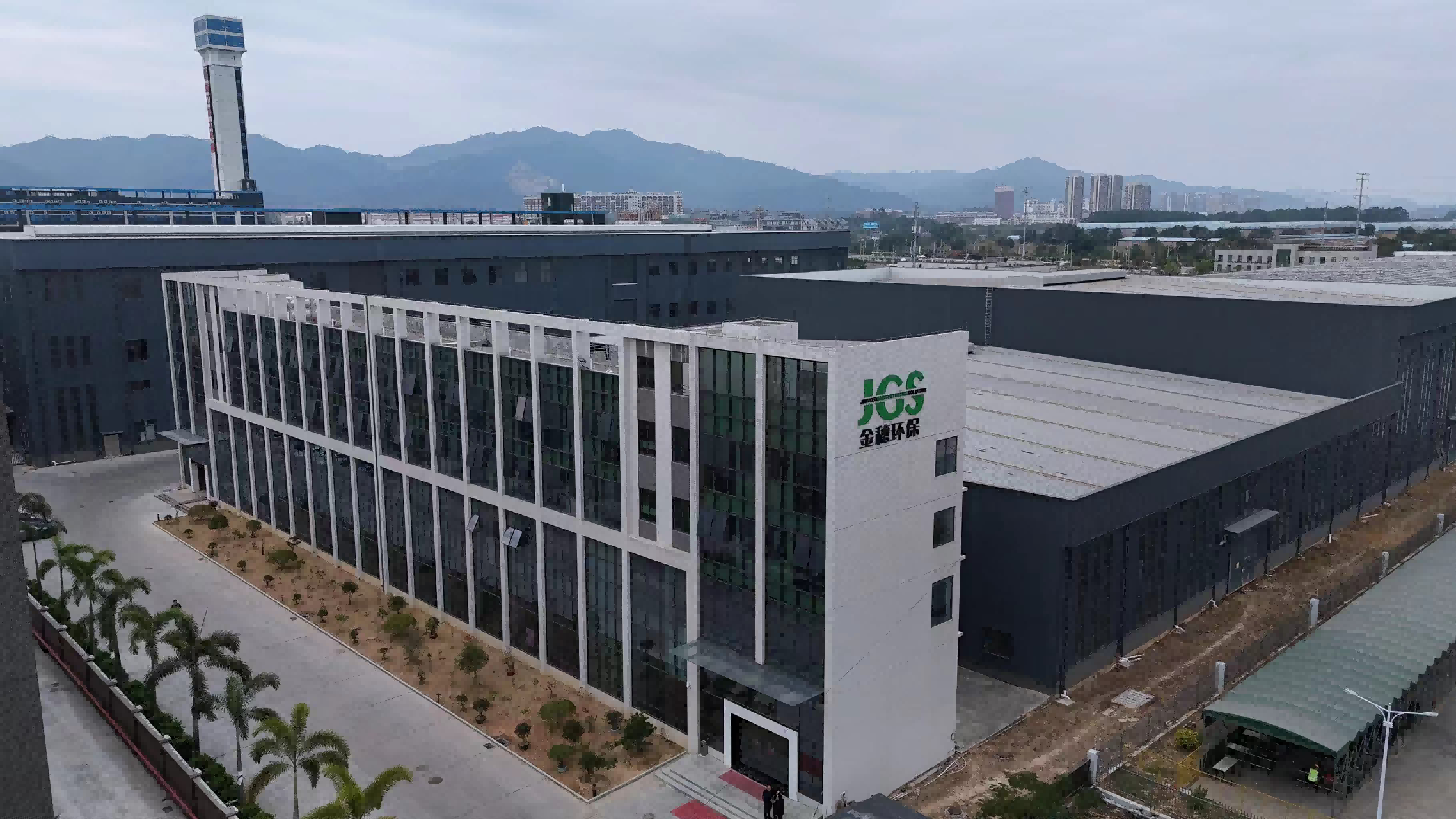

HDPE Geomembrane Pond Liner Manufacturer: Essential Buying Guide for Durable Liners
2026-08-18
A pond liner isn't the place to cut corners. HDPE geomembrane liners are known for their strength, but the real difference comes down to the manufacturer behind the product. In this buying guide, you'll learn what separates a durable, decades-long liner from one that fails early, and why working with a proven supplier like JInseed Geosynthetics Solution can save you from costly repairs and replacements.
Why Thickness Is Not the Whole Story
It is tempting to equate extra millimeters with better performance, but that assumption rarely holds up under real-world conditions. Consider two workbench tops: one is a 30 mm slab of low-density particleboard, while the other is a 20 mm piece of cross-laminated birch plywood. Despite being thinner, the plywood resists sagging far more effectively because its internal grain layers are oriented in alternating directions, creating a stiffer, more stable structure. Thickness alone tells you almost nothing about how a material will behave under load.
In many engineering contexts, the relationship between thickness and key properties like flexural strength, impact resistance, or thermal insulation is not linear. A thick layer of loosely packed foam can be outperformed by a thinner layer of aerogel, for instance, because the latter's nanoporous structure traps air far more efficiently. Similarly, adding thickness to a metal plate does improve stiffness, but only until practical limits of weight and cost make alternative approaches—such as ribbing, honeycomb cores, or high-strength alloys—more sensible.
Smart product design, then, means looking past the number on a spec sheet. Instead of asking "How thick is it?" the better question is "How is it put together?" Manufacturing method, material density, fiber orientation, and joint design all play roles that can outweigh raw thickness. A thin but well-engineered component often delivers better long-term value than a bulky one that ignores these factors.
The Installation Mistakes That Age a Liner Prematurely

Most liner failures don't start with the material—they begin at the moment of installation. A liner stretched too tightly across a corner or forced into a sharp radius will carry that stress for years, quietly cracking long before its rated lifespan. The damage is rarely visible at first: microscopic tears along the backside, a slight thinning where the membrane was overworked, a seam that was welded too hot and left brittle. These are the hidden time bombs that turn a twenty-year liner into a five-year problem.
Another common mistake is ignoring the substrate. Installers sometimes skip proper smoothing or leave behind small stones, fasteners, or rough weld spatter. Under the constant weight of water or soil, those tiny protrusions become stress concentrators. The liner may hold for a season or two, but every thermal cycle—every expansion and contraction—works the puncture wider. By the time a leak appears, the surrounding area is often too degraded to patch cleanly, forcing a full replacement that could have been avoided with an extra hour of prep.
Seam placement is another factor that gets overlooked. Running a seam across a high-traffic area, a sharp corner, or a point of frequent flexure dramatically shortens service life. A well-trained installer knows to position seams in low-stress zones and to allow adequate overlap for thermal movement. Cutting corners here—literally or figuratively—may save a few minutes on installation day, but it guarantees that the liner will age unevenly, developing leaks exactly where they are hardest to repair.
Finding a Manufacturer That Answers After the Sale
A manufacturer's willingness to talk after the invoice clears often tells you more than any polished sales pitch. Before placing a bulk order, call the support line with a simple technical question about replacement parts or firmware updates. If you get a human who can actually answer instead of a voicemail loop, that's a promising sign. Ask for the name of a dedicated account rep and a direct extension—if nobody can provide one, imagine what happens when a shipment arrives with defects.
Dig into the warranty process rather than just the warranty length. A two-year guarantee means little if returns require weeks of back-and-forth and you foot the shipping bill both ways. Request a sample of their repair or replacement timeline in writing, and ask existing customers how long claims actually took. You want a supplier that treats post-sale issues as normal business, not as a favor.
Finally, check whether the manufacturer keeps local stock or relies on drop-shipping from overseas. A vendor with spare parts in your region can turn around a failed component in days, not months. Send a test email over a holiday weekend and see how quickly you get a substantive reply. Responsiveness after the sale isn't a bonus—it's the difference between a minor hiccup and a halted production line.
What Resin Quality Means for a Pond’s Lifespan
The resin in a pond shell is often overlooked, yet it quietly determines whether the structure will hold up for a decade or start cracking after a few harsh winters. Cheaper resins tend to be brittle once cured, making them vulnerable to ground shifts, UV exposure, and the constant pressure of water. Over time, micro-fractures appear, and those tiny breaks become entry points for moisture that weakens the laminate from within. A high-quality resin, by contrast, retains a degree of flexibility that lets the pond shell absorb stress without failing, which directly translates into fewer repairs and a far longer service life.
What separates a premium resin from a bargain blend often comes down to how it cures and what additives are used to resist environmental wear. Polyester resin may be cheap and fast to work with, but it can shrink slightly as it hardens, pulling away from the fiberglass and creating hidden voids. Epoxy or vinyl ester resins bond more aggressively to the reinforcement and resist water penetration far better. They also hold their color and structural integrity under constant sun exposure, which matters if the pond is not fully shaded. In practice, a pond built with a lower-grade resin might look perfect on day one, but after two or three seasons of freeze-thaw cycles, the surface can develop a crazed pattern that signals deeper fatigue.
Ultimately, resin quality is not just about the material itself—it is about how the manufacturer uses it. Even an excellent resin can be undermined by poor wet-out, uneven thickness, or skipped post-curing. A conscientious builder will control the resin-to-fiber ratio, avoid air pockets, and allow the shell to cure slowly for maximum strength. When you run your hand along the inside of a well-made pond, the surface feels dense and slightly waxy, not chalky or porous. That feel is the first clue that the resin was chosen for endurance rather than for cutting corners. Choosing a pond with that kind of resin means you are buying decades of quiet, leak-free enjoyment instead of a ticking clock.
Looking Beyond the Lowest Bid
A tempting price tag often steals the spotlight, but smart buyers know that the cheapest offer rarely tells the whole story. When you chase the lowest number, you might inherit hidden costs down the road—flimsy materials, rushed workmanship, or a vendor who vanishes when problems crop up. Instead of treating the bid as a simple race to the bottom, it pays to weigh what that figure actually includes and excludes.
Take a closer look at the vendor's track record. Have they delivered similar work on time? Do their past clients speak highly of the follow-up support? A slightly higher bid from a team with proven reliability can save you from sleepless nights and expensive fixes later. The real cost isn't just the invoice you receive today; it's the total you'll spend over the life of the purchase or project.
Smart decision-makers also compare the fine print. One bid might bundle in warranties, training, and maintenance, while another leaves those as costly add-ons. Ask for a breakdown of what's covered and what's not. By looking beyond the headline number, you shift from a short-term bargain hunt to a long-term value strategy—and that's how you build partnerships that actually deliver.
Quick Checks Before the Liner Reaches Your Site
Most site supervisors learn the hard way that the hour before the liner truck arrives is not for paperwork. Walk the pad yourself, even if the crew swears it's ready. Look for soft spots near the edges, left-over rebar stubs, or puddles that shouldn't be there. A two-minute lap on foot catches what a truck window never will.
Confirm the drop zone is clear of overhead lines, low branches, and stacked pallets that block the swing radius. If the driver has to maneuver around a parked skid steer or a pile of scrap, you've already lost thirty minutes. Send a photo of the access route to the dispatcher—measure the widest point with a tape, not a guess.
Finally, check the weather and the ground compaction. A light rain overnight can turn a firm base into a sinkhole trap. If you wouldn't drive a loaded concrete truck over it yourself, don't expect the liner crew to try. One extra pass with a plate compactor now saves digging out a stuck rig later.
FAQ
Focus on their resin choice and extrusion quality. Ask which grade of virgin HDPE they use and whether they perform online thickness scanning. A supplier who openly shares production line data is usually more reliable than one who only quotes a low price.
Smooth liners are easier to clean and weld, so they work well for flat floors and gentle slopes. Textured surfaces give better friction on steep sides, which helps keep cover soil or ballast from sliding. If your slopes are steeper than 3:1, the added grip usually justifies the extra cost.
With proper carbon black content and UV stabilizers, exposed HDPE can last 20 to 30 years before it becomes brittle. Buried or covered liners last much longer because they are shielded from UV and temperature swings. Regular inspection around the waterline will catch early signs of stress cracking.
Watch out for freight, customs, repackaging, and short rolls that force more field seams. Cheap liners often fail on thickness consistency, so you might need extra patching or even a second liner. Ask for the total delivered cost per square meter, including welding rod, testing, and any import duties.
Ask for a certificate of analysis with density, carbon black dispersion, tensile strength, elongation at break, and tear resistance. A reputable factory will also perform a spark test on every seam if they prefabricate panels. If they hesitate to share fresh lab data, treat that as a red flag.
Cold installation is possible but requires extra care. HDPE stiffens at low temperatures, which makes unfolding and welding slower. Pre-warming the sheets and using welders with preheat settings helps maintain seam quality. Never pull or drag the liner over frozen ground, as micro-scratches can become stress points later.
Yes, because liner performance depends heavily on proper deployment and welding. A manufacturer who sends an experienced supervisor or provides detailed video training helps prevent mistakes like wrinkles, poor seam overlap, or inadequate anchoring. You end up with fewer warranty disputes and a liner that actually lasts.
Conclusion
A durable HDPE geomembrane pond liner starts long before installation. Thickness gets a lot of attention, but it is not the whole story; two liners rated at 1.5 mm can behave very differently if one uses virgin high-grade resin and the other relies on blended or recycled polymer. Resin quality directly controls stress crack resistance, UV stability, and how long the liner stays flexible underwater. Before the liner reaches your site, run a few quick checks: confirm the manufacturer's batch certificates, look for surface imperfections or uneven texture, and verify roll dimensions. Small inconsistencies here often signal bigger problems later. Even the best material fails early when installation is rushed. Subgrade prep, seam welding temperature, and anchoring details are where most premature failures begin, so a supplier who offers clear installation guidance or trained technicians is worth more than a spec sheet.
The buying decision should also weigh what happens after the sale. A manufacturer that answers calls, provides field support, and stands behind warranty claims changes the whole lifespan equation. If a liner starts leaking or a seam opens, waiting days for a callback can mean losing water, fish, or project time. That support should be part of the price comparison. Looking beyond the lowest bid almost always pays off: a cheap liner cut with lower-quality resin may save a few dollars per square meter now but can cost a full replacement within five or ten years. Ask directly about resin source, manufacturing date, and whether test samples are retained. Serious suppliers share that data without hesitation. Combined with careful handling and installation, these factors separate a liner that lasts twenty years from one that quietly degrades just out of sight.
Contact Us
Contact Person: Jerry Qiu
Email: [email protected]
Tel/WhatsApp: +65 84265294
Website: https://www.jinseed-geo.com