

Halogenated Aromatic Intermediate Export Opportunities Every Chemical Supplier Should Know
2026-11-02
The global market for halogenated aromatic intermediates is shifting faster than many suppliers realize. While these compounds quietly power pharmaceuticals, agrochemicals, and specialty polymers, export demand is now outpacing domestic supply in several key regions—creating a narrow window for forward-thinking distributors. At DSL Chemicals, we have watched buyers pivot toward suppliers who understand both the regulatory complexity and the logistical edge required to move these intermediates across borders. This post breaks down the export opportunities that deserve a place on your radar before your competitors claim them.
Where Halogenated Aromatic Demand Is Quietly Outpacing Supply
Halogenated aromatic compounds rarely grab headlines, yet in several end-use sectors the gap between consumption and available production capacity has been widening for months. Specialty polymer producers, for instance, are drawing on brominated and chlorinated intermediates at rates that far exceed what existing batch reactors can deliver. Procurement teams dealing with flame-retardant epoxy systems or high-performance engineering resins report lead times stretching from six weeks to nearly four months, even as spot prices creep upward without triggering the usual rush of new capacity announcements.
The quiet strain is most visible in niche pharmaceutical and agrochemical synthesis, where fluorinated and chlorinated aromatic building blocks are essential but rarely prioritized by large-scale manufacturers. A handful of dedicated producers control the reliable supply of these intermediates, and their output has been absorbed by long-term contracts, leaving smaller buyers scrambling for smaller lots. Because the molecules often require corrosive handling, strict environmental controls, and multi-step purification, newcomers face steep barriers, so the imbalance is not easily corrected by a surge in investment.
What makes this shortfall unusual is that it is not driven by a single disruptive event, but by a slow accumulation of demand from electronics, water treatment, and high-temperature lubricants. Each application needs only modest volumes, but together they tax the same limited pool of halogenation capacity. Distributors are now rationing allocations, and some converters are qualifying alternative formulations out of necessity rather than preference. Without a meaningful expansion of specialized capacity, the mismatch is likely to persist well beyond the current quarter.
The Substituent Sweet Spot: Bromo, Chloro, or Fluoro Export Bets
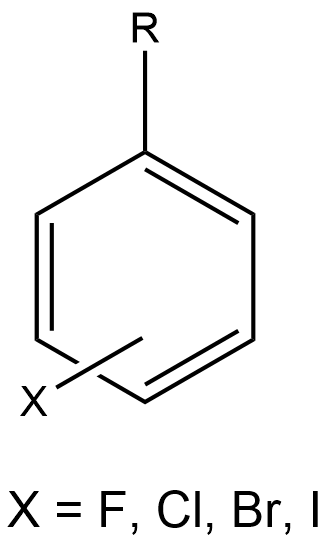
Fluorine rarely loses its place as the default halogen in lead optimization, but bromine and chlorine keep proving they deserve a seat at the table. The choice is not just about size or electronegativity—it is about how the substituent shifts the molecule’s whole behavior in a biological system. A single chloro can rescue a series from metabolic collapse, while a bromo might unlock a halogen bond that no amount of fluorine could mimic. The sweet spot emerges when potency gains do not come at the cost of solubility or clearance.
Bromine’s larger van der Waals radius often fills hydrophobic pockets that fluorine leaves empty, yet that bulk drags up logP and can stall a compound in membranes. Chlorine sits between the two, offering enough polarizability for halogen bonding without the same lipophilicity penalty as bromine. Fluorine, for its part, buys metabolic stability and a strong electron pull, but too many fluorines can flip a molecule into rigid, crystalline territory that formulations hate. Each substituent is a different kind of bet on how the compound will export from the liver, cross membranes, and engage the target.
The smart play is rarely dogmatic. Teams that treat halogen selection as a tunable parameter—not a checkbox—run parallel matrices early, watching how bromo, chloro, and fluoro versions diverge in free fraction, CYP inhibition, and passive permeability. Sometimes the best export bet is a chlorine at the para position; other times a strategically placed fluorine beats both heavier halogens by avoiding efflux entirely. The sweet spot is not a universal answer. It is a local optimum you find only by racing the substituents against each other in real assays.
Regulatory Landmines That Can Stall Your Halogenated Intermediate Shipments
A single misclassified halogenated intermediate can trigger a cascade of delays that ripple through your entire supply chain. Many shippers assume that because a compound has been moved before without incident, the paperwork is still compliant—but regulators update lists, harmonization codes shift, and a borderline flash point or bromine content can suddenly place your cargo under a different hazard class. One logistics manager we worked with discovered this the hard way when a routine shipment of a chlorinated pyridine derivative was held at Rotterdam for three weeks because the safety data sheet referenced an outdated transport classification. The physical product hadn't changed, but the regulatory ground had moved beneath it.
Beyond classification, the real landmines often hide in regional registration gaps. A halogenated intermediate that is fully cleared under European REACH may still require a separate notification under Korean K-REACH or a TSCA pre-manufacture notice for the U.S. market. What catches importers off guard is not the existence of these frameworks, but their differing definitions of “intermediate” status. Some jurisdictions grant strict control exemptions only if the substance is consumed on-site in a closed system; others interpret storage and transfer as breaking that chain. A shipment can be rejected at the border not because the chemical is banned, but because the importer failed to demonstrate that the intended use qualifies for the reduced data package.
Then there is the documentation trap: even when the substance is correctly classified and registered, incomplete or inconsistent paperwork can stall a shipment for days. Customs authorities increasingly cross-check the chemical name, CAS number, declared quantity, and end-use description against their own databases. A missing letter of access for a jointly submitted registration, or a discrepancy between the commercial invoice and the dangerous goods declaration, is enough to send your containers into a holding area. The most frustrating part is that these delays are rarely about the product itself—they stem from avoidable oversight in the administrative layer that surrounds halogenated intermediates, from the original synthesis route to the final destination.
How Specialty Chemical Buyers Evaluate Halogenated Aromatic Suppliers Overseas
Overseas halogenated aromatic suppliers often struggle to convey the subtle differences in purity profiles, isomer distribution, and trace metal content that actually matter in downstream synthesis. Buyers with deep technical teams rarely rely on spec sheets alone; they request retention samples, review batch-to-batch chromatograms, and ask pointed questions about impurity fate under their specific reaction conditions. A supplier who can discuss real process deviations—not just recite a certificate of analysis—earns trust far faster than one who hides behind generic quality promises.
Logistics and regulatory fluency separate dependable partners from transactional vendors. Experienced buyers probe how a supplier handles temperature-sensitive brominated intermediates, whether they pre-clear customs documentation for restricted precursors, and how they manage hazmat labelling across multiple jurisdictions. A supplier who volunteers contingency plans for port delays or sudden tariff shifts signals operational maturity. Those who treat compliance as an afterthought rarely survive a second audit.
Finally, pricing discussions reveal more than unit costs. Sharp buyers compare not just per-kilogram quotes but the total landed cost including freight consolidation, payment terms, and the cost of re-qualification if a batch fails. They remember suppliers who proactively offer alternative halogenation routes to reduce waste or suggest blending strategies to stabilize reactive aromatics. That kind of technical partnership—where the supplier thinks like a process chemist rather than a catalogue distributor—creates switching costs that no discount can easily overcome.
Freight Realities for Halogenated Aromatics: What Exporters Often Overlook
Shipping halogenated aromatics across borders isn't just about booking a container and hoping for the best. Many exporters focus on the obvious—hazardous classification, proper labeling, and the right paperwork—but the real friction often shows up in less visible places. Port storage fees can climb fast when a shipment gets held for inspection, and not every carrier will touch brominated or chlorinated compounds without prior approval. If you've never had a container sit on a dock for two weeks because the receiving terminal lacked the correct bonded warehouse code, you're lucky. That delay alone can wipe out the margin on an entire order.
Another overlooked layer is temperature and segregation. Halogenated aromatics don't always need reefers, but they do absorb odors and can react with incompatible cargo if stowed too close. A shipment of 2-bromotoluene sharing a hold with strong oxidizers or food-grade materials can trigger a re-routing nightmare, or worse, a rejected consignment at destination. Smart exporters build segregation clauses directly into their booking confirmations and demand written confirmation from the freight forwarder before the container is sealed.
Finally, there's the paperwork trap that has nothing to do with the SDS. Many countries require an end-use declaration or a no-transshipment certificate for halogenated aromatics, especially those with benzene rings and halogen substituents. Missing one line on a commercial invoice—like the exact CAS number or the IUPAC name in full—can cause customs to hold the cargo for days. And since these products often go to specialty chemical distributors rather than bulk users, the importer of record may not have the expertise to clear a flagged shipment quickly. The exporters who thrive in this niche are the ones who treat freight documentation as a living checklist, updated for every port and every customer, not just a one-time template.
From API Intermediates to Agrochemicals: The Real Export Pull for Halogenated Aromatics
Halogenated aromatic compounds rarely make headlines, yet their quiet movement across borders tells a sharper story than most bulk chemical trades. The pull starts in the pharmaceutical sector, where brominated and chlorinated intermediates like 2-bromotoluene or 4-chlorobenzaldehyde serve as building blocks for active ingredients. Indian and Chinese manufacturers have long dominated this niche, but the real shift comes from how demand patterns fragment. An API intermediate bound for a hypertension drug might share a chlorinated ring with a fungicide intermediate used in Brazilian soybean fields. That overlap is not incidental; it is structural. Exporters who once chased single-molecule contracts now watch crop protection calendars as closely as patent expiries.
Agrochemical demand adds a different tempo. Unlike pharmaceutical intermediates, which follow clinical milestones with long lead times, agrochemical halogenated aromatics respond to pest outbreaks, regulatory bans on older chemistries, and planting seasons. The same brominated phenol that leaves a Gujarat port in March for a herbicide synthesis in Argentina may reappear in October as a key input for an insecticide formulation in Southeast Asia. This dual-track pull forces producers to maintain flexible batch sizes and stricter impurity profiles. A 99.5% pure chlorinated pyridine might pass for one API route but fail for a high-value fungicide where a single positional isomer ruins efficacy. Buyers know this, and they increasingly write specifications that cross the pharma-agro divide.
Margins tell the rest of the story. Halogenated aromatics for agrochemicals rarely command the premium of late-stage pharmaceutical intermediates, but their volumes are punishingly consistent. A drought in one region or a sudden resistance outbreak in another can spike orders within weeks, something no clinical trial pipeline ever does. Smart exporters have stopped treating agrochemical demand as a side business. They now allocate reactor time, manage bromine or chlorine sourcing, and even adjust packaging to match agrochemical formulators' drum sizes. The real export pull is not about chasing the highest price per kilogram; it is about building a supply chain that can pivot between a cardiac drug intermediate and a cereal fungicide precursor without breaking stride. Those who master that pivot own the halogenated aromatic trade.
FAQ
2-Chloro- and 4-fluoronitrobenzene derivatives are moving fast into India and China's API sectors, especially for cardiovascular and antiviral intermediates. Buyers want etherification-grade purity above 99.5% and are paying premiums for low iron and low moisture specs, not just the standard assay.
Mono-bromotoluenes usually carry 20-35% higher unit margins than their chloro counterparts because fewer suppliers stock them in commercial volumes. The trade-off is order size: brominated volumes are smaller and more fragmented, so you need three or four steady buyers to match the throughput of one chlorotoluene contract.
Most delays come from incomplete REACH substance identity profiles. A missing isomer ratio or a vague CAS descriptor for a mixed halogenated stream can trigger weeks of review. Suppliers who pre-register exact isomer compositions and attach an analytical certificate for each batch clear customs noticeably faster.
Brazil and Argentina are expanding soybean and corn fungicide synthesis, which leans heavily on 2,4-dichloro-5-fluorobenzene and 4-fluoro-3-nitroaniline. These buyers often need sea-freight-stable packaging and longer payment terms, so suppliers with local warehousing or consignment stock have an edge.
Unless you have integrated chlorine capacity and rail access, commodity chlorobenzenes will erode your margin in a downcycle. Niche di- or tri-halogenated derivatives with one bromine or fluorine atom give better pricing power, but you need a bench-scale pilot line to qualify quickly for custom specs.
Many are shifting from single-supplier dependence on a few domestic producers to dual sourcing from Southeast Asian exporters. They are not chasing the lowest CIF price; they want shipment-to-shipment consistency in para/meta isomer ratios, which domestic batches sometimes fail on.
Lined steel drums with nitrogen blankets outperform standard epoxy-coated drums for brominated intermediates like 4-bromobenzotrifluoride. Adding a desiccant pouch inside the drum and shrink-wrapping pallets cuts rust-related rejection rates by over half in Southeast Asian rainy season.
Custom synthesis locks buyers into your quality system and often covers pilot-scale R&D costs upfront. Even a 12-month exclusive supply clause for a fluorinated pyridine precursor can fund two or three new catalog products, but you must be willing to accept smaller initial volumes and strict IP boundaries.
Conclusion
Halogenated aromatic intermediates are moving through a strange phase right now: demand in several niches is climbing faster than most suppliers realize, especially for brominated and fluorinated building blocks used in late-stage pharmaceutical and agrochemical synthesis. The sweet spot isn't uniform—chloro derivatives remain workhorse commodities, but bromo and fluoro variants often carry higher margins if you can document purity and handle the extra handling requirements. Buyers overseas rarely just look at price; they dig into batch consistency, impurity profiles, and whether your facility has survived a recent audit. If you can show that your bromination or fluorination step is reproducible and not borrowed from a generic catalog, you'll get a serious look even when your quote isn't the cheapest.
The less glamorous side is where deals stall: export compliance and logistics. Halogenated aromatics can trip multiple regulatory flags depending on end-use declarations, especially if the molecule could be diverted to restricted chemistry. A missing TSCA or REACH clarification, or a vague HS code, can hold a container for weeks. Freight is another silent killer—many of these intermediates are moisture-sensitive, light-sensitive, or require temperature control that standard forwarders don't plan for. Yet the pull from API intermediates and crop protection remains strong, because downstream formulators need reliable access to chloro-, bromo-, and fluoro-substituted rings that aren't easy to source locally. Exporters who treat compliance and packaging as part of the product, not an afterthought, are the ones quietly locking in long-term contracts.
Contact Us
Contact Person: Wei Zhang
Email: [email protected]
Tel/WhatsApp: 862163529955
Website: https://www.dslchem.com