

Column Still Exporter: Insider Strategies for Global Distillation Equipment Success
2026-07-28
In the high-stakes world of distillation, choosing the right column still can make or break your operation. But finding a reliable exporter who truly understands your global ambitions? That’s where most distillers stumble. At DYE, we’ve spent years decoding the insider moves that separate costly mistakes from scalable success. This post pulls back the curtain on sourcing strategies, quality verification, and logistics hacks that even seasoned buyers overlook. Whether you’re scaling up a craft distillery or launching a multi-site industrial project, what you don’t know about column still exporting could be costing you more than money.
How We Slash Lead Times Without Sacrificing Build Quality
Trimming lead times starts long before a single component hits the production floor. We front-load engineering effort, running modular sub-assemblies through virtual simulations that catch interference and tolerance issues weeks ahead of schedule. This digital dress rehearsal means our build teams walk into a proven sequence, not a guessing game. By aligning design intent with fabrication reality early, we eliminate the stop-start cycles that traditionally eat up time—and do it without pressuring anyone to cut corners on material specs or weld inspection.
On the shop side, we treat craftsmanship cadence as a fixed variable, not something to be compressed. Instead of asking people to work faster, we buffer capacity strategically: flexible fixturing lets us parallel-process frames while plumbing and electrical teams work concurrently in pre-staged zones. The result is a flow that feels unhurried yet delivers a fully integrated unit faster. Our quality checks remain deliberately slow—every critical joint gets the same inspector attention, whether the overall timeline is six weeks or sixteen—because we know that rework is the real schedule killer.
The supply chain piece is where many shortcuts happen, but we invert that logic. We partner with foundries and machine shops on rolling forecasts, absorbing their typical lag instead of passing it downstream. When a key component does run late, we pivot to a pre-qualified alternate without schedule impact because we’ve already tested and approved it during product development. This approach keeps momentum without ever asking a supplier to rush—and without burying the assembly crew in last-minute design changes that would compromise what gets built.
Navigating the Certification Maze in 30+ Countries
Obtaining product certifications across dozens of countries can quickly turn into a logistical headache. Each market brings its own regulatory quirks, from the CE marking in Europe to FCC compliance in the United States or the CCC mark in China. What’s often overlooked is that even “harmonized” international standards can be enforced differently, leaving companies tangled in documentation and retesting cycles they didn’t anticipate. The sheer variety of marks and approval processes forces businesses to make difficult calls on where to invest their limited time and resources first.
The real challenge isn’t just understanding the isolated requirements—it’s grasping how they intersect and sometimes conflict. For instance, a wireless device might need radio emission approvals in Brazil (Anatel) and Japan (MIC), but also have to meet separate safety or energy efficiency labels in each locale. The timelines can diverge wildly, too: what takes three weeks in one jurisdiction could drag on for months in another. Without a clear map, you risk launch delays and costly redesigns that sink your competitive edge before you even enter the market.
Many teams learn the hard way that a one-size-fits-all approach doesn’t work. Instead, the most effective strategies blend early-stage planning with local insight. They identify which certifications are truly non-negotiable for market access and which carry hidden complexities, then sequence submissions to avoid rework. By treating certification not as a final checkbox but as a thread woven through product development, companies can navigate this maze with fewer surprises and a much shorter path to global revenue.
Why Customization Beats Off-the-Shelf for Microdistilleries
Running a microdistillery means every detail matters, from the grain you source to the character of the final pour. Off-the-shelf equipment forces you to adapt your methods to the machine, but customization allows your process to drive the design. Whether it's a unique mash tun size that fits your fermentation cycle or a still neck that shapes the spirit's profile, tailor-made gear amplifies what makes your distillery distinct.
Standardized systems often come with hidden costs—retrofits that don't quite fit, workarounds that slow production, and compromises in spirit quality. Custom-built solutions, on the other hand, are engineered around your space, workflow, and ambitions. They grow with you, letting you tweak recipes or scale output without starting from scratch. For a distiller chasing a signature taste, that flexibility is priceless.
Beyond function, custom equipment reflects your brand's identity. Copperwork with a personalized patina, control panels laid out to match your operating style—these details tell a story before a customer even sips the whiskey. In a market crowded with craft labels, that authenticity helps you stand out, making your distillery not just another producer, but a destination.
From Single Unit to Turnkey: The Real Profit Shift
Many businesses start by selling individual products—a single software license, a standalone piece of equipment, or a one-off consulting session. While this unit-by-unit approach can generate steady revenue, it often limits long-term profitability. Customers purchase once and then drift away, forcing you to constantly chase new sales just to maintain the same income level. The real breakthrough happens when you stop thinking in terms of isolated transactions and start bundling your expertise, products, and support into a complete, ready-to-use solution. This is where the turnkey model changes the game.
A turnkey offering does more than combine items into a package; it removes friction for the buyer. Instead of forcing clients to piece together components, you deliver a fully integrated system that works from day one. This shift fundamentally alters your profit structure. Suddenly, you’re not just selling a product—you’re providing an outcome. Customers pay a premium for the convenience, reduced risk, and immediate value. And because the solution is comprehensive, you build deeper relationships that lead to recurring revenue streams, upgrades, and referrals.
The margin improvement comes from both sides of the equation. On the cost side, you standardize delivery, streamline implementation, and often reduce support inquiries because the system is pre-configured. On the revenue side, you capture far more of the value you create. A single unit might net you a modest profit, but a turnkey project can command multiples of that amount—even if the underlying components are similar. The real profit shift isn’t about selling more units; it’s about selling a complete, worry-free experience that customers are eager to pay for.
Hedging Currencies Without a Finance Degree
You don't need a fancy diploma to protect your money from wild currency swings. Think of hedging like putting on a raincoat before a storm—simple moves can keep you dry even if the weather goes crazy. It starts with spotting where your cash is exposed. If you're paid in euros but live in the US, or you're buying supplies from Japan, exchange rates can eat into your profits or savings. The trick is to lock in a rate or offset the risk without turning into a math wizard.
One straightforward approach is a forward contract. Imagine you know you'll need to pay a supplier in pounds three months from now. You can fix today's exchange rate with your bank or a specialist service, so you're not guessing what the rate will be later. No complicated formulas, just a phone call or a few clicks. Another easy method is to hold a bit of foreign currency in a separate account if you regularly deal with that currency. That way, when the rate moves, you use the stash instead of converting at a bad time. It's like keeping a spare tank of gas when prices are volatile.
Even spreading your spending across different times can smooth out the bumps. Instead of converting a huge sum all at once, break it into smaller chunks and exchange over several weeks or months. This naturally averages the rate, so you don't get hit by a single bad day. And if you travel often, a multi-currency card lets you load money when rates look good and spend later without extra fees eating your hedge. The point is, you can sidestep a lot of currency drama with a few practical habits—no MBA required.
Remote FAT: Making Virtual Work for Heavy Equipment
Factory acceptance testing for heavy equipment traditionally meant flying engineers across continents to huddle around a machine in a dusty workshop. But as travel restrictions tightened and project deadlines loomed, the industry was pushed to rethink a ritual that had barely changed in decades. Remote FAT strips away the logistical chaos, replacing it with a digital-first approach where validation happens through live video streams, shared dashboards, and interactive 3D models—bringing the machine to the people rather than the other way around.
Making this work for excavators, crushers, or mobile cranes isn’t as simple as pointing a webcam. The process demands multiple camera angles to catch fine details like weld quality or hydraulic hose routing, often paired with augmented reality overlays that let remote attendees place virtual measurement tools directly onto the equipment. Data from the machine’s control system is mirrored in real time, so a torque curve or a cycle time can be scrutinized as if you were standing on the factory floor. When a critical test point requires physical input, a local technician follows scripted procedures while the off-site team watches, logs results, and signs off through secure digital platforms.
The shift hasn’t just been a temporary fix—it’s uncovering permanent efficiencies. Without the need for international travel and on-site staging, projects move faster and budget overruns shrink. Factory teams can run multiple test sessions in a single week, while engineers stuck in back-to-back meetings can join for the critical ten minutes that actually matter. The real win, though, is in the collaboration it enables: an expert in Germany and a site manager in Chile can troubleshoot a hydraulic sequence side by side, drawing on the same live screen, turning what used to be a week-long ordeal into an afternoon of focused work.
FAQ
It's rarely about just the hardware. The best exporters understand regional distillation traditions, local compliance quirks, and the unspoken need for after-sales engineering support that keeps a distillery running years after the sale.
They build relationships with in-country consultants who live and breathe the local codes. It's not just about certificates; it's about knowing how a customs officer in a specific port interprets safety standards, and having documentation that speaks their language.
Customizing your proposal down to the utility requirements of the buyer's site. While others send a generic spec sheet, top exporters include a pre-installation audit that shows you've already solved problems the client hasn't voiced yet.
Often it's the flexibility offered. A design that allows easy plate adjustments or modular additions lets a distiller pivot from whiskey to rum without a new capital expense. Exporters who highlight this adaptability in their pitch close deals faster.
It's everything. Knowing that a Scottish distiller values tradition while a Caribbean buyer prioritizes maintenance simplicity means you frame the same technical benefit in two completely different stories. That narrative alignment builds trust before any contract is signed.
It's the silent engine of repeat business. An exporter that sends a seasoned distiller, not just a technician, to train the buyer's team on-site creates advocates who will call them first when expanding. This turns a transactional sale into a partnership.
Smart exporters use a tiered disclosure strategy. Early conversations reveal enough to build excitement but keep core proprietary plate geometry or heat recovery innovations under NDA until trust is established. It's a dance of transparency and caution.
Conclusion
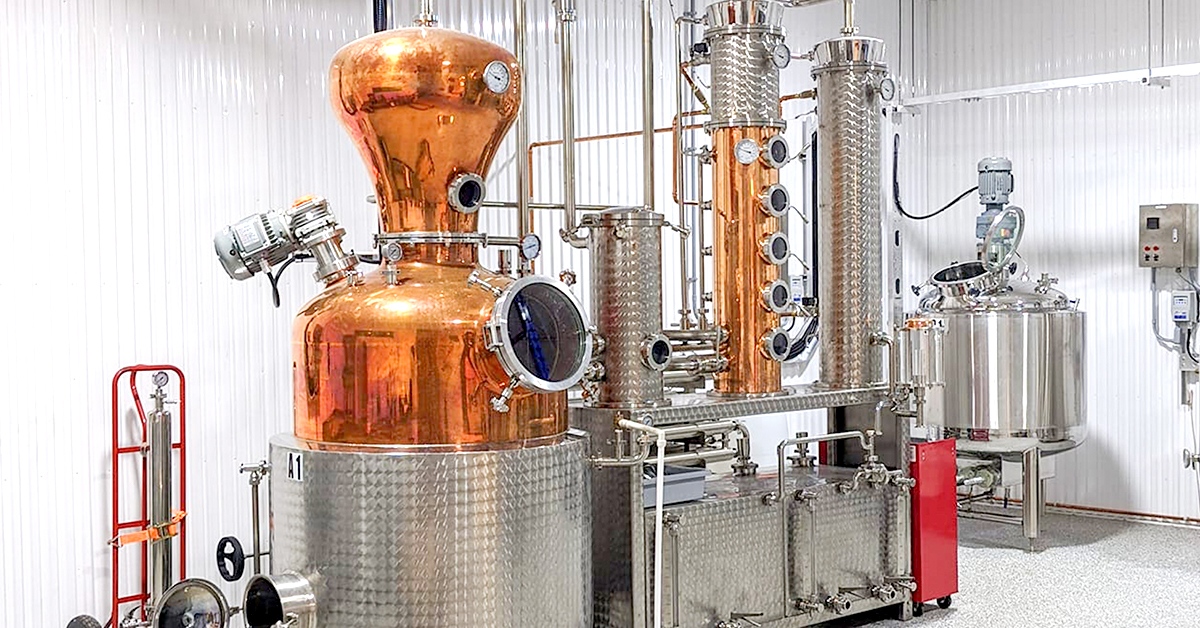
Success as a column still exporter isn't just about the steel we ship—it's about how we anticipate and dissolve the friction points that plague international equipment buyers. We've redesigned our manufacturing workflow around parallel processing and modular sub-assembly, which lets us cut lead times by nearly half without ever rushing a weld or skimping on copper gauge. This speed means nothing if the still doesn't fit the distiller's exact workflow, so we abandoned the catalogue model years ago. Now every microdistillery engagement starts with a blank slate: pot height, column diameter, lyne arm angle, and even the placement of sight glasses are iterated through live sketching sessions with the distiller, not picked from a dropdown menu. The real pivot, though, came when we realized a single still sale leaves money on the table. By bundling fermentation tanks, pumps, chillers, and process piping into a true turnkey package—complete with on-site commissioning support—we transformed a transactional relationship into a partnership that often spans the distillery's entire expansion journey.
The hidden half of the battle happens after the order is signed. Navigating the certification maze across more than 30 countries is a full-time discipline inside our company—from ASME and PED to obscure local pressure vessel codes that can stall a shipment for months if overlooked. We keep a living matrix of requirements for each market, updated quarterly by our in-house compliance team, so a still bound for Chile never gets held up for missing a Peruvian certification nuance. Currency swings used to eat margins alive, but we learned to bake natural hedges into our contracts without needing a Wall Street background: multi-currency accounts, forward contracts on major pairs, and sometimes simply pricing in a basket of stable currencies when the client's local currency is too volatile. Even factory acceptance testing went through a quiet revolution. With high-resolution PTZ cameras strapped to hard hats and real-time steam logs streamed to the client's browser, our remote FATs now feel more like a guided tour than a compromised substitute—clients watch every weld dye-penetrant test and column water trial live, ask questions mid-stream, and walk away with the same confidence they'd get standing next to us on the shop floor.
Contact Us
Contact Person: Ada Xu
Email: [email protected]
Tel/WhatsApp: 0577-86806088
Website: https://www.dayuwz.com/