
Collapsible Water Bottles We Recommend for Travel and Everyday Hydration
2026-10-24
Travel hydration has a problem: rigid bottles eat up space and end up left behind in hotel rooms. Collapsible bottles solve that by shrinking to the size of a deck of cards when empty, yet they still need to survive daily use without leaking in your bag. I've been testing a range of them for months—on flights, gym commutes, and day hikes—and the gap between gimmick and genuinely useful is wide. One name that consistently made the cut is Qunhao, whose foldable design feels less like a novelty and more like a daily carry essential. Below are the collapsible water bottles I'd actually recommend for travel and everyday hydration.
The Case for Letting Your Water Bottle Shrink
Most rigid bottles spend their lives taking up the same amount of space whether they're full or nearly empty. A bottle that shrinks as you drink changes that equation. By the time you finish your water, the thing in your bag is a fraction of its original size, leaving room for everything else you actually need to carry.
That simple shift also nudges you toward better habits. When a bottle collapses flat, you're more likely to tuck it into a pocket or small bag instead of leaving it behind. And because it disappears when empty, you won't find yourself lugging around dead weight or buying a plastic bottle just because your usual one felt too bulky.
There's a quieter benefit too: a shrinking bottle makes you aware of how much you've consumed. Watching the walls fold inward is a small, tactile reminder that you're making progress on your hydration without needing an app or a time-stamped chart.
Materials That Handle Hot, Cold, and Everything in Between
Aerospace engineers often turn to nickel-based superalloys when a single component must shrug off both the scorching exhaust of a jet engine and the deep freeze of high-altitude cruise. Alloys like Inconel and Hastelloy retain their strength at temperatures that would soften ordinary steel, while their low thermal expansion keeps parts from warping as they cycle between extremes. The secret lies in a carefully balanced mix of chromium, molybdenum, and other elements that form stable oxide layers and resist creep, making them indispensable for turbine blades, rocket nozzles, and even the hot sections of gas turbines.
Ceramics and glass-ceramics offer a different kind of resilience. Materials such as silicon carbide and zirconia can withstand abrupt thermal shocks because their strong atomic bonds and low thermal conductivity minimize the stress that builds when one side heats faster than the other. In the kitchen, borosilicate glass moves from freezer to oven without cracking, while advanced ceramic matrix composites are now replacing metal parts in brakes and heat shields where temperatures swing by hundreds of degrees in seconds.
For applications that demand flexibility along with thermal endurance, engineers blend polymers with conductive fillers or design phase-change materials that absorb and release heat as they melt and solidify. Silicone elastomers, for example, maintain their elasticity from -50°C to over 200°C, making them ideal for gaskets and seals in outdoor equipment. Meanwhile, materials like paraffin wax embedded in building panels buffer indoor temperatures by storing daytime heat and releasing it at night, quietly handling the full range of hot and cold without a single moving part.
Our Favorite Collapsible Bottles Right Now
Collapsible bottles have become a quiet staple in my daypack, and the current crop has finally struck the right balance between packability and drinkability. The Platypus Platy still wins for pure simplicity—it rolls down to a stub and doesn't leak even after months of being crushed into side pockets. I also keep coming back to the HydraPak Stow because the cap opens wide enough for a proper gulp instead of a frustrating trickle.
What separates this year's standouts is how they behave during actual use, not just in photos. A rigid top ring makes one-handed drinking while walking far less awkward, and a wide opening means you can actually scrub the inside without a special brush. The Vapur Eclipse has been my surprise favorite because it stands upright when half-full—no more floppy pouch sliding off a park bench.
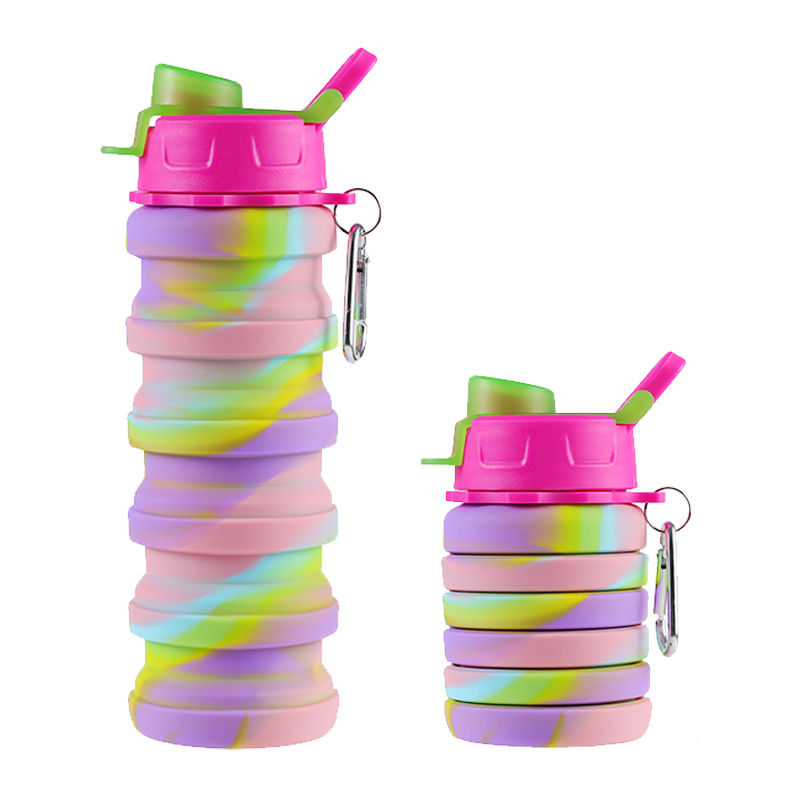
For longer trips, the materials matter more than the folding trick. Silicone bodies shrug off freezing and hot water, which turns them into a backup mug or a cold compress in a pinch. When empty, the whole thing flattens to roughly the size of a granola bar, which is exactly why it has earned a permanent spot in my travel kit.
Travel Days Are Easier With a Bottle That Packs Flat
Morning rush at the airport, and you're already juggling a passport, boarding pass, and an overstuffed carry-on. The last thing you need is a rigid water bottle jabbing into your ribs. That's where a bottle that compresses to nearly nothing saves the day. Roll it up, tuck it into a side pocket, and forget it's there until you pass the security checkpoint and find a fountain on the other side.
Hotel rooms, train seats, rental cars—space is always at a premium. Instead of buying overpriced plastic bottles at every stop, you can refill the same flattened pouch again and again. It holds enough for a long walk through a new city, yet collapses back down to the size of a deck of cards when empty. No more bulky souvenirs from the convenience store, just a practical tool that fits your rhythm.
Dishwasher safe, leakproof when capped, and surprisingly durable for something so thin, this bottle has survived being shoved under bus seats and dropped on cobblestone streets. Once you get used to packing it flat, you'll wonder why every travel accessory isn't designed with the same respect for your limited bag space.
For Desk, Gym, and Commute: No More Heavy Metal
At your desk, the last thing you need is another bulky metal accessory stealing your elbow room. The days of heavy stands, thick frames, or clunky organizers are over. A lighter build slides right into your workspace without demanding constant adjustment—just set it down and get to work. You’ll notice the difference the moment you reach for something, and your desk finally feels like a place for thinking, not lifting.
Hit the gym and your bag shouldn’t feel like it’s carrying the weight room home with you. Ditching heavy metal gear means more energy for your actual workout. Whether it’s a shaker, a towel clip, or a phone mount, the lighter option frees you to move between stations without that dull clank or extra shoulder burn. Pack it, forget it’s there, and focus on the rep in front of you.
Your daily commute already has enough baggage—literally. Swapping out dense metal parts for something far lighter turns a stuffed backpack into an easy carry. No more digging past a cold steel edge or feeling the strap dig in by the third block. It’s the kind of small change that makes a crowded train or a long walk feel a little more human.
Simple Care Habits That Prevent That Plastic Taste
That faint plastic taste usually comes from oils, heat, or trapped moisture breaking down the surface of your bottle or container. A practical habit is to rinse it with warm water and a pinch of baking soda right after you finish drinking, then leave the cap off until it's completely dry. This simple step stops residue from settling into tiny scratches where flavors linger.
Avoid putting hot drinks or food in plastic containers meant for cold storage, because heat speeds up the release of off-tastes. Once a week, fill the bottle halfway with cool water, add a tablespoon of white vinegar, shake it for a minute, then rinse thoroughly. The mild acid lifts stale oils without leaving behind a soapy film that can amplify the plastic note.
Store empty bottles with the lid off and keep them out of direct sunlight or a hot car. If a plastic taste still appears, try soaking the lid and mouthpiece in a mix of lemon juice and cold water for an hour, then scrubbing gently with a soft brush. These habits work together to keep the material from breaking down as quickly, so your water stays clean and neutral-tasting.
FAQ
They flatten or roll up when empty so they don't hog space in a daypack or carry-on. Most weigh next to nothing and can be clipped to a bag, which is handy when you're already lugging other gear.
Look for ones made from food-grade silicone or BPA-free TPU. As long as you clean them regularly and don't leave flavored drinks sitting for days, they're totally fine for everyday hydration.
The Platypus Platy and Vapur Element are both solid choices. They take a beating, fit in tight pack pockets, and the bite valve on some models lets you drink without stopping.
Rinse it soon after use and let it dry completely with the cap open. For deeper cleaning, use warm soapy water and a bottle brush, or a drop of unscented dish soap and a shake with rice or baking soda.
It depends on the material. Some silicone bottles can handle warm (not boiling) liquids, but many are designed only for cold or room-temp drinks. Check the manufacturer's max temperature before pouring coffee or tea.
The Nomader bottle has a sturdy shape but still rolls up, and it has a leak-proof cap that survives being tossed in a bag. If you want ultra-light, go with a soft flask like the Hydrapak Stow.
Quality ones with a secure screw cap or high-flow bite valve rarely leak, but it's smart to store them in an outer pocket or upright if possible. Some designs add a rigid rim or locking mechanism for extra peace of mind.
Most travel-friendly options range from 500 ml to 1 liter. If you like longer hikes or hate refilling, pick a 1-liter model; for daily commutes or shoulder bags, 500-750 ml feels less bulky.
Conclusion
Collapsible bottles solve a real problem: they shrink when empty, freeing space in cramped bags and pockets. Most of us have juggled a rigid bottle under an airplane seat or carried an empty one around a city, and the appeal of a vessel that folds flat is immediate. Silicone models handle both icy water and hot tea without cracking, while some use BPA-free plastic liners that resist stains and odors. For travel days, a bottle that packs down to the size of a paperback means you can slip it into a daypack after clearing security. At a desk or gym, it replaces the clunky metal thermos without forcing you to sacrifice capacity—many hold a liter or more when expanded.
Maintenance matters more with flexible designs. Rinsing with warm water and baking soda after each use, then leaving the cap off to air dry, prevents the plastic taste that turns people away from collapsibles. We currently favor bottles with wide mouths for ice cubes and leakproof twist caps that stay sealed in a tote. A few models include a small carabiner loop or a rigid rim that keeps the spout from collapsing mid-sip. Whether you're navigating a long layover or just refilling at the office cooler, a collapsible bottle earns its keep by disappearing when you don't need it and performing like a standard bottle when you do.
Contact Us
Contact Person: Cecilia
Email: [email protected]
Tel/WhatsApp: 8619057488653
Website: https://silwatbottle.com