
China Zinc-Nickel Alloy Plating Equipment: What to Look For Before You Buy
2026-09-13
Choosing zinc-nickel alloy plating equipment from China can feel overwhelming—every supplier promises high corrosion resistance and low operating costs, but the details that actually determine performance are often hidden in the fine print. In this guide, we'll walk through the key factors you should evaluate before signing a purchase order: bath chemistry compatibility, anode configuration, rectifier ripple control, and automation capabilities. We'll also touch on why experienced manufacturers like Junda consistently deliver reliable systems, and how their approach can help you avoid the most common pitfalls. Read on to make a confident, informed decision for your plating line.
Where Zinc-Nickel Plating Lines from China Fall Short When Nobody Checks
A lot of Chinese zinc-nickel lines look identical on paper—same tank dimensions, same rectifier specs, same claimed current density range. The real gap shows up when no third party is standing on the shop floor. Without independent eyes, bath chemistry gets topped up by feel instead of titration, and brightener additions drift from lot to lot. One week the zinc-nickel ratio sits at 12–15%, the next it creeps toward 8% because the lab tech was busy and nobody logged the Hull cell panels. Those shifts rarely trigger an alarm, but they change deposit stress, throwing power, and post-plate bake performance.
Temperature control is another place where lines quietly underperform. A probe that sits in a dead zone can read 35°C while the working zone near the anodes runs 42°C. Operators won't chase that down unless someone forces a calibration or a heat-mapping audit. When nobody checks, rectifier ripple drifts too—worn capacitors and loose bus connections get ignored because the parts still come out silver-grey. Then a batch of fasteners fails salt spray at 480 hours instead of 720, and everyone blames the passivate.
The most expensive shortcomings leave no fingerprint. Racks get stripped less often, so contact resistance builds up and some parts plate thin in low-current areas. Rinse tanks are topped with hard water, leaving silicate films under the trivalent passivate. Maintenance logs stay blank for weeks. By the time the line is audited, a quick polish and a fresh set of certificates can hide most of it—but the warranty claims and retrofits start piling up a year later.
The Technical Specs That Actually Matter for Alloy Deposition Uniformity
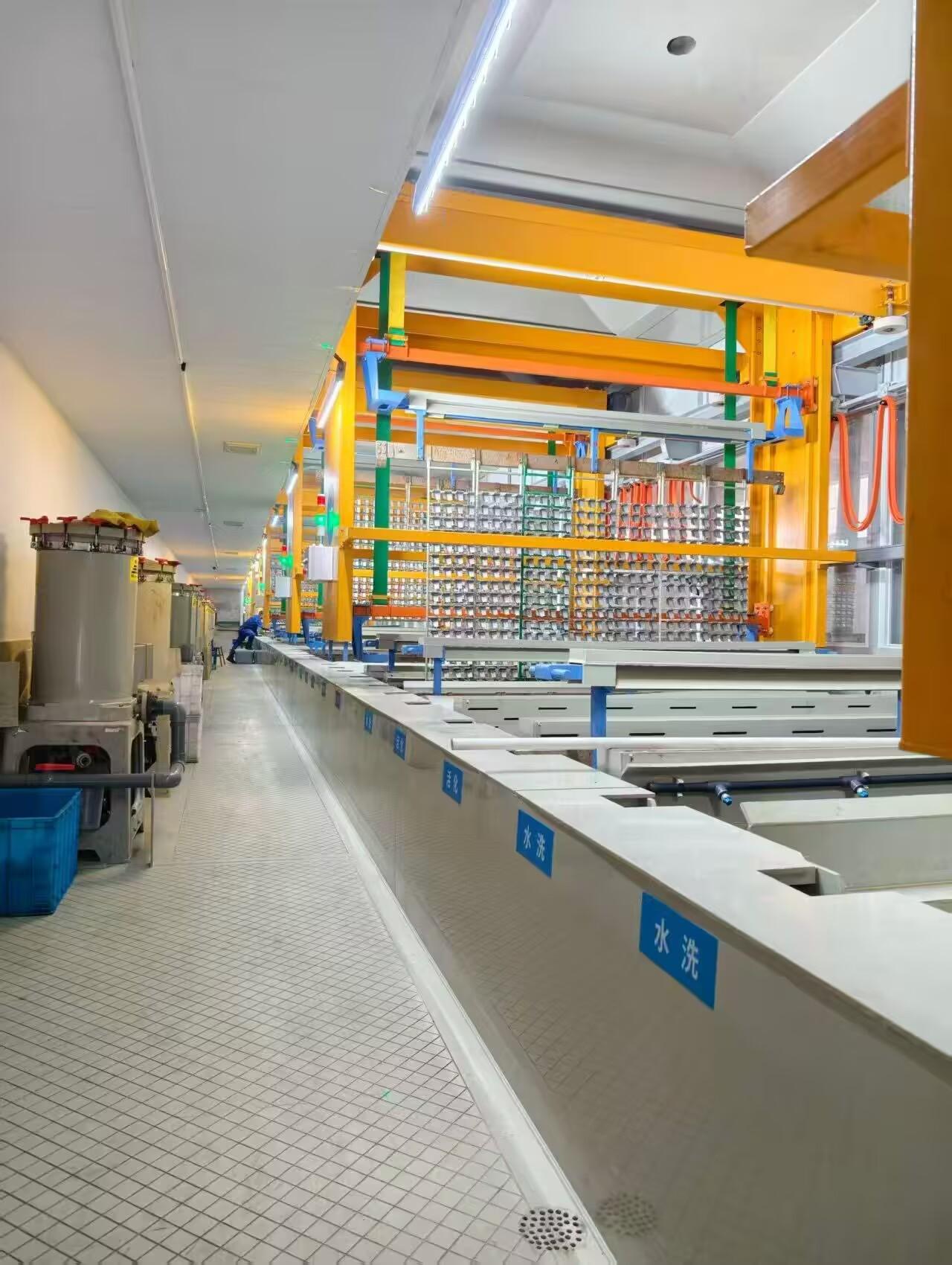
Current density distribution across the cathode surface is often the first thing to check, yet it is rarely controlled tightly enough. A variation of just three to five percent from center to edge can produce visible thickness differences after a few microns of deposit. Rather than relying on the power supply's nominal output, map the actual potential using a segmented cathode or a moving probe. Shield plates, auxiliary anodes, and adjustments to anode-to-cathode spacing are more effective than simply raising the average current.
Flow dynamics in the plating cell determine how quickly metal ions reach the surface once the boundary layer is depleted. Uniformity suffers when solution velocity drops near corners or recessed features, leading to slower growth there. Use nozzle arrays or eductor agitation to maintain a more even flow pattern, and verify temperature gradients across the bath with at least two probes. A difference of more than two degrees Celsius can alter deposition rate locally even if the current remains constant.
Pulse parameters are not just a setting on a rectifier; the waveform shape, frequency, and duty cycle directly affect nucleation density and grain structure. For alloy systems with different reduction potentials, a short off-time can reduce hydrogen entrapment and help the less noble metal deposit more evenly. Monitor additive concentration with cyclic voltammetric stripping rather than only checking pH. Additive depletion near high-current areas causes roughness before bulk concentration changes become obvious.
Component Quality: How to Spot Substandard Rectifiers, Tanks, and Anodes Before Payment
A rectifier that runs unusually hot during a brief bench test is often the first giveaway of cheap internals. Look for uneven plating on the heatsink fins or discoloration around the diode junctions, which point to marginal components that will fail under continuous load. A quality unit should maintain a steady output voltage within a tight tolerance even when you toggle between low and high current settings; if the needle drifts more than a few percent after warm-up, walk away.
Tanks are easier to judge once you know the tricks. Run your fingers along the welded corners and bottom seams—substandard fabricators often leave pinholes or rough overlap that will trap solution and corrode from the inside out. Ask for the actual material thickness at the rim, not the quoted gauge; many suppliers shave a half-millimeter to save cost. Also check whether the tank sits perfectly flat on a concrete floor without rocking. A subtle twist in the frame is a sign of rushed bending or thin-wall materials that will distort further when filled with hot electrolyte.
Anodes demand the closest look because their flaws hide beneath a shiny surface. Weigh a sample piece against the manufacturer's stated density—undercut anodes often contain excessive lead or recycled scrap that reduces conductivity and lifespan. Scratch a small corner with a utility knife: a uniform, bright metallic cut indicates solid alloy, while a grainy or flaky texture suggests voids and inclusions. Finally, request the lot's spectrographic report before you wire any payment; if the supplier hesitates to share the trace element breakdown, assume the anode will dissolve unevenly and poison your bath within the first month.
Custom Engineering vs. Off-the-Shelf Frames: Hidden Costs You Don't See in Quotes
When comparing custom engineering to off-the-shelf frames, the quoted price often tells only part of the story. The real costs emerge later—in design revisions, unexpected integration work, or field modifications that no catalog part can absorb. A standard frame might seem like a bargain until you factor in the hours spent reworking mounting points, reinforcing weak joints, or retrofitting brackets that were never meant to carry your specific load profile.
Custom engineering, by contrast, front-loads the thinking that off-the-shelf frames force you to do later. The initial quote may be higher, but it includes the structural analysis, material selection, and tolerance decisions that prevent downstream failures. Off-the-shelf frames hide costs in downtime, warranty disputes, and the slow erosion of performance when the product simply doesn't fit the application as well as it should.
The hidden cost rarely appears on any invoice: the time your team spends making a generic frame work instead of optimizing the system around it. Custom engineering eliminates that rework by aligning the frame's stiffness, weight, and connection points with your actual operating conditions from day one. The question isn't whether custom costs more—it's where you'd rather pay: in upfront clarity or in the unplanned expenses that accumulate after installation.
After the Sale: Spare Parts, Remote Troubleshooting, and Service Response Realities
Once the invoice is paid, the real test begins. Spare parts availability often becomes a quiet battlefield—some components ship within days, others sit on backorder for weeks, forcing operators to make uneasy choices between downtime and costly workarounds. Remote troubleshooting, meanwhile, promises speed but hinges on how well the machine's diagnostics were designed. A skilled technician on the phone can resolve a surprising number of faults, yet the moment a physical part fails, the conversation shifts from software logs to shipping manifests.
Service response times vary wildly depending on geography, contract tier, and sheer luck. A same-day visit sounds reassuring until you realize the nearest field engineer is four hours away. Many manufacturers now push for video-guided repairs, sending customers a link and hoping for steady hands. But there's no substitute for a technician who has seen the same failure a dozen times—those instincts can't be downloaded.
What rarely makes it into the brochure is the emotional weight of waiting. A production line halted, a harvest window closing, a clinic unable to run tests—each delay has a human cost. Savvy buyers learn to ask not just about the machine's specs, but about the nearest spare parts hub, the average time to resolution, and whether the support team is empowered to make decisions or just log tickets.
Validating a Supplier Without a Site Visit: Documentation, References, and Third-Party Tests
When you can't walk a supplier's floor, the paperwork has to carry more weight. Request the obvious items—business license, ISO certificates, export records—but don't just file them away. Look for inconsistencies: does the registration address match the invoicing address? Are the quality certifications still valid and issued by a recognized body, not a pay-for-play outfit? Ask for recent bank statements or audited financials if the order value justifies it. A genuine supplier will usually share redacted versions without much fuss.
References are only as good as the questions you put to them. Instead of a generic "would you recommend them?" ask about defect rates on the last three shipments, how the supplier handled a late delivery, and whether the contact person you're dealing with now was the same one who managed their order. If possible, request a reference from a customer in your own region or industry—someone whose tolerance for risk resembles yours. Third-party audit reports from firms like SGS or Bureau Veritas can fill gaps, but check the date; an audit from three years ago doesn't tell you much about the factory today.
For product-specific assurance, third-party lab tests are non-negotiable in many sectors. Specify exactly which standards the sample must meet—don't rely on the supplier's own QC lab. Order a pre-shipment inspection from an independent agency, and make it clear that payment releases only after the report lands in your inbox. If the product category allows, ask for a small batch produced with your exact specifications and sent to a lab you choose. The cost is modest compared to the risk of a container full of unusable goods.
FAQ
Polypropylene or PVDF linings tend to outlast bare steel, with PP being common for moderate temperatures and PVDF worth the upgrade if your bath runs hot or uses aggressive additives. Check weld quality and ask for thickness specs rather than relying on a sales sheet.
Match the rectifier's current output to your largest planned workload plus about 20% headroom, and make sure ripple stays under 5% for uniform nickel codeposition. A unit with too much ripple will throw alloy ratios off, especially in low-current-density areas.
Many can, but you have to specify the exact directives upfront. Ask for CE or UL certification on electrical panels, fume extraction designs that meet your local exposure limits, and documentation showing wastewater treatment compatibility. Don't assume a generic export model will pass.
Insoluble anodes with a separate zinc replenishment loop often beat soluble zinc anodes because they keep the bath chemistry steadier. If you go with soluble anodes, make sure the baskets and bags are sized to prevent sludge buildup and uneven dissolution.
It can make or break your alloy consistency. Look for PLC-based controls that log amp-hours, temperature, and pH, and can adjust rectifier output automatically. A basic timer setup saves money upfront but will cause headaches if you run high-volume or mixed parts.
Get clear answers on remote troubleshooting, spare parts lead times, and whether they have a local service partner or expect you to ship components back. Ask for a list of reference sites in your region and call at least one that has run the equipment for over a year.
Yes, barrel lines need stronger solution agitation and more frequent filtration to handle metal fines, while rack lines demand better shielding and anode placement for complex shapes. Specify your part geometry and volume per hour before comparing quotes.
Freight, import duties, and local electrical conversion are obvious, but also budget for installation supervision, initial bath make-up chemicals, spare anode baskets, and possible retrofitting of plumbing to your existing wastewater system. Cheap quotes often leave these out.
Conclusion
Before signing off on a zinc-nickel plating line from a Chinese supplier, spend time on the details that rarely appear in glossy brochures. Alloy deposition uniformity is not guaranteed by a single rectifier spec; you need to look at anode placement, current density distribution, and whether the tank agitation pattern has been verified for the specific barrel or rack geometry you plan to run. Many lines fall short when nobody checks the actual plating thickness at low-current-density recesses, not just the high-current edges. Ask for sample coupons from a full-size trial, not a lab beaker. Component quality deserves equal scrutiny: rectifiers with undersized cooling paths, tanks with thin or poorly welded polypropylene, and anodes with inconsistent zinc-nickel ratios can pass a visual inspection but fail within months. Request teardown photos and test certificates for transformers, diodes, and anode material before payment. Custom engineering may cost more upfront, but it often eliminates the hidden expenses of retrofitting an off-the-shelf frame to your existing wastewater and ventilation layout.
Pay attention to what happens after the equipment ships. Spare parts for proprietary pumps, heaters, and control boards can sit in customs longer than you expect, so negotiate a locally warehoused critical-parts kit. Remote troubleshooting is helpful only if the supplier has engineers who can walk your team through PLC diagnostics in your time zone, with actual experience on similar lines. Service response claims mean little without written penalties for downtime. If you cannot visit the factory, validate the supplier through more than a glossy website: request full electrical schematics, a list of three recent buyers in your region, and third-party test reports for coating adhesion and corrosion resistance per ASTM B117 or ISO 9227. Ask for video of the exact model running a full production load, not a staged demo. The cheapest quote rarely reflects the real cost of rework, replacement rectifiers, and lost production when the line underperforms. A supplier that resists documentation or cannot explain the relationship between anode area, bath chemistry, and thickness distribution is not worth the risk, regardless of the price tag.
Contact Us
Contact Person: hayyr
Email: [email protected]
Tel/WhatsApp: 8613082110525
Website: https://www.jundaelectroplating.com