

Bulk N52 Magnet Essentials: What Makes These Neodymium Magnets So Powerful?
2026-08-21
If you've ever wondered why N52 neodymium magnets punch far above their size, you're not alone. These bulk magnets are the strongest commercially available grade, but raw power isn't just about the label—it's about how they're made and what you actually need. In this guide, we strip away the hype and look at the essentials behind bulk N52 magnet performance, from material purity to real-world limits. Whether you're prototyping or scaling up, understanding these factors matters. And when consistency counts, sourcing from DAWA gives you a reliable partner for high-grade N52 magnets that hold up.
Why N52 Grade Isn't Just Another Number
When you see N52 stamped on a neodymium magnet, it’s easy to assume it’s just another tier in a long list of grades. But N52 is the ceiling — the strongest commercially available grade you can actually buy. The “52” refers to the maximum energy product, measured in megagauss-oersteds, and it sits at the top of the standard scale. Most other grades, like N35 or N42, trade a bit of pull force for lower cost or easier manufacturing, but N52 doesn’t compromise. It’s the grade engineers reach for when every millimeter of space counts and every ounce of holding power matters.
What makes N52 genuinely different isn’t just the raw number, it’s how that number changes design constraints. With a higher energy product, you can shrink a magnet’s volume by up to 30% compared to N42 while retaining the same strength. That’s a huge deal in compact electronics, medical devices, or high-performance motors where space is tight and weight is penalized. The grade forces a rethink: instead of adding more magnet, you add less material for the same result. That’s not a trivial spec bump, it’s a completely different approach to magnetic circuit design.
Of course, N52 comes with trade-offs that make it more than a number on a datasheet. It’s more brittle, harder to machine, and more sensitive to temperature than lower grades, often requiring a coating to prevent corrosion. Yet designers still choose it because the performance ceiling it opens up is worth the handling headaches. That’s why N52 isn’t just “another number” — it’s a deliberate choice for applications where failure isn’t an option and where the strongest possible field in the smallest possible package is the only way forward.
The Truth About Rare Earth Magnet Strength
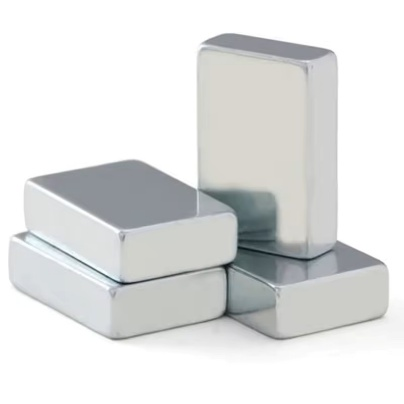
Most people assume a magnet’s pull force scales directly with its physical size, but rare earth magnets flip that intuition on its head. A coin-sized neodymium disc can hold a stack of papers thicker than your hand, while a similarly sized ferrite magnet struggles to keep a single page pinned. The real driver is not bulk but coercivity and remanence—two properties that describe how stubbornly the material resists demagnetization and how much magnetic flux it retains after being magnetized.
What rarely gets mentioned is temperature. Neodymium magnets lose strength quickly once they pass 80°C, and standard grades can permanently weaken if heated too far. Samarium cobalt costs more and delivers slightly less pull at room temperature, yet it shrugs off heat that would turn a neodymium magnet into a paperweight. So the “strongest” magnet is not a single answer—it depends on whether you need brute force on a cool workbench or reliability inside a hot motor housing.
Coatings matter more than people expect, too. Bare neodymium oxidizes fast, and once corrosion creeps under the nickel or epoxy layer, strength fades even without any mechanical shock. If you buy a cheap uncoated magnet for outdoor use, you are not saving money—you are just scheduling a future replacement. Pay attention to the environment and the duty cycle, not just the N-rating on the label.
Bulk Buying: Where Quality Control Makes or Breaks Performance
When you order pallets of components, the shiny sample from the sales rep means nothing if the thousandth unit drifts out of spec. Bulk buying shifts risk from price per piece to consistency, and that's where most procurement teams get burned. A single batch that fails incoming inspection can idle a production line, eat the savings from a negotiated discount, and leave you scrambling for replacement stock that costs more on the spot market.
The fix isn't more paperwork—it's building quality gates into the purchase order itself. Specify acceptable defect levels, require batch-level test data, and agree on who pays for return freight before the first crate ships. Suppliers who push back on those terms are telling you something useful about their own confidence. Smart buyers treat bulk discounts as a starting point, not a win, and keep a second source warm even when the primary supplier looks solid.
Coatings That Fight Corrosion Before It Starts
Corrosion doesn't wait for a coating to fail; it starts the moment moisture and oxygen find a path to the metal. Traditional paints simply sit on the surface like a passive shield, and once a scratch appears, the protection ends. The newest generation of anti-corrosion coatings changes this dynamic by embedding active inhibitors that react to the earliest signs of electrochemical attack. Rather than waiting for rust to bloom, these formulations release protective compounds only when conditions turn hostile, effectively interrupting the corrosion cycle before it can gain a foothold.
Some of these coatings rely on microencapsulated agents—tiny reservoirs of film-formers or corrosion inhibitors that break open when the local pH shifts or when mechanical damage occurs. Others use conductive pigments like zinc or magnesium that act as sacrificial anodes, corroding in place of the steel beneath. A more recent approach adds self-healing polymers that flow into hairline cracks and restore barrier integrity without any external trigger. The common thread is responsiveness: the coating isn't just a static layer, but a reactive system that monitors its own surroundings and responds to threats in real time.
In marine environments, offshore platforms, and buried pipelines, this proactive behavior translates into longer service intervals and lower life-cycle costs. Instead of relying on frequent inspections and touch-ups, asset owners can trust that the coating is working even when no one is watching. Field tests on bridges and storage tanks show that active coatings can delay first maintenance by several years compared with conventional epoxy or polyurethane systems. That's a meaningful shift from merely covering metal to genuinely defending it.
Temperature Limits: When Strong Magnets Get Weaker
Every permanent magnet relies on a delicate internal order. Rising temperatures inject energy into the crystal lattice, making atoms vibrate more violently. These vibrations work against the magnetic alignment, gradually shrinking the regions—called domains—where atomic moments point in the same direction. As the disorder grows, the magnet’s external field weakens even though no physical damage is visible.
Not all magnets fail at the same temperature. Neodymium iron boron, the strongest commercial magnet at room temperature, often begins losing usable strength around 80°C unless specially formulated for higher heat. Samarium cobalt holds its field far better at 250°C or more, while alnico can survive red-hot conditions without demagnetizing, though its low coercivity creates different trade-offs. Selecting a magnet without checking its temperature rating almost guarantees performance loss in motors, sensors, or brakes.
Some weakening is reversible—the magnet recovers when cooled back down. But repeated or prolonged exposure to excessive heat pushes beyond a tipping point. Above the Curie temperature, the magnetic order collapses completely, and the material behaves like an ordinary piece of metal. Even below that point, high heat can permanently rearrange the microstructure, leaving a portion of the lost strength permanent. Engineers often run thermal cycling tests to verify how much of a magnet’s original pull remains after it has spent hours near its maximum rated temperature.
Understanding Pull Force Without the Jargon
Picture yourself dragging a heavy suitcase across a carpet. The steady tug you feel in your arm, the one that keeps the suitcase moving toward you, is pull force. It is simply a measure of how strongly something is being drawn in a particular direction. No formulas required, just the everyday sensation of hauling, reeling, or stretching.
Pull force shows up in ordinary moments: opening a stuck window, pulling a wagon up a hill, or yanking a weed out of the garden. Each time, the object resists a little, and your muscles have to work against that resistance. That back-and-forth between your effort and the object's reluctance is the heart of pull force.
You don't have to touch something to pull it. A magnet tugs at a paperclip across a table, and gravity keeps your feet planted by pulling you downward. In all these cases, the same basic idea applies: a pull force is just a way of describing how hard something is being drawn closer, stretched out, or moved from where it wants to stay.
FAQ
N52 is a grade of neodymium magnet with a maximum energy product of about 52 MGOe. Compared to N35 or N42, it packs more magnetic strength into the same physical size, which lets you use smaller magnets to achieve the same holding force. However, the actual pull force still depends on dimensions and coating.
The strength comes from the neodymium-iron-boron alloy and the specific sintering process that aligns a very high percentage of magnetic domains in the same direction. N52 represents the top end of that alignment for standard commercial grades, giving it the highest energy density you can typically buy.
Common uses include motor rotors and stators, magnetic couplings, sensor triggers, speaker assemblies, magnetic door catches, tool holders, and DIY jigs or fixtures. Bulk packs are popular for prototyping and small production runs.
Yes, standard N52 magnets usually start losing strength permanently if heated above roughly 80°C (176°F). If your application gets hotter than that, you'd need a lower grade with a higher temperature rating or a special high-temperature neodymium variant.
Common coatings are nickel-copper-nickel (shiny silver), zinc, epoxy, and sometimes gold or parylene. For outdoor or damp environments, epoxy or a multi-layer nickel coating with an added sealant tends to hold up best against corrosion.
Definitely. These magnets can snap together with enough force to pinch skin or shatter if allowed to slam into each other. Keep them away from pacemakers, magnetic media, and small children, and use spacers or gloves when separating large stacks.
For quantities above a few dozen pieces, bulk pricing usually drops the per-magnet cost noticeably, especially when ordering from a manufacturer or distributor rather than retail packs. The savings matter most if you use them regularly in products or prototypes.
Ask the supplier for a mill test certificate or a grade verification report, and check that the listed pull force and dimensions match N52 expectations. You can also test with a gauss meter: a surface field reading that's far below the calculated value for N52 is often a sign of a lower grade.
Conclusion
Most people assume all neodymium magnets are roughly the same, but the N52 designation separates genuinely powerful discs and blocks from weaker imitations. This grade sits at the top of standard commercial neodymium ranges, meaning the material has been pushed closer to its theoretical magnetic saturation. That difference shows up immediately in real-world tasks: an N52 magnet can hold items that a lower grade simply cannot, even when the physical size is identical. The rare earth composition itself—mostly neodymium, iron, and boron—is already strong, but N52 refines the grain structure during manufacturing to squeeze out extra performance. However, not every bulk order labeled N52 delivers on that promise. Without strict quality control, magnet batches can vary wildly in actual strength, coating consistency, and dimensional accuracy. Buyers who need hundreds or thousands of pieces should look for suppliers that test each production run, because even a small drop in grade from N52 to N48 can mean a 10–15% reduction in holding force. That gap becomes critical in industrial fixtures, magnetic separators, or precision assemblies.
The physical power of an N52 magnet also depends on two factors that get overlooked in product listings: surface coating and operating temperature. Bare neodymium oxidizes quickly, so most bulk magnets come with nickel, zinc, or epoxy coatings. Nickel is the standard workhorse—thin, conductive, and reasonably tough. Epoxy offers better chemical resistance for outdoor or marine environments. But a coating is only as good as its application; pinholes or uneven layers invite rust that silently weakens the magnet below the surface. Temperature is the other hidden limit. While N52 magnets are rated as the strongest at room temperature, their performance drops as heat rises. Above 80°C, an N52 magnet can lose a noticeable amount of pull force, and exceeding 176°C may cause permanent demagnetization. This is why high-temperature variants or lower grades are sometimes the smarter choice for motors or heaters. Finally, understanding pull force doesn't require a physics degree. Most reputable sellers list vertical pull strength in pounds or kilograms, measured against a thick steel plate under ideal conditions. In practice, pull force drops dramatically if the surface is thin, painted, uneven, or if the magnet is subjected to sideways shear. Knowing these basics helps anyone choose bulk N52 magnets that actually perform as expected.
Contact Us
Contact Person: Kelvin Lo
Email: [email protected]
Tel/WhatsApp: 0769-88561131
Website: https://dawamagnetic.com/