

Best Rotary Dip Switches Manufacturer: Your Ultimate Guide to Quality and Reliability
2026-06-14
When it comes to precision control and reliable performance in electronic devices, rotary dip switches play a critical role. Selecting a manufacturer that consistently delivers quality can be challenging. KEJIAN ELECTRONICS stands out as a trusted name, combining decades of expertise with rigorous testing to ensure every switch meets the highest standards. In this guide, we’ll explore what makes a top-tier supplier and why partnering with the right brand matters for your projects.
Why Rotary Dip Switches Deserve More Attention in Modern Electronics
It’s easy to overlook rotary dip switches in an age of touchscreens and voice controls, but their silent, physical reliability is exactly why they deserve a second look. Unlike software-based settings that can glitch, crash, or become inaccessible after a faulty update, these tiny mechanical components hold their state without power, memory, or a processor. They remain set through power cycles, resets, and firmware hiccups—a trait that becomes critical in industrial controls, medical devices, and outdoor equipment where a wrong configuration can have real consequences.
There’s also a user-experience angle that modern design often forgets. A rotary dip switch offers unambiguous, tactile feedback. You can feel the position change, and you don’t need a screen, a manual, or a charged battery to verify the setting. In factory floors, server rooms, or field repairs, that instant physical certainty saves time and prevents errors. It’s a simple but powerful form of accessibility that no GUI can fully replicate, especially in noisy or gloves-on environments.
Surprisingly, these switches are also evolving instead of fading away. Miniaturized versions now fit into dense IoT modules, and sealed designs handle dust and moisture far better than early generations. Some even integrate with microcontroller logic for hybrid approaches: hard settings for safety-critical parameters with software flexibility on top. That blend of rugged physical anchoring and modern adaptability is why engineers who care about long-term reliability keep reaching for them—even when flashier options exist.
What Separates a Truly Dependable Manufacturer from the Rest
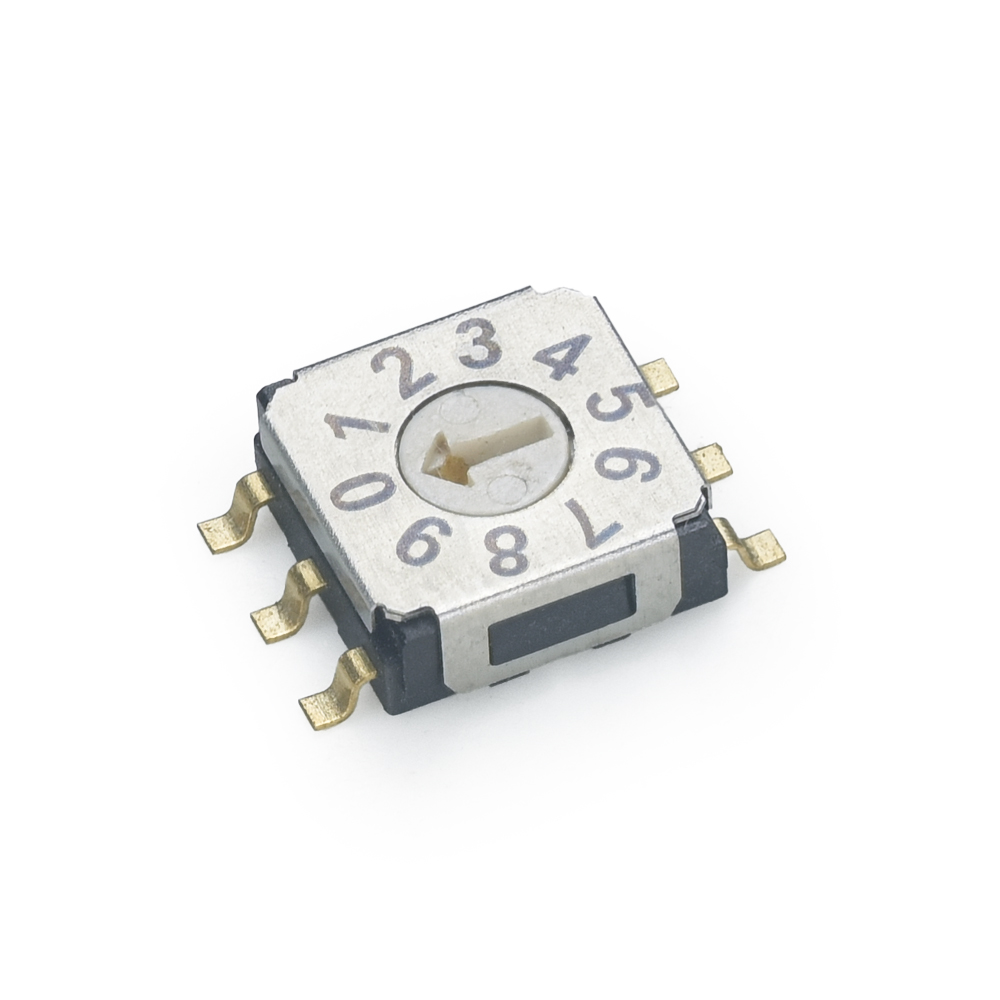
Dependable manufacturers earn that label through an almost obsessive attention to the small things—raw material traceability, in-process inspection frequency, and a refusal to ship anything that doesn't meet the spec, even if it means reworking an entire batch. It's not flashy, but when you never have to worry about a sudden dip in part quality or a batch that "looks fine" but fails after a few months, the value becomes impossible to ignore.
Another dividing line is how they handle communication. You won't find them waiting days to reply to a straightforward question, or burying bad news under vague updates. If a shipment is delayed, they tell you before you have to ask, along with the reason and the revised timeline. That kind of transparency builds a working relationship that goes beyond a purchase order, making them a natural extension of your own operations.
Finally, a truly dependable manufacturer doesn't just wait for problems to appear—they anticipate them. They'll flag a design choice that might cause assembly headaches, suggest a coating change that doubles the part's lifespan, or adjust packaging after noticing a shipping trend. That proactive mindset means fewer fires for you to put out, and over time, it transforms a supplier into an irreplaceable partner.
Inside the Production: Materials and Processes That Define Longevity
True durability starts long before a product hits the shelf—it’s engineered into the choice of materials. Instead of defaulting to the cheapest available stock, manufacturers focused on longevity prioritize substrates with inherent resilience. For metals, this means alloys selected not just for strength but for their fatigue limit and corrosion resistance in specific environments. Polymers aren’t picked from generic grades; they’re often custom-compounded with UV stabilizers, impact modifiers, or flame retardants that extend functional life without compromising the tactile or aesthetic qualities end users expect. Even textiles undergo rigorous abrasion and pilling tests before a single yard gets cut, ensuring the fabric won’t thin or fade under repeated use.
The processes that shape these raw inputs matter just as much as the materials themselves. Tight control over manufacturing parameters—injection pressure, cure time, cooling gradients—transforms a good material into a reliable part. It’s the difference between a die-cast housing that develops microcracks after a thousand thermal cycles and one that stays dimensionally stable for decades. Precision machining with real-time tool wear compensation eliminates the sort of subtle variance that leads to premature bearing failure. Even seemingly minor steps, such as stress-relieving heat treatments or passivation of metal surfaces, are what separate gear that wears in from gear that simply wears out.
Quality assurance here isn’t a final inspection sticker; it’s an embedded culture of making sure each process step contributes to service life. Suppliers are qualified through accelerated life testing that mimics years of field abuse. In-line monitoring catches drift before defects become embedded, while periodic destructive sampling validates that the production line hasn’t drifted from the validated state. This obsessive attention to detail—down to the cleanliness of assembly environments and the torque values on critical fasteners—ensures that the product doesn’t just survive its warranty period but continues to perform long afterward. Ultimate longevity is never accidental; it’s the cumulative result of decisions made at every stage of bringing a design to life.
Reading Between the Lines: Certifications and What They Actually Mean
Certifications often come with glossy seals and impressive acronyms, but their real value depends heavily on the rigor of the issuing body and the specific standards applied. A certificate can range from a simple participation acknowledgment to a rigorous professional license, yet many people treat them as interchangeable symbols of expertise. Digging into the audit process, renewal requirements, and whether the certifying organization is accredited by a recognized oversight body reveals far more than the name on the paper.
In some industries, certifications function more as a marketing tool than a genuine measure of competence. Vendors may design their own programs around proprietary products, making the credential a testament to brand loyalty rather than broad-based skill. Meanwhile, independent third-party certifications can signify a baseline level of knowledge that withstands scrutiny across different employers and environments. Learning to identify who benefits most from a particular certification—the individual, the corporation, or an independent standards board—can clarify what the credential actually communicates.
Even well-respected certifications have limitations and evolve over time. A certification earned a decade ago might not reflect current best practices, and some credentials require ongoing education to remain valid. Overemphasis on certifications can also exclude talented individuals who lack access to exam fees or preparatory courses. Ultimately, deciphering the true meaning behind any certification means looking past the logo and asking how the credential is earned, maintained, and recognized by those with real-world experience in the field.
Custom Solutions Without the Headache: Matching Design to Real-World Demands
When requirements shift or unexpected constraints appear, off-the-shelf designs rarely hold up. We focus on collaborative discovery from the start, mapping out not just the technical specs but the operational realities your team lives with every day. That means instead of forcing your workflow into a rigid template, we build around how you actually get things done.
Our process cuts out the usual back-and-forth that drains time and patience. By running quick prototyping cycles and validating ideas against your tangible environment early, we expose mismatches before they become costly reworks. The result is a solution that slots naturally into your existing stack, scales without constant hand-holding, and genuinely resolves bottlenecks rather than adding new layers of complexity.
We’ve seen too many projects stall because the design looked great on paper but ignored the day-to-day friction users encounter. Whether it’s adapting interfaces for field teams with intermittent connectivity or shaping backend flows that respect legacy data structures, the emphasis stays on practical fitment—delivering something your people instinctively understand and trust, without the headache of endless tweaking.
The Hidden Costs of Cutting Corners in Switch Selection
Snagging a bargain on switches feels like a smart move when you're staring down a tight budget. The price tag difference can be dramatic, and it's tempting to believe you've found a shortcut that doesn't sacrifice much. But what doesn't show up on the initial invoice often turns out to be vastly more expensive: unplanned downtime when those low-cost components fail, the scramble to source replacements at the worst possible moment, and the labor hours eaten up by troubleshooting flaky connections you thought you'd never have to touch again. That upfront saving starts looking pretty thin once your team has been pulled off important work to nurse a system that should be running itself.
Beyond the obvious repair costs, there's a durability deficit that rarely gets talked about until it's too late. Switches built with bottom-dollar materials and lax quality control may work fine for a few months, but push them into cyclical loads, dust, vibration, or temperature swings and you'll see a rapid, non-linear decay in performance. This isn't just an inconvenience; when a switch controls safety interlocks, lighting for hazardous areas, or critical process sequencing, a premature failure can cascade into equipment damage or worse. The real hidden charge? You're not just buying a replacement—you're absorbing the cost of whatever it broke on its way out.
There's also a more subtle drain that chips away at your operation's credibility. Frequent minor malfunctions, even if they don't cause a full stop, force workers to develop workarounds and breed a quiet distrust of the entire installation. Quality switches often earn their keep through unnoticed reliability—nobody thinks about them because they simply never fail. Cut-rate alternatives, on the other hand, introduce a steady background noise of frustration and rework. By the time you factor in the creeping loss of efficiency and the hit to your reputation from unreliable throughput, the true cost per switching cycle easily eclipses the premium product's price several times over.
FAQ
Focus on a manufacturer that has a proven track record with long-standing industry experience, uses high-grade materials like gold-plated contacts, and provides detailed technical documentation. On-site quality audits and transparent failure rate data are also strong indicators of a commitment to quality.
Reliability can be assessed by reviewing the manufacturer's lifecycle testing results, looking at environmental ratings for temperature and humidity, and ensuring the switch meets international standards such as IEC 60068 for shock and vibration. Don't overlook real-world field performance data from similar applications.
Reputable manufacturers typically conduct mechanical endurance tests exceeding 10,000 cycles, thermal cycling from -40°C to 125°C, vibration testing per MIL-STD-202, and salt spray corrosion tests. In-circuit electrical testing under load is also critical to verify contact integrity over time.
Look for ISO 9001 for quality management, ISO 14001 for environmental compliance, and IATF 16949 if automotive-grade reliability is needed. Product-specific certifications like UL, VDE, or CQC demonstrate adherence to regional safety standards.
The contact material directly impacts conductivity and corrosion resistance; beryllium copper with gold plating offers excellent reliability. The body material—typically high-temperature thermoplastics like PPS or LCP—determines thermal stability and chemical resistance. Actuator design and material influence tactile feel and durability.
Through-hole (THT) switches generally provide stronger mechanical anchoring to the PCB, making them more durable in high-vibration environments. Surface-mount (SMD) versions are more compact and suited for automated assembly, but they rely on solder joint integrity, which can be less robust under extreme stress. Both can be durable if manufactured to high standards.
A flexible manufacturer should offer custom actuator colors, shaft lengths, switch position counts, terminal configurations, and special plating options. They might also provide custom PCB layouts or even fully sealed IP67-rated designs. Quick turnaround on samples and support for low-volume runs without huge NRE fees are important.
Quality-focused manufacturers implement statistical process control (SPC) during production, use automated optical inspection (AOI) systems, and perform lot-based sampling tests. They often assign dedicated production lines for large orders and maintain detailed traceability records to quickly isolate and address any deviation.
Conclusion
Rotary dip switches might seem like humble components, but their role in modern electronics is quietly pivotal—handling everything from address configuration to mode selection in industrial controls, medical devices, and communication systems. Instead of treating them as an afterthought, engineers are rediscovering how a well-built rotary dip switch can eliminate intermittent failures that plague complex circuitry. The difference between a mediocre supplier and a truly dependable one often lies in the details most buyers overlook: contact plating thickness, housing material resilience, and the consistency of detent torque over thousands of cycles. Top-tier manufacturers don't just slap together parts; they engineer every aspect with longevity in mind, using high-grade phosphor bronze for contacts, gold plating for corrosion resistance, and high-temperature thermoplastics that hold up under soldering stress. In-house tooling and rigorous batch testing further weed out variability, a practice that separates dedicated switch makers from generic component packagers.
Certifications like UL, RoHS, or ISO are more than just badges on a website—they represent a manufacturer's willingness to submit their processes to third-party scrutiny, verifying everything from fire resistance to environmental compliance. Yet, a smart buyer peers beyond the logos, asking how those certifications translate to real-world performance in their specific application. The best partners pair compliance with deep customisation: they tweak actuators, adjust pinouts, or modify sealing without treating every small change as a monumental custom order. It's the kind of flexibility that slashes development time while ensuring the final design truly fits the application's mechanical and electrical demands. And while bargain-bin switches might trim pennies from a BOM, the hidden costs—field failures, rework calls, and reputation damage—quickly erase any upfront savings. Savvy decision-making weighs not just the unit price but the whole lifecycle, because a switch that survives millions of actuations without drift is what keeps a product reliable and a brand trustworthy.
Contact Us
Contact Person: Anna lin
Email: [email protected]
Tel/WhatsApp: +86 13567768885
Website: https://www.kjele.com/