

Best Industrial Parts for Maximum Equipment Reliability and Performance
2026-10-27
You can spot the difference within the first hundred hours of runtime. Cheap parts fail quietly—misalignment, micro-cracks, a vibration you can't quite trace. That's when downtime stops being a risk and becomes a schedule. For equipment that has to run through punishing cycles, choosing the right industrial parts isn't a cost decision; it's a reliability strategy. This guide breaks down what actually moves the needle in performance—and why Zhaoyuqi keeps showing up in the maintenance logs of operations that can't afford surprises.
Material Grades That Prevent Premature Wear in Heavy-Duty Gearboxes
Heavy-duty gearboxes live or die by the fatigue resistance of their tooth flanks, and the base alloy sets the ceiling. Grades like 18CrNiMo7-6 and AISI 9310 are favored not because they are exotic, but because their nickel and molybdenum content keeps the core tough while the case takes the compressive hammering. A shallow-hardening 8620 might survive a light industrial drive, but once torque density climbs, the softer core under a carburized layer begins to yield, triggering spalling that no lubricant can rescue.
Cleanliness in the melt matters as much as the chemistry on paper. Calcium-treated, low-sulfur variants of 4320 or 17CrNiMo6 reduce oxide and sulfide stringers, which act as crack initiation sites under repeated rolling-sliding contact. Some shops skip the premium grades and instead push nitrided 4140 into gear service, but that usually backfires: the diffusion layer is too thin to support the Hertzian stresses at the pitch line. For sustained loads, double vacuum degassed carburizing steel with controlled retained austenite below 15 percent consistently outlasts the cheaper alternatives.
Why Bearing Clearance Tolerances Matter More Than Brand Reputation
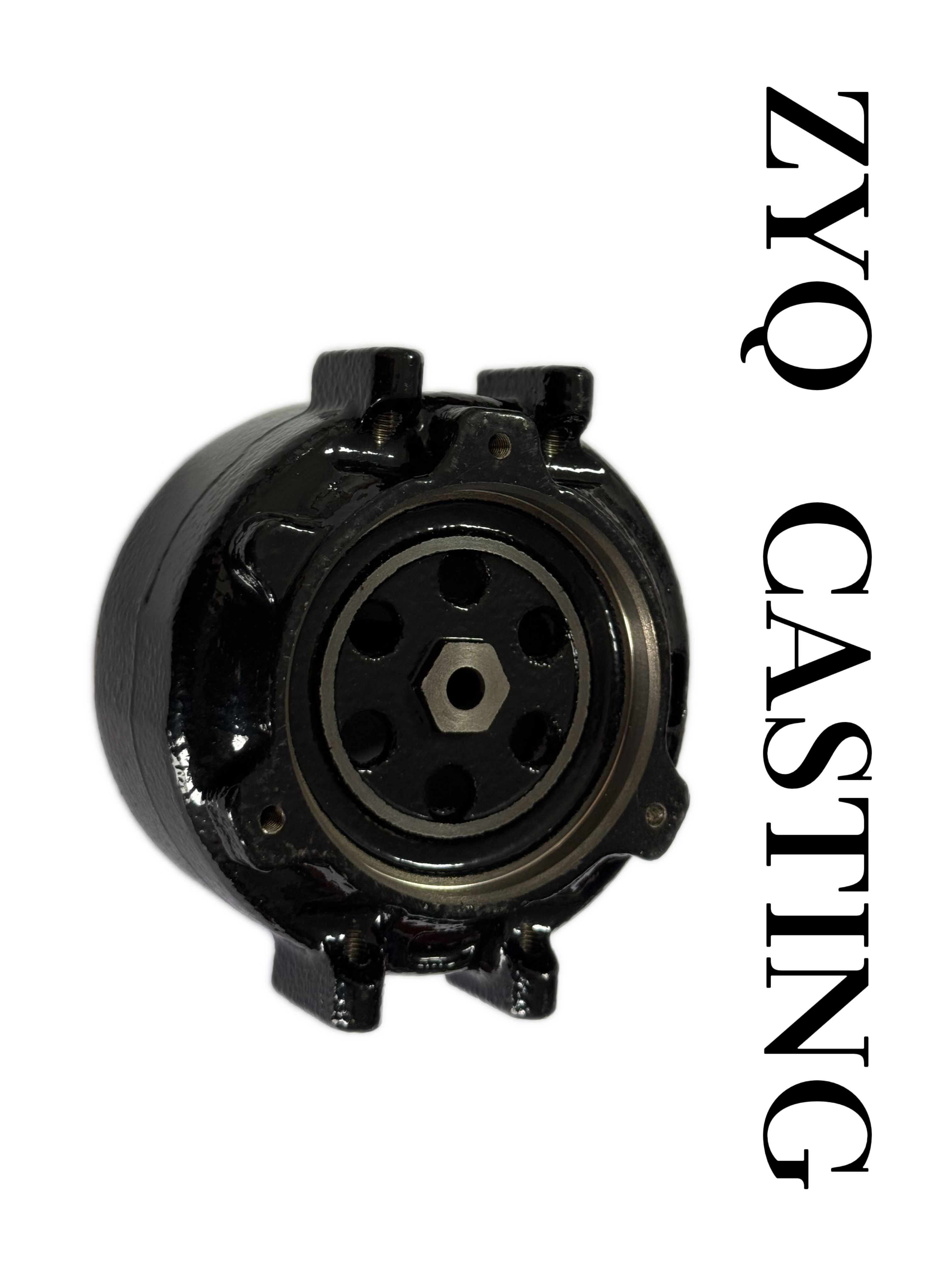
A bearing's internal clearance is what actually determines whether the rolling elements have enough room to handle thermal expansion, maintain a lubricant film, and distribute load evenly. A well-known name on the box doesn't change the fact that an incorrectly specified C2 clearance can seize under high-speed heat, while a properly measured C3 from a lesser-known manufacturer runs quietly for years. The clearance value is a physical property you can verify before installation, whereas brand reputation is just a summary of past averages that may not apply to the unit in your hand.
Most bearing failures linked to clearance are not caused by poor materials but by a mismatch between the actual gap and the operating conditions. Too tight, and friction builds until the surfaces weld or spall. Too loose, and the shaft floats, creating vibration that destroys seals and housings. These failure modes don't care about logos or marketing claims. A printed measurement report showing the real radial play of each bearing is far more useful than a brand story built on decades-old success in a different application.
When maintenance teams replace bearings strictly by brand and ignore clearance tolerance, the new part often fails long before the old one. Equipment that runs hot needs extra space for expansion; equipment that runs cold and slow may need a tighter setup. Even within the same brand, batch-to-batch variation can shift the actual clearance enough to matter. Treating clearance tolerance as the first filter, and brand as a secondary check, prevents unnecessary downtime and keeps the focus on measurable performance rather than reputation.
Corrosion-Resistant Coatings for Parts Exposed to Washdown Cycles
Parts that go through regular washdown cycles see more than just water. High-pressure sprays, steam, alkaline cleaners, and sanitizing agents all take turns attacking exposed surfaces. A coating that only resists basic moisture will often fail at edges, fasteners, or weld seams where chemical residue lingers. In practice, the most reliable choices are high-solids epoxies, polyurethane topcoats, or fluoropolymer-based systems because they maintain adhesion under thermal shock and resist the pinhole formation that leads to underfilm corrosion.
But the coating alone is not enough if the application process is rushed. Surface prep matters more here than in many dry environments. Any remaining mill scale, grease, or old coating becomes a weak point once chlorinated cleaners get into the gaps. A properly anchored profile and a continuous film thickness across sharp edges and threaded areas prevent the typical failure pattern where rust starts at a bracket or bolt hole and spreads underneath an otherwise intact surface.
Field experience also shows that touch-up kits and recoat windows deserve attention. Washdown environments rarely allow long shutdowns, so selecting a system that can be spot-repaired without losing chemical resistance keeps small damage from turning into a full strip-and-recoat job. The goal is not just to survive the next inspection but to keep the part from becoming a source of contamination in food, beverage, or pharmaceutical processing.
Seal Designs That Keep Contaminants Out Without Adding Friction
The trick with sealing a moving shaft is that you're always trading contamination resistance for drag. Most seals press hard enough to wipe dirt away, but that pressure becomes friction the motor has to fight constantly. The designs that actually solve this rely on geometry instead of brute force—labyrinth paths, centrifugal slingers, and non-contact lip profiles that let the shaft spin freely while still blocking moisture and grit. When the seal never touches the rotating surface, there's no wear and no energy loss, yet the contamination still can't find a straight path in.
Some of the better designs take advantage of the rotation itself. A V-ring seal, for example, flings contaminants outward as speed increases, using centrifugal force to do the work that static pressure used to do. Other approaches stack multiple narrow gaps with expansion chambers between them, so any particle that manages to enter one stage loses momentum before it reaches the next. Grease-packed labyrinth seals go a step further—the grease fills the gaps to trap dust, but because it's not squeezed against the shaft, the added resistance is negligible.
The real difference shows up at higher speeds, where conventional lip seals start to overheat and fail. Non-contact designs stay cool because there's no rubbing, and their effectiveness doesn't depend on maintaining a perfect interference fit as parts wear. That's why you see them in everything from electric vehicle drive units to industrial gearboxes where every watt matters. The shaft spins freely, contaminants stay out, and there's nothing to replace every few thousand hours.
Reading Load Ratings Beyond Manufacturer Marketing Claims
Many riders assume the number printed on a tire sidewall tells the whole story, but those figures often reflect ideal lab conditions rather than real-world abuse. A tire rated for 1,200 pounds per axle may handle that once on smooth asphalt, yet repeated impacts, heat buildup from long descents, and underinflation can slash its true capacity by a third. Digging into actual failure reports, owner forums, and long-term fleet data reveals a more honest picture: some budget tires survive far beyond their stated limits, while premium brands occasionally crack under loads well below spec when pushed on rough terrain.
To read load ratings properly, start with the ply count and construction type, but don't stop there. Look at how the rating was obtained — was it a static vertical load test or a dynamic cornering simulation? A tire with a lower stamped number but a stiffer sidewall and reinforced bead may outperform a higher-rated one that squirms under lateral stress. Cross-reference the manufacturer's own warranty exclusions: if they void coverage for off-road use or sustained speeds above 65 mph, the rating is essentially marketing fiction for anyone who ventures off pavement.
The smart approach is to treat the stamped load index as a starting point, then derate it based on your actual conditions. Cut 10% for every five psi below recommended pressure, another 15% if you regularly drive on washboard gravel or exposed rock, and 20% if ambient temperatures exceed 95°F. Better yet, measure your axle weights fully loaded and select tires with a 25% safety margin over that real number — not the optimistic maximum on the sidewall. That's how you avoid the classic trap of believing a brand's brochure over a bent rim on the trail.
Maintenance-Friendly Part Features That Reduce Replacement Downtime
In many production environments, the difference between a quick part swap and a lengthy shutdown comes down to how the component was designed. Modular connectors, captive fasteners, and clearly marked orientation points let technicians replace a worn part without needing to disassemble surrounding assemblies or recalibrate from scratch. A well-placed alignment boss or a foolproof keyed interface can cut the physical swap time from hours to minutes.
Accessibility also plays a larger role than most people expect. Parts that can be reached without removing guards, hoses, or neighboring modules reduce the risk of collateral damage during service. Features like quick-release couplings, tool-free latches, and pre-wired pigtails eliminate the need for specialized tools or on-the-spot splicing. When a replacement part arrives pre-tested and configured, the maintenance window shrinks even further because the crew isn't troubleshooting the new component.
Finally, standardized interfaces across a product family mean a single spare part can serve multiple machine models. This reduces inventory confusion and speeds up diagnosis—maintenance teams don't have to verify part numbers or search for model-specific adapters. Thoughtful labeling, color coding, and even embossed torque values on the part itself guide the installer toward correct assembly the first time, avoiding repeated downtime from loose fittings or reversed connections.
FAQ
Bearings, seals, and filters usually top the list. A single failed bearing can bring an entire line to a halt, while worn seals allow contamination that accelerates wear in everything else. Don't overlook simple parts like belts and couplings either—they're often the first to degrade under misalignment or temperature swings.
Look beyond the basic size and bore. Pay attention to the cage material, clearance class, and lubrication path. For shock loads or slow speeds, a spherical roller bearing with a machined brass cage often outlasts a standard stamped-steel version. Also match the grease to the operating temperature—too thin and it runs out, too thick and it starves the rolling elements.
Many seals die from installation damage or shaft surface finish issues rather than material breakdown. A tiny nick during mounting can turn into a leak path within weeks. Also, if the shaft has spiral machining marks, the seal lip can actually pump oil out. Using the right seal profile for the speed and pressure—like a cassette seal for contaminated environments—makes a bigger difference than just swapping brands.
Filtration is the first line of defense against particulate wear. Even particles smaller than the oil film thickness can cause abrasive damage over time. A high-efficiency filter with a beta ratio of 200 or better keeps hydraulic fluids and gear oils clean enough to extend pump and valve life dramatically. The trick is balancing flow restriction with dirt-holding capacity—cheap filters often choke early and force bypass valves open.
Use condition-based triggers rather than fixed schedules for most components. Vibration analysis, oil sample reports, and thermal imaging usually give early warnings. For example, if a bearing's vibration velocity climbs 20% above baseline without a load change, plan a replacement during the next scheduled downtime. Belts and hoses often have visible cracking or swelling that signals the end of safe life, even if they still function.
Often yes, but only if the failure mode matches the upgrade. A premium seal made from fluoroelastomer may cost three times more, yet survive a chemical environment where a nitrile seal fails every month. The key is to analyze why parts are failing. If the root cause is misalignment, a stronger bearing won't help—you'll just destroy a more expensive part. Fix alignment first, then invest in higher-end components where conditions demand them.
Cleanliness during installation is the biggest one. Even a small amount of dirt introduced during a bearing change can cut its life by half. Use proper tools—no hammers on bearing races—and follow torque specs for fasteners. Also, track lubricant condition rather than blindly greasing on a calendar. Overgreasing can blow seals and cause as much damage as undergreasing.
Yes. Recurring failures in the same location, rising energy consumption, or increasing noise and heat under normal load all suggest the current parts are underspecified. For instance, if a gearbox output shaft keeps eating seals every few months, the shaft may be running too hot or deflecting too much. A heavier-duty seal or a different material may solve what repeated replacements cannot.
Conclusion
Choosing industrial parts that hold up under real operating conditions means looking past glossy spec sheets and focusing on how materials, tolerances, and coatings interact. In heavy-duty gearboxes, the difference between a twelve-month rebuild cycle and a five-year run often comes down to case-hardened alloy grades that resist micropitting and spalling under shock loads. Bearing selection follows the same principle: a well-known label cannot compensate for incorrect internal clearance, which directly influences heat generation, noise, and fatigue life when shafts expand at operating temperature. For equipment subjected to daily washdowns, thin-film corrosion-resistant coatings on fasteners, housings, and mounting surfaces prevent rust creep that silently compromises structural integrity. These material and tolerance choices set the foundation for uptime long before any repair is scheduled.
Seal performance also deserves more attention than it typically receives. The goal is a lip or labyrinth design that blocks abrasive fines and moisture without creating excessive drag, which can raise energy use and accelerate shaft wear. When comparing load ratings, it pays to dig into the test conditions behind the numbers rather than trusting a single headline figure, because dynamic, static, and shock ratings can tell very different stories. Finally, parts designed with maintenance in mind, such as split housings, pre-greased cartridge bearings, and tool-free access covers, shorten replacement windows and help plants return to full production faster. Together, these features form a practical framework for maximizing equipment reliability without chasing brand names or inflated marketing claims.
Contact Us
Contact Person: Nico Yin
Email: [email protected]
Tel/WhatsApp: 8618561567088
Website: https://www.ductileironparts.com/