

Best Food Grade Fumed Silica: Top Picks for Purity and Performance
2026-05-23
When it comes to food-grade fumed silica, purity isn’t just a specification—it’s a promise. From anti-caking in powders to thickening in sauces, the right silica ensures your products perform flawlessly while meeting the strictest safety standards. But not all silicas are created equal, and finding the balance between uncompromising purity and consistent performance can be a challenge. That’s where Zhonglian enters the picture, setting a benchmark with materials trusted by manufacturers worldwide. In this guide, we’ve cut through the noise to bring you top picks that deliver both—so you can focus on what really matters: creating food products that consumers love and trust.
Understanding Food Grade Fumed Silica and Its Role in Modern Production
In the realm of food manufacturing, controlling texture and flow can make or break a product. Fumed silica, a synthetic amorphous silicon dioxide, has quietly become an essential tool for processors of powders, liquids, and beyond. Unlike its coarser cousins, food grade fumed silica boasts an exceptionally high surface area, which allows it to act as a potent anti-caking agent at remarkably low inclusion rates. It coats each particle, absorbing moisture and creating microscopic barriers that prevent clumping. This property keeps everything from spice blends to instant drink mixes free-flowing, even in humid conditions that would otherwise render them unusable.
Beyond simply keeping powders dry, this nanoscale additive plays a more nuanced role in stabilizing complex formulations. In oil-based systems—think salad dressings or nut butters—it builds a three-dimensional network that suspends solid particles and prevents oil separation. The result is a consistent mouthfeel and appearance without the heavy, starchy texture that traditional thickeners can leave behind. Similarly, in low-fat spreads and processed cheeses, it imparts a creamy, full-bodied texture while replacing some of the fat, helping manufacturers meet clean-label demands without sacrificing sensory appeal. Its versatility lies in its ability to function without altering taste or color, making it invisible to the consumer yet invaluable to the developer.
Adopting fumed silica, however, requires a shift in thinking from conventional ingredients. Its dust-free handling must be carefully managed—proper ventilation and personal protective equipment are non-negotiable during processing, even though the final product is completely safe for consumption. Many producers now pre-disperse it into a carrier oil to simplify mixing and reduce airborne particles. Formulation success also hinges on precise dispersion: under-mixing leaves weak spots, while over-shearing can collapse the very structure it’s meant to build. Those who invest the time to understand its rheological quirks find a customizable tool capable of fine-tuning tenderness in baked goods, crunch in snacks, and silkiness in sauces—securing its place in modern production kitchens.
Key Characteristics That Define High-Purity Fumed Silica
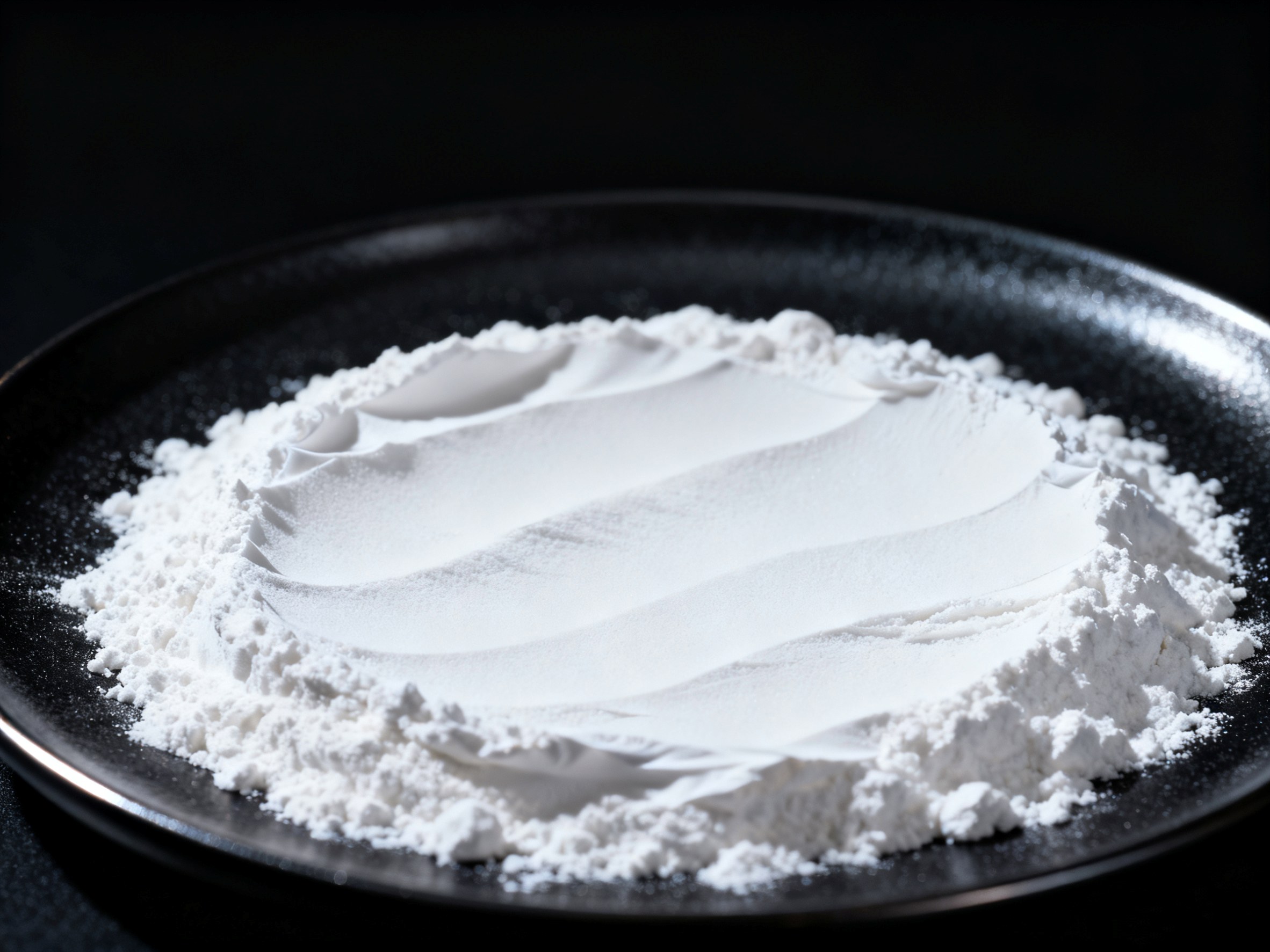
High-purity fumed silica stands apart from conventional silica products due to an exceptionally low level of metallic and ionic contaminants. The production process, involving flame hydrolysis of silicon tetrachloride, yields a material where trace elements such as iron, aluminum, and titanium are reduced to parts-per-million levels or even lower. This inherent cleanliness is critical for advanced applications — from semiconductor polishing slurries to high-performance adhesives — where any impurity can compromise performance or introduce defects. Manufacturers achieve such purity through rigorous raw material selection and precisely controlled reactor conditions, ensuring that the final product meets stringent industry specifications without the need for extensive post-processing.
Another defining trait is the material's consistent surface chemistry and high surface area, typically ranging from 50 to 400 m²/g. The surface is densely populated with silanol groups (Si-OH), which can be further modified to tailor hydrophilicity or hydrophobicity. This fine-tuning capability allows the silica to integrate seamlessly into diverse matrices, offering reliable thickening, anti-settling, and reinforcing properties. In coatings, for instance, the uniform particle size distribution and the absence of oversized agglomerates translate into superior transparency and smooth finish, while in silicone sealants, it enhances mechanical strength without compromising clarity.
What truly distinguishes high-purity fumed silica is its batch-to-batch reproducibility coupled with a tightly controlled aggregate structure. The fractal-like aggregates create a network that provides exceptional rheological control at low loading levels. Users can depend on predictable viscosity build, thixotropy, and sag resistance, which simplifies formulation work and reduces production variability. Moreover, the material's low moisture content and minimal volatiles contribute to long-term stability, making it a preferred choice in sensitive electronic encapsulants and pharmaceutical excipients where consistency and purity are non-negotiable.
How Performance Varies Across Different Product Grades
Not all product grades are created equal, and the performance gap often reveals itself in how they handle real-world stress. A premium-grade hydraulic pump, for instance, might deliver consistent flow even after thousands of cycles, while an economy version starts to lag, showing subtle pressure drops that can derail precision tasks. It’s less about immediate failure and more about the drift in accuracy and reliability that creeps in when materials and tolerances aren’t prioritized quite as highly.
Temperature tolerance is another arena where grades diverge sharply. Industrial-grade sensors might smoothly ride out a heat wave or a freezing night, barely flinching, while cheaper commercial alternatives can go haywire—outputting erratic readings or simply shutting down. This isn’t a flaw per se, but a design choice: higher grades invest in better thermal compensation circuits, shielding, and robust component matching, making them the only viable option for environments where conditions refuse to stay polite.
Then there’s the longevity factor, which often catches users off guard. A high-performance lubricant can keep machinery humming for months longer than a generic grade, not because it’s fundamentally different chemically, but because the additive package is tuned to fight oxidation and sludge just a bit better. The result isn’t a dramatic explosion of failure, but a slow, expensive creep of maintenance that quietly tilts the total cost of ownership against the lower upfront price.
Real-World Applications Where Quality Makes a Difference
Consider the split-second decisions made by an autonomous vehicle navigating a crowded intersection. A single flaw in a sensor or a microscopic defect in a braking component isn't just an inconvenience—it can mean the difference between a safe stop and a catastrophic failure. In these moments, quality isn't a checkbox; it's the invisible guardian that ensures technology performs exactly as promised when lives are on the line.
Now shift to the operating room of a modern hospital. A cardiac surgeon relies on a robotic-assisted system to perform delicate, minimally invasive procedures. Every actuator, every line of code, every sterilized instrument must function with absolute precision. Here, quality extends beyond reliability into the realm of haptic feedback and real-time imaging, where even a slight lag or material inconsistency could alter the course of a patient’s future. It’s a realm where meticulous engineering meets profound human stakes.
Even in less dramatic settings, the undercurrent of quality shapes experiences we often take for granted. The aircraft that crosses an ocean without a tremor in its engines, the lab equipment that detects a trace impurity in a pharmaceutical batch, the bridge that holds firm through decades of storms—these are all quiet testaments to a prior commitment. Quality doesn’t just meet specifications; it builds trust, prevents hidden failures, and allows everyday life to move forward with an unspoken assurance that the systems around us work, even when we’re not paying attention.
Critical Factors to Consider When Selecting a Supplier
Picking a supplier often feels like a gamble until you dig into the details that truly matter. Beyond the basic price tag, it's the quieter signals that reveal whether they'll be a partner or a headache. Look at how they handle missteps—every supply chain hits snags, but a supplier that owns up quickly and fixes problems without finger-pointing is worth their weight in gold. Consistency in product quality batch after batch, not just in the sample they proudly showed, separates the reliable from the risky. And don't underestimate the vibe of their operation; a quick visit can uncover whether their team is genuinely engaged or just going through the motions.
Another layer that gets overlooked is how well they adapt when your needs shift. A supplier with rigid processes might crumble under a sudden order change, while one with flexible capacity and open communication turns chaos into a manageable pivot. Check their track record with clients similar to your size—too big and you're an afterthought, too small and they might drown under your demand. It's also smart to peek at their financial stability; a supplier hanging by a thread can drag your timelines down with them. In the end, the right fit feels less like a transaction and more like a natural extension of your own team, where problems get solved before you even sense them.
Expert Insights on Optimizing Usage for Consistent Results
Getting consistent results isn’t about rigid routines or blindly following instructions—it’s about understanding the underlying patterns of how you work best. Small adjustments in timing, environment, or approach can compound over time, turning a decent outcome into a repeatable strength. Pay attention to what you do instinctively when things go smoothly, and gently replicate those conditions.
One overlooked factor is the mental load we carry into each session. If you’re rushing or distracted, even the best tools won’t save your output from being erratic. A simple pre-work ritual—like clearing your workspace, taking three slow breaths, or jotting down a single focus word—can anchor your mind and dramatically improve throughput. It’s not about perfection; it’s about removing the friction that makes performance unpredictable.
Finally, treat consistency as a feedback loop rather than a finish line. After each meaningful run, briefly note what felt different and the result it produced. Over time, you’ll spot the levers that actually move the needle for you personally—not just generic advice—and refine from there. The goal is a sustainable rhythm that feels natural, not strained.
FAQ
Food grade fumed silica is an ultra-pure, synthetic amorphous silicon dioxide powder specifically manufactured to meet strict safety standards for use in food processing and packaging. Unlike regular silica, which may contain impurities or crystalline forms that can be harmful, the food grade version is produced through high-temperature hydrolysis of silicon compounds, resulting in a consistent, high-purity product with no detectable crystalline silica. It acts as an anti-caking agent, thickener, and carrier for flavors and nutrients, all while being inert and safe for ingestion within approved limits.
Purity directly impacts consumer safety and product quality. Any contaminants—such as heavy metals, organic residues, or crystalline silica—could leach into food, alter taste, or pose health risks. High-purity food grade fumed silica meets regulations like FDA 21 CFR 172.480 or EU E551, ensuring low levels of impurities and consistent performance. This safeguards the integrity of the final food product and helps manufacturers comply with rigorous food safety standards without introducing unwanted variables.
Top-tier food grade fumed silica excels at preventing clumping and maintaining free-flowing properties even in humid conditions. Its extremely fine particle size and high surface area create a barrier between powder particles, absorbing moisture rapidly. It also stabilizes emulsions and suspensions, ensuring that drink mixes dissolve smoothly without forming lumps. Additionally, it can enhance shelf life by protecting sensitive ingredients from humidity and oxygen, keeping the product consistent from the first scoop to the last.
Look for certificates of analysis that confirm purity levels (typically >99.8% SiO₂), low bulk density, and high specific surface area (often 200–300 m²/g). Reliable suppliers will provide clear documentation on compliance with food safety regulations and trace heavy metals below 5 ppm. Performance-wise, test for moisture absorption capacity and anti-caking efficiency under your specific processing conditions. A transparent supply chain and consistent lot-to-lot quality are also strong indicators of a superior product.
It depends on the certifying body and country-specific regulations. In the EU, food grade fumed silica (E551) is permitted in organic processing with certain restrictions, while in the US, the National Organic Program does not allow synthetic silicon dioxide as an ingredient in organic foods. For clean-label products, some brands avoid it due to its synthetic origin, but others accept it when it is used as a processing aid that does not appear on the final ingredient list. Always check with your organic certifier and local regulations to ensure compliance.
Though the final product is safe for ingestion, the fine dust can cause respiratory irritation during handling. Proper engineering controls like local exhaust ventilation, dust collection systems, and enclosed transfer points are essential. Workers should wear NIOSH-approved N95 respirators, protective gloves, and safety goggles. Regular air monitoring for respirable dust, along with thorough training on safe handling procedures, minimizes risks. Keep in mind that good housekeeping practices, such as using HEPA-filtered vacuums instead of dry sweeping, prevent dust accumulation and improve overall plant safety.
Absolutely. Its unique properties are being leveraged in novel food technologies—such as encapsulating probiotics and enzymes to survive harsh digestive environments, creating 3D-printed food structures that hold precise shapes, and developing edible films that extend the freshness of cut fruits. Additionally, it serves as a clarifying agent in fruit juices and wine, a free-flow aid in spice blends, and a rheology modifier for reduced-fat cream fillings that maintain richness without the extra calories.
When stored in a cool, dry place in sealed containers, food grade fumed silica remains stable for years without losing its functionality. However, exposure to high humidity or direct contact with liquids will compromise its free-flow and anti-caking abilities by causing partial agglomeration. It is also hygroscopic, so once a bag is opened, it should be used quickly and resealed tightly to prevent moisture uptake. In exceptionally humid environments, nitrogen-blanketed storage or smaller packaging can help maintain its original performance.
Conclusion
Food grade fumed silica stands out as an indispensable additive in modern production, prized for its ability to enhance texture, prevent caking, and stabilize suspensions without compromising safety. What truly separates premium options from the rest lies in their exceptional purity—trace metals and contaminants are virtually eliminated through advanced manufacturing processes, ensuring compliance with stringent food regulations. High-purity variants exhibit consistent particle size distribution and surface area, directly impacting their thickening and anti-settling performance. Even subtle differences between product grades can lead to noticeable variations in viscosity control or clarity, making it essential to match the silica’s characteristics to the specific demands of each formulation.
In real-world applications, this quality focus proves critical across everything from powdered drink mixes and sauces to nutritional supplements, where even minor impurities could affect taste or shelf life. Selecting a reliable supplier goes beyond price; it requires auditing their quality control protocols, batch-to-batch consistency, and technical support. Experts further emphasize that optimal results come from proper dispersion techniques and precise dosage adjustments, rather than simply opting for the highest grade available. By combining a rigorous supplier evaluation with a deep understanding of how fumed silica interacts within a given matrix, manufacturers achieve the repeatable purity and performance benchmarks expected in top-tier food production.
Contact Us
Contact Person: Levin Wang
Email: [email protected]
Tel/WhatsApp: 8618668999988
Website: https://www.silicaplant.com/